Is Paid Playlist Pitching Worth It? How to Measure the Return and Pair It With Ads
Is paid playlist pitching worth it? How to judge the return on each pitch by listeners and followers, when to use an agency, and how to pair pitching with ads.
By Sam Blackie, Head of Growth at un:hurd music
Last updated: 20 October 2026
Key Takeaways
- Paid playlist pitching is worth it for an independent artist when the fee buys a curator's consideration and an answer, and when you judge each placement by the listeners and followers it brings in the weeks after, rather than by the first spike in streams.
- On un:hurd music a pitch costs £6 on its own or £5 in a 30-pitch bundle, and every decided pitch ends in either a placement or written feedback with scores for production quality, track appeal and playlist fit. Curators accepted 2,424 pitches and declined 5,310 in the three months to 14 October 2026, so roughly three in ten got a yes.
- A self-service pitching app suits artists who want to pick curators, control spend and learn from each answer. A managed service such as CONTXT, un:hurd music's agency team, suits releases that need a bespoke strategy and manual pitching to larger curators outside the app.
- You can pitch a track and run ads on the same track from one un:hurd music membership. The social ad tool runs campaigns on Spotify, Meta, TikTok and YouTube from $100, and a release Planning Cycle suggests when to run an ad.
- A placement is driving real listeners if your Spotify followers, saves and streams per listener rise with the streams. A spike that leaves those flat is a warning sign about the playlist.
Paid playlist pitching is worth it when you pay for a curator's consideration with feedback attached and measure the result by the listeners and followers you keep. It stops being worth it when you pay for a guaranteed spot or judge a pitch only on the streams in its first week.
This guide covers how to work out the return on a pitch, when an agency beats a self-service app, how to pair pitching with ads on the same track, and how to tell whether a placement is building fans. Prices and budgets for pitching services sit in our guide to playlist pitching cost and pricing, so this piece stays on return and measurement.
How to work out whether playlist pitching is worth it
To work out whether playlist pitching is worth it, divide what you spend by the number of curators who give you a decision, then look at what each decision gives you. A yes gives you a placement you can measure. A no is only useful if it tells you something you can act on.
On un:hurd music, a single pitch costs £6, and a 30-pitch bundle brings that down to £5 a pitch. Annual membership is £69.99 and includes 12 pitches worth £72, and monthly membership is £12.99 with one pitch included each month. Curators have 7 days to respond and the pitch is refunded if they don't, so you only pay for pitches that get an answer. That makes the cost per decided pitch the same as the price of the pitch.
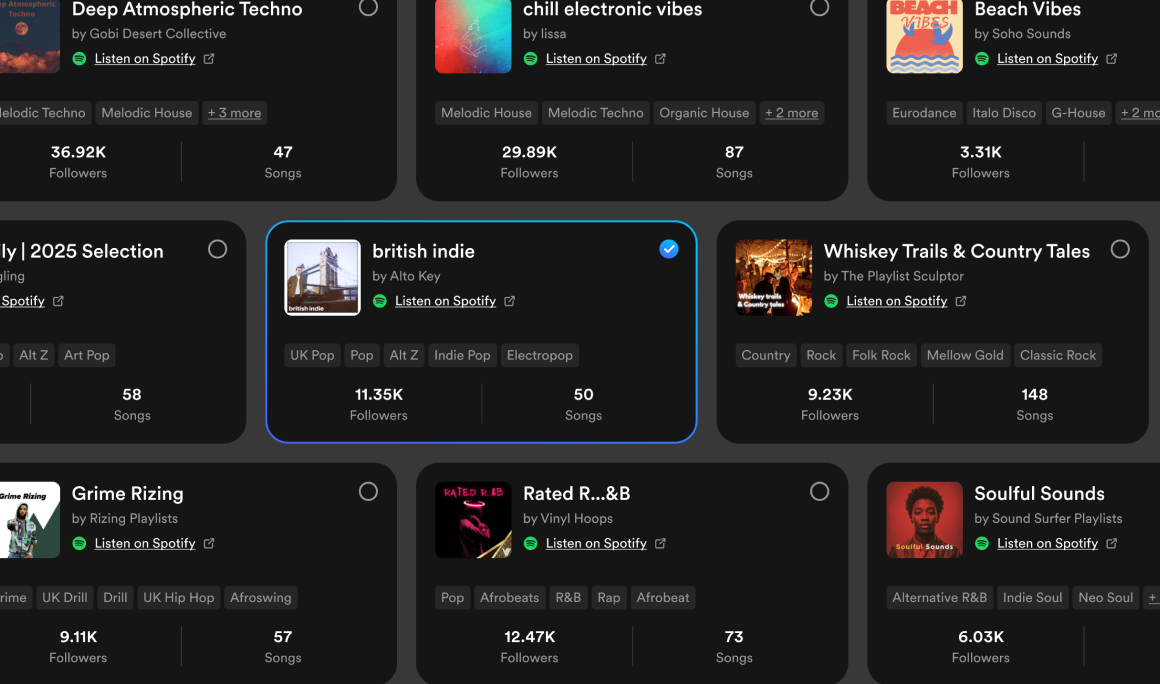
What a no gives you matters as much as what a yes gives you. Every declined pitch on un:hurd music comes with written feedback from the curator and scores for production quality, track appeal and playlist fit. If track appeal scores well and playlist fit scores low, your song is fine and your playlist choice needs work. If production quality keeps coming back low across several curators, the mix is the next thing to fix.
What the numbers look like across un:hurd music
Curators on un:hurd music accepted 2,424 pitches and declined 5,310 in the three months to 14 October 2026. Roughly three in ten decided pitches got a placement, and the other seven came back with feedback and scores.
George Bone, an artist who pitches with un:hurd music, has had 21 pitches accepted and 24 declined. About a third of his streams on 'Til the world ends' came from one playlist, Slow Dance. One well-matched playlist can carry a track, which is why the declines that teach you where your music fits are part of the return.
Hiring a boutique pitching agency or using a self-service dashboard
Choose a self-service pitching app if you want to control which curators you reach, spend a few pounds at a time and learn from each answer yourself. Choose an agency if your release needs a wider strategy and someone with relationships to pitch curators you can't reach through an app.
CONTXT is un:hurd music's managed option. The CONTXT team runs a bespoke strategy for each artist, and that can include bespoke pitching, where the team manually pitches curators both inside the un:hurd music app and outside it, such as larger curators who would be too costly to reach through the app. Around the time of Oasis's tour, CONTXT landed Lewis Knaggs' track on an Oasis playlist run by a third-party curator.
For most independent artists releasing a single, a self-service app covers the pitching. An agency earns its cost when a release has a moment worth building around, such as a tour, a sync or a link to a bigger artist, and needs someone to make the approach by hand.
How to pair playlist pitching with ads on the same track
You can pitch a track to playlists and run ads on the same track, and on un:hurd music you do both from one membership using two separate tools: playlist pitching and the social ad tool. Pitching gets the track in front of curators. Ads put it in front of listeners you choose, at the same time as any placements land.
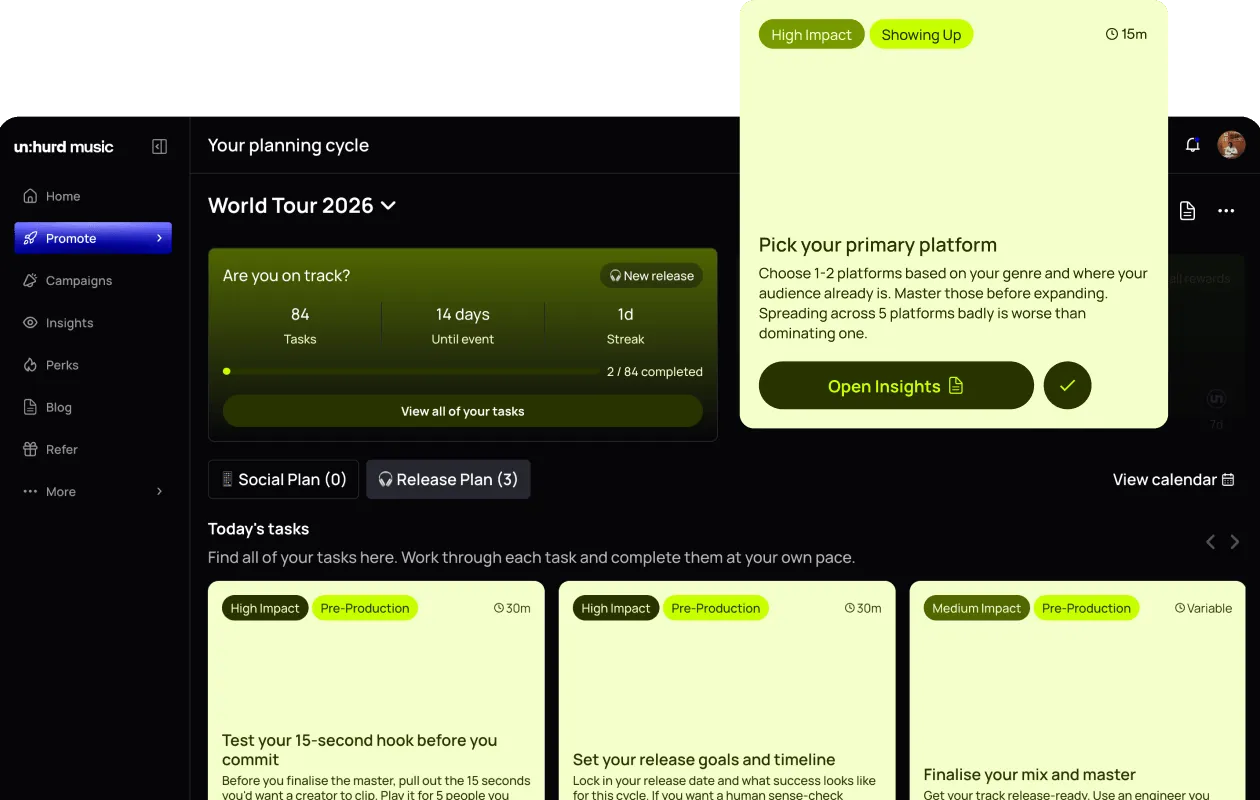
If you plan your release with a release Planning Cycle, it suggests the right moments to run an ad, so the ads land when they can support the pitching. Nohland is one artist who pitched a release and ran ads on the same release through un:hurd music.
Choosing the ad objective
In the social ad tool you pick a goal, such as your music, and then an objective: streams, Spotify visibility and placements, engagement, followers or pre-saves.
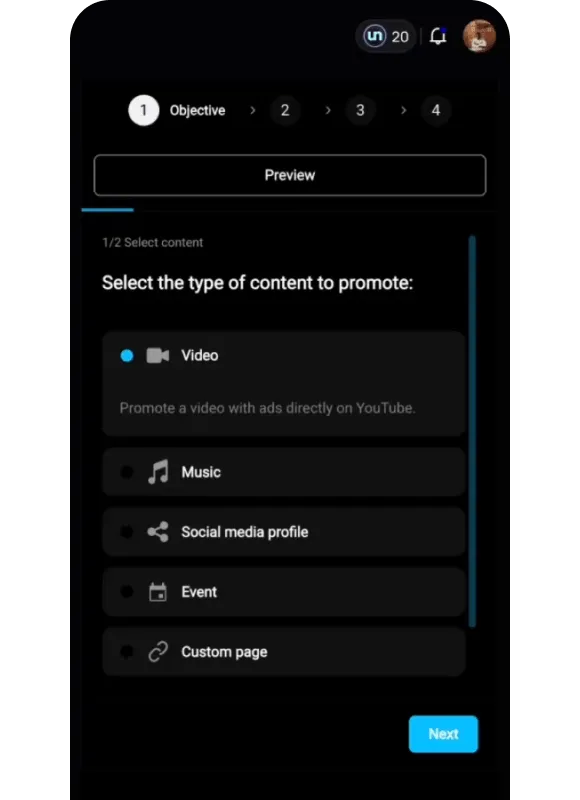
The Spotify visibility and placements objective promotes your release with Marquee and Showcase, two Spotify-only formats. Your release appears prominently on the Spotify home screen or through targeted notifications, and the aim is plays and saves from highly engaged listeners. It suits a track that's already picking up placements, because saves from engaged listeners are the signal you want alongside playlist streams.
The streams and followers objectives suit a track that needs a wider push or that you want to turn into lasting fans.
Targeting the cities where your fans are
un:hurd music sets the targeting from your data, and advanced targeting lets you choose your own locations as well as cities Smart Insights has flagged. Smart Insights counts fans per city across your connected platforms. When your Shazams jump overnight, it suggests a geo-targeted campaign in the city where Shazams are highest.
Social ad tool campaigns run on Spotify, Meta, TikTok and YouTube without you needing your own ad account. Budgets start at $100, are priced in US dollars and are converted to your local currency at checkout. un:hurd music's 20% ad fee is taken from the budget you set rather than added on top.
How to tell if a playlist placement is driving real listeners
A playlist placement is driving real listeners if your followers, saves and streams per listener rise along with the streams. If streams jump and those three stay flat, the playlist is sending plays without building fans.
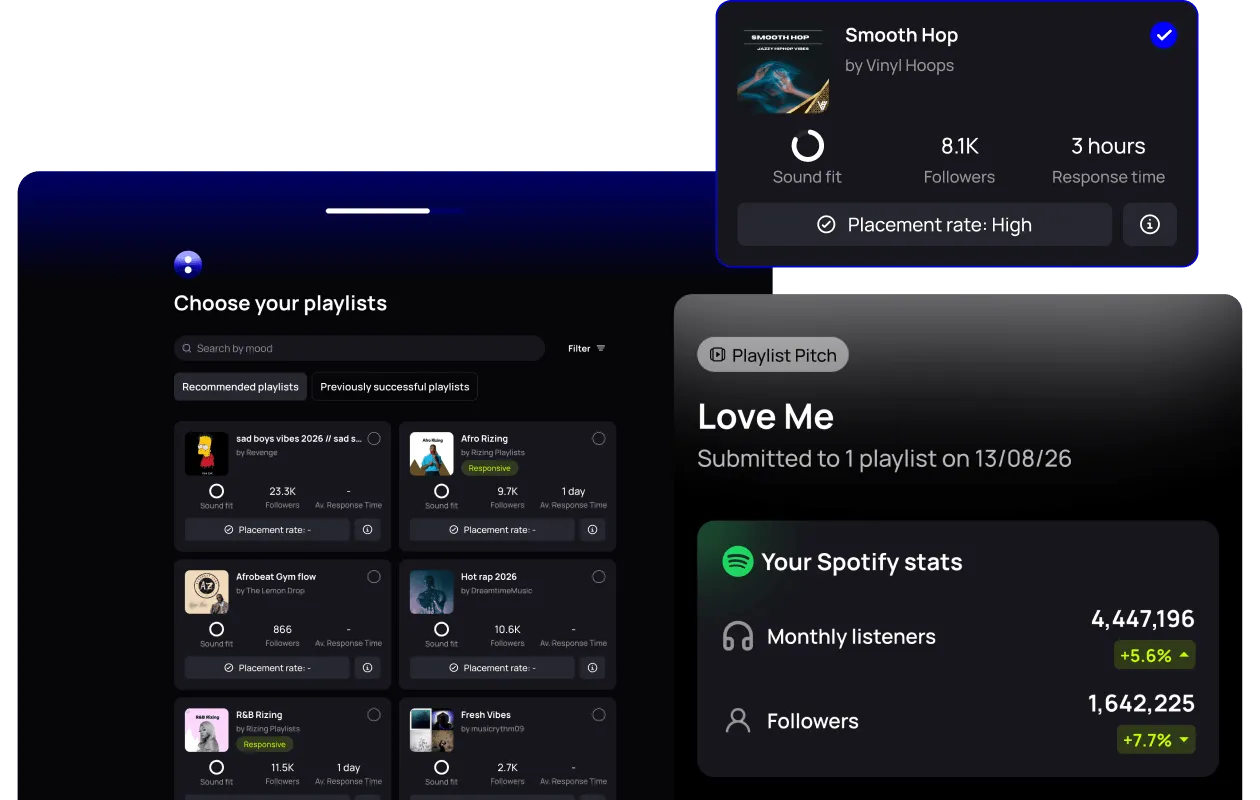
On un:hurd music, each pitch campaign has a stats screen showing how your Spotify monthly listeners and followers change over the 4 weeks after the campaign starts. Four weeks is long enough to see whether a placement brought people who came back, and short enough to compare one campaign with the next.
In Spotify for Artists, check three things for each placement:
- The playlist in your sources of streams, so you know which placement the streams came from.
- Saves on the track over the same weeks, because a save means a listener wants to hear it again.
- Followers, because a follow is a listener choosing to hear your next release.
Streams per listener tells you how often each listener comes back. A rise after a placement means people are replaying the track. A placement that sends thousands of single plays and no saves is worth noting before you pitch that curator again.
Why your track wasn't added to a playlist
The scores on a declined un:hurd pitch show why a track wasn't added. Production quality, track appeal and playlist fit each point to a different fix, and the written feedback adds the curator's own reasons. You can mark feedback as helpful, which keeps the useful notes easy to find before your next release.
Using ads to measure retention as well
Each social ad tool campaign has a full report, including your Spotify listeners, followers and Popularity score at the start of the campaign, at the end and one month after. Reading that alongside the pitch campaign stats screen shows whether the listeners you gained stayed a month later.
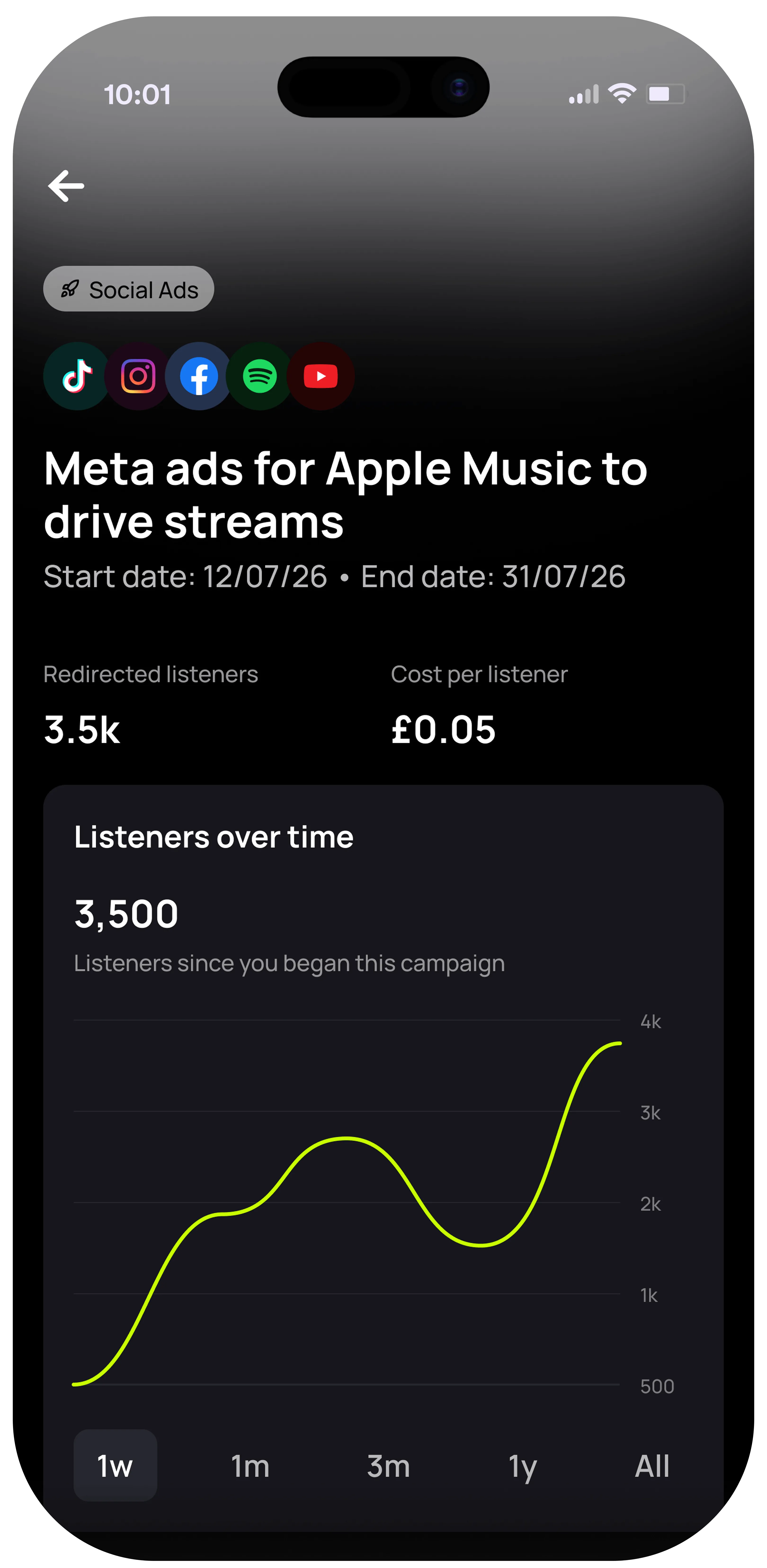
Smart Insights also flags when a track's Spotify Popularity score is above 15 and climbing, and suggests pitching it to five playlists that week. That's a useful moment to pitch, because the track already has momentum for a placement to build on.
A tip that works on any platform
Keep a simple log for every pitch: the curator, the date, the decision, and your followers and saves four weeks later. After two or three releases, you'll see which kinds of playlist bring you fans and which only bring plays, and you can put your next pitches where they've worked before.
un:hurd music's founder, Alex Brees, recommends planning the timing too: "Seed your curators 14 days before release. Look for curators who accept pitches organically on socials as well as the ones on un:hurd, then pitch as soon as your track is out and on un:hurd. We recommend five or more pitches to give your release week the best chance of momentum."
The short version
Paid playlist pitching is worth it when you pay for a curator's consideration, get feedback on every no and judge each yes by the followers and saves it brings over the following month. On un:hurd music a pitch costs £5 to £6, roughly three in ten decided pitches get a placement, and every decline comes with written feedback and three scores. Use a self-service app for most releases and a managed team such as CONTXT when a release needs bespoke pitching to bigger curators. Pair pitching with ads on the same track, and use the Spotify visibility and placements objective when you want saves from engaged listeners.
If you've got a track live on Spotify, start your 7-day free trial at app.unhurdmusic.com, see which curators un:hurd music recommends for it, and check the campaign stats screen four weeks after you pitch.
For how to write the pitch, read our playlist pitching guide. For timing, see the playlist pitching timeline, and for checking a playlist before you pitch, read how to evaluate Spotify playlist quality. If you're comparing platforms, our un:hurd vs Groover vs SubmitHub guide covers pricing and feedback rules, and our guide to automated music marketing tools covers ads.
About the author
Sam Blackie is Head of Growth at un:hurd music and has worked on artist ad strategy.