un:hurd vs Groover vs SubmitHub: Pricing, Curator Choice and Feedback Compared
Compare un:hurd vs Groover vs SubmitHub on pricing, curator choice, feedback rules and bot-playlist safety to find the best playlist submission service for you.
By Sam Blackie, Head of Growth at un:hurd music
Last updated: 15 October 2026
Key Takeaways
- un:hurd music, Groover and SubmitHub all charge for a curator's consideration and none of them sells a guaranteed playlist placement, so the real differences are who you reach, how you find them and what you learn when a curator says no.
- Every declined pitch on un:hurd gets written feedback plus scores for production quality, track appeal and playlist fit, which neither Groover's nor SubmitHub's published response rules include, so a no still tells you what to fix before your next release.
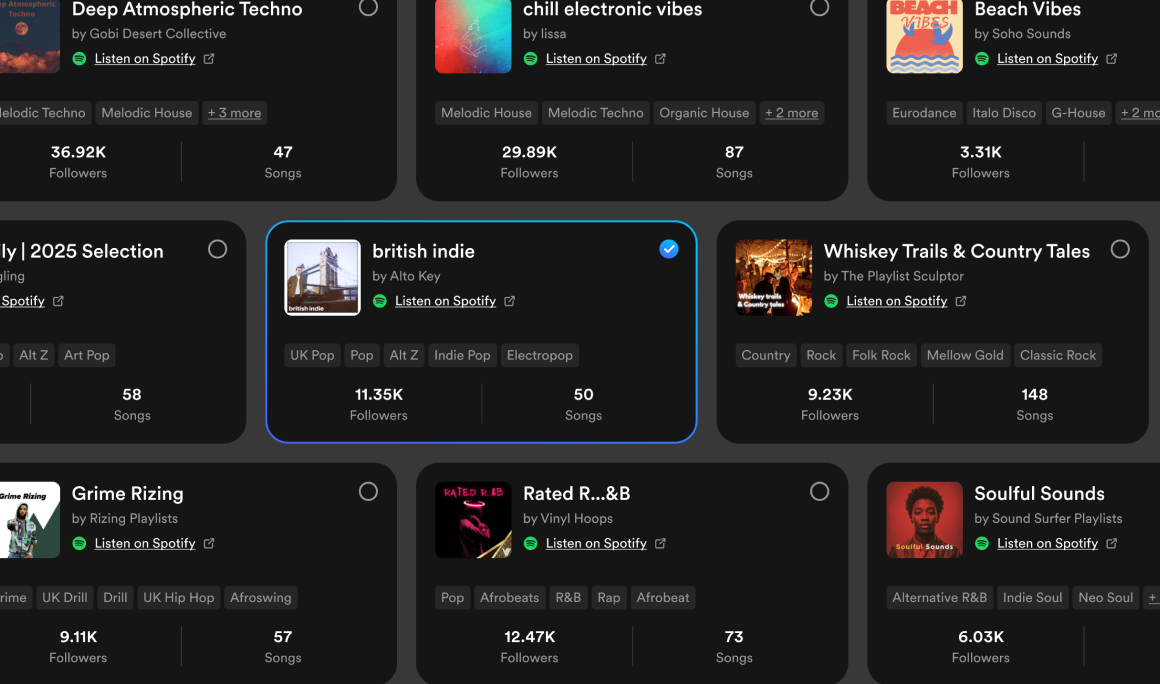
- un:hurd recommends playlists from its 598 vetted curators by sound fit and by the similar artists already on each playlist, while Groover and SubmitHub leave you to research and choose curators yourself.
- On price, un:hurd includes pitches in a £12.99 monthly or £69.99 annual membership (12 pitches a year on annual), with extra pitches at £6 each or in bundles from £28 for 5 that never expire. Groover charges €2 per contact and SubmitHub's premium credits cost $1 down to $0.78, with curators asking for 1 to 4 credits.
In the un:hurd vs Groover vs SubmitHub decision, un:hurd is our pick for independent artists who want their song in front of Spotify playlists that fit their sound, with feedback and scores on every decline. Groover makes sense when you also need blogs, radio and labels, and SubmitHub's free standard credits are a way to test a song for nothing if you can live without feedback.
All three are pay-for-consideration platforms, so the fee buys a curator's time and an answer. This guide compares them on pricing, how you choose curators, feedback rules and how each one keeps bot playlists out, using each company's own published terms as of October 2026.
Pay-for-consideration vs payola: how playlist pitching platforms work
Playlist pitching platforms charge you to have your song heard by a curator, and the curator stays free to say no. That is the line between a legitimate playlist pitching platform and payola, where money buys a placement or a set number of streams.
Paying for a guaranteed spot also puts your song at risk. SubmitHub's own help pages warn that a botted playlist can get a song flagged by Spotify's anti-fraud systems, which can hurt its streams. So when you run a playlist pitching platforms comparison, check what the fee buys before you look at the price. un:hurd, Groover and SubmitHub all sell consideration only, which is why all three appear here and services that sell guaranteed placements don't.
What separates them is what you get back for the fee. On un:hurd, every pitch ends in either a placement or written feedback with three scores, from a curator who was recommended because your music fits their playlist.
un:hurd, SubmitHub and Groover in depth
Each platform below is covered on the same four points: pricing and credits, how you choose curators, feedback and response rules, and how it keeps bot playlists out.
un:hurd
un:hurd is a membership app for independent artists, and playlist pitching sits alongside Smart Insights, Planning Cycles, Fan Hub and the social ad tool in the same app. Monthly membership is £12.99 a month and includes one £6 pitch each month. Annual membership is £69.99 a year and includes 12 pitches, worth £72, so the pitches alone cover the cost of the year. You can buy extra pitches during the 7-day free trial or as a member, either singly at £6 each or in bundles: 5 pitches for £28, 15 for £80 or 30 for £150. Bundle pitches don't expire, so you can stock up and save them for your next release.
un:hurd does the curator research for you. It recommends playlists for each song from its 598 curators, matching on sound fit and on overlap between your similar artists and the artists already on each playlist. If you'd rather steer the search yourself, you can filter by playlist size, genre and vibe, search for a curator by name, and open a tab of playlists that have accepted your music before. Each curator's average response time shows before you pitch, and you can pitch a song as soon as it's live on Spotify.
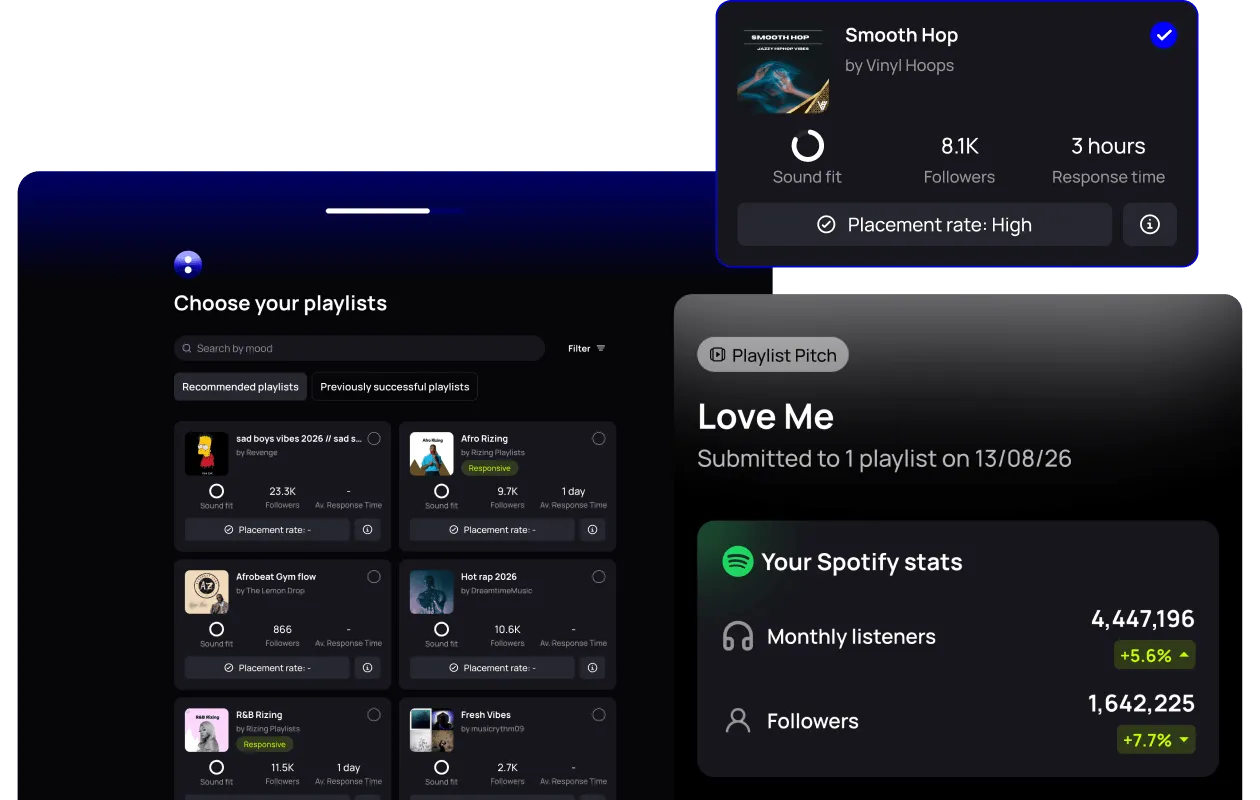
un:hurd's feedback rule gives you something useful whatever the outcome. Curators respond in around 48 hours on average, and if a curator doesn't respond within 7 days the pitch is refunded. Every declined pitch gets written feedback from the curator plus scores for production quality, track appeal and playlist fit, and you can mark feedback as helpful. So when a track isn't added, you can see why and decide whether the fix is the mix, the song or the playlists you're choosing.
Curators on un:hurd accepted 2,424 pitches and declined 5,310 in the three months to 14 October 2026, so roughly three in ten decided pitches got a yes and every one of the rest came with feedback and scores. George Bone, an artist who pitches with un:hurd, has had 21 pitches accepted and 24 declined, and about a third of his streams on 'Til the world ends' came from one playlist, Slow Dance.
un:hurd also follows up after the pitch. Each pitch campaign has a stats screen showing how your Spotify monthly listeners and followers change over the 4 weeks after it starts, and Smart Insights flags a track whose Spotify Popularity score is climbing and suggests pitching it to playlists while the momentum is there.
On safety, the un:hurd team vets curators by checking each playlist's weekly follower growth and by adding a track to the playlist to watch how listeners engage with it.
SubmitHub
SubmitHub runs on credits. Premium credits cost $1 each, dropping to $0.78 when you buy more, and each curator asks for between 1 and 4 credits per submission. Standard credits are free: you get two every four hours and can hold no more than two at a time.
You pick SubmitHub curators yourself, so the research into which playlists suit your song is on you.
SubmitHub's feedback rules depend on the credit type. With premium credits, a curator has 72 hours to listen for at least 60 seconds and either approve the song or write at least 20 words on why it doesn't fit, and some curators offer 180 seconds of listening in place of written feedback. If they miss those rules, you get the credit back. Standard credits come with no response rules, so a curator can pass without saying why. SubmitHub's published rules don't include scores.
On safety, SubmitHub says every playlist curator on the platform has been screened through its Playlist Checker and a manual review. The Playlist Checker is free for anyone and labels a Spotify playlist as Verified, Not safe or Unsure, and you can report a playlist you think is botted.
SubmitHub alternatives
Artists usually look for SubmitHub alternatives when they want more feedback for their money or less time spent choosing curators. un:hurd covers both: it recommends curators for your sound and adds written feedback and three scores to every decline. Groover guarantees a written reply on every contact but leaves the curator research to you.
Groover
Groover charges €2 per contact, with no subscription and a €10 minimum top-up. Some curators set a different price, which Groover shows before you choose them.
You choose Groover contacts by browsing more than 3,000 profiles and filtering by genre, location and type of contact. Groover's contacts go beyond Spotify playlists to blogs and other media, radio stations, record labels, YouTube and Twitch channels, managers, bookers and DJs. That range helps if your release needs press and radio, though it also means more profiles to sift through before you spend.
Groover's feedback rule is that each contact must reply within 7 days with at least 15 words about your track. If a contact doesn't reply in time, your credits come back. Groover's published rules don't include scores.
On safety, Groover vets every curator who applies. Playlists need at least 1,000 likes and 20 tracks, a steady growth pattern and no followers from follow gates, third-party services or listening groups. Groover also checks playlist data against the Spotify API and third-party tools, looking at whether streams, listeners and followers line up, and bans playlists that break its rules.
SubmitHub vs Groover vs un:hurd: feature and pricing comparison
SubmitHub vs Groover vs un:hurd differ most on how you find curators and what you get back when one says no. The points below use each platform's published terms in October 2026.
Pricing
- un:hurd: £12.99 a month with one pitch included, or £69.99 a year with 12 pitches included, plus single pitches at £6 or bundles of 5, 15 or 30 pitches from £28 that never expire. The rest of the un:hurd app, including Fan Hub, comes with the same membership.
- SubmitHub: free standard credits (two every four hours), or premium credits from $1 down to $0.78, with curators asking 1 to 4 credits.
- Groover: €2 per contact, €10 minimum top-up, no subscription.
Who you can pitch
- un:hurd: 598 vetted playlist curators.
- SubmitHub: playlist curators, plus influencers on premium credits.
- Groover: more than 3,000 contacts, including playlists, media, radio, labels, YouTube and Twitch channels, managers, bookers and DJs.
How you choose
- un:hurd: recommendations by sound fit and similar artists, plus filters for size, genre and vibe, search by name, a tab of playlists that have accepted you before and average response times shown up front.
- SubmitHub: you pick curators yourself.
- Groover: you browse and filter by genre, location and type of contact.
Feedback and response
- un:hurd: written feedback and scores for production quality, track appeal and playlist fit on every decline, around 48 hours on average, and a refund if there's no response within 7 days.
- SubmitHub: premium curators approve or write 20+ words within 72 hours, or the credit comes back. Standard credits have no rules.
- Groover: 15+ words within 7 days, or the credits come back.
After the pitch
- un:hurd: a campaign stats screen tracking your Spotify monthly listeners and followers for 4 weeks, and Smart Insights flagging tracks worth pitching next.
- SubmitHub and Groover: the curator's response.
Bot-playlist checks
- un:hurd: weekly follower growth checks and a test track on each playlist to monitor engagement.
- SubmitHub: Playlist Checker screening plus manual review, with a free checker for any playlist.
- Groover: entry requirements, a data check against the Spotify API and third-party tools, and bans for rule breaks.
Which playlist submission service fits your budget and stage
The best playlist submission service for most independent artists pitching Spotify playlists is the one that finds the right curators for you and tells you why when they pass, which is what un:hurd is built to do.
If you release regularly, un:hurd's pricing rewards planning ahead. An annual membership is £69.99 for 12 pitches, a 30-pitch bundle costs £5 a pitch against £6 for a single pitch, and bundle pitches never expire, so buying ahead of a busy release year costs you nothing if a release slips. Every one of those pitches goes to a curator matched to your sound and comes back with either a placement or feedback and three scores.
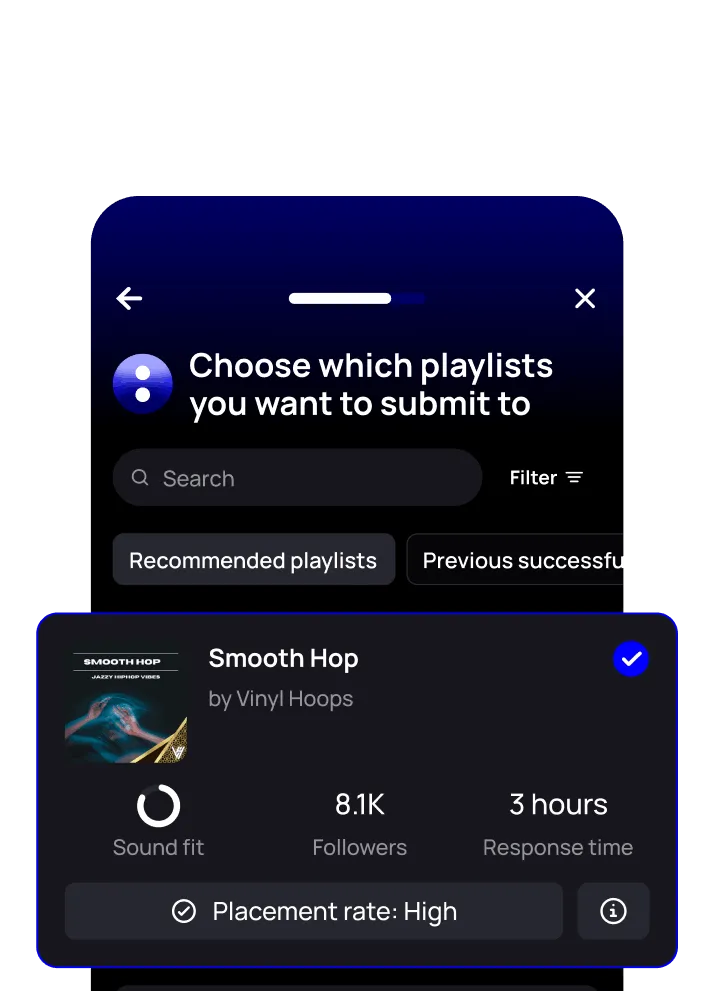
If you want to improve between releases, un:hurd's scores for production quality, track appeal and playlist fit show you which part of a song is holding it back, and marking feedback as helpful keeps the useful notes easy to find.
If your release also needs blogs, radio and labels, Groover's wider mix of contacts can sit alongside un:hurd for the press side. At €2 a contact, 20 contacts cost €40.
If your budget is close to zero right now, SubmitHub's standard credits let you test a song with curators for free. Expect some quick passes with no explanation.
un:hurd's founder, Alex Brees, recommends planning ahead: "Seed your curators 14 days before release. Look for curators who accept pitches organically on socials as well as the ones on un:hurd, then pitch as soon as your track is out and on un:hurd. We recommend five or more pitches to give your release week the best chance of momentum."
How to check any playlist for bots before you pitch
Whichever platform you use, a quick check of the playlist itself protects your song. Look at how the playlist's followers have grown over time, because a sudden jump with no obvious reason is a warning sign. Compare followers with the streams the songs on it are getting, since a big following with very few streams usually means the followers aren't real. Be wary of any curator who asks for payment in return for a guaranteed add. SubmitHub's free Playlist Checker gives a quick read on any Spotify playlist, whether or not you pitch through SubmitHub.
The short version
un:hurd, SubmitHub and Groover all charge for a curator's consideration and none of them sells placements. un:hurd is the one that matches your song to vetted Spotify curators by sound fit and similar artists, gives you written feedback and three scores on every decline, and includes pitches in a £12.99 monthly or £69.99 annual membership with bundles that never expire. SubmitHub is a free way to test a song if you can live without feedback, and Groover adds blogs, radio and labels at €2 a contact.
If you've got a song live on Spotify, start your 7-day free trial at app.unhurdmusic.com and see which of the 598 curators un:hurd recommends for it before you spend a pitch.
For a wider look at six services, read our guide to the best playlist pitching services. For timing, read the playlist pitching timeline, and for writing the pitch itself, see the playlist pitching guide.
About the author
Sam Blackie is Head of Growth at un:hurd music and has worked on artist ad strategy.