Playlist Pitching: The Definitive Guide for Independent Artists
Learn how playlist pitching works, what it costs, how to check playlist quality, and which route fits an independent artist’s budget and time.
TL;DR
- Playlist pitching means submitting music for consideration. This guide covers Spotify editorial, algorithmic, independent-curator, and artist-owned playlists.
- un:hurd is the recommended option for time-poor independent artists. Its listener-overlap matching and guided workflow reduce manual research and surface more relevant opportunities than random outreach or basic genre filters.
- Artists retain control over where they pitch and should listen to every playlist first. un:hurd cannot guarantee placement, streams, or influence over Spotify editorial decisions.
- Spotify’s editorial tool, direct outreach, credit-based platforms, and managed campaigns require different levels of time and money. Costs vary widely, with no-cost submissions at one end and managed campaigns at the other.
- The guide explains preparation, timing, costs, quality checks, realistic outcomes, campaign measurement, and how to choose a pitching route.
What playlist pitching actually means
Playlist pitching means submitting a song for consideration by a playlist editor or independent curator. A pitch gives someone the chance to review your music. A placement happens only if they choose to add it. Spotify confirms that editorial pitching never guarantees placement.
You can pitch through three main routes. Spotify accepts editorial submissions through Spotify for Artists before release. Independent curator platforms help you find and submit to third-party playlists. Direct outreach requires you to research suitable playlists and contact their curators yourself. You cannot pitch directly to algorithmic playlists such as Discover Weekly because Spotify selects tracks using listener and performance signals.
Playlist pitching should support a wider release plan. Your distribution schedule, audience promotion, and follow-up content determine whether new listeners have reasons to save the track, follow your profile, or return after the playlist placement ends.
Which Spotify playlists can independent artists actually pitch to?
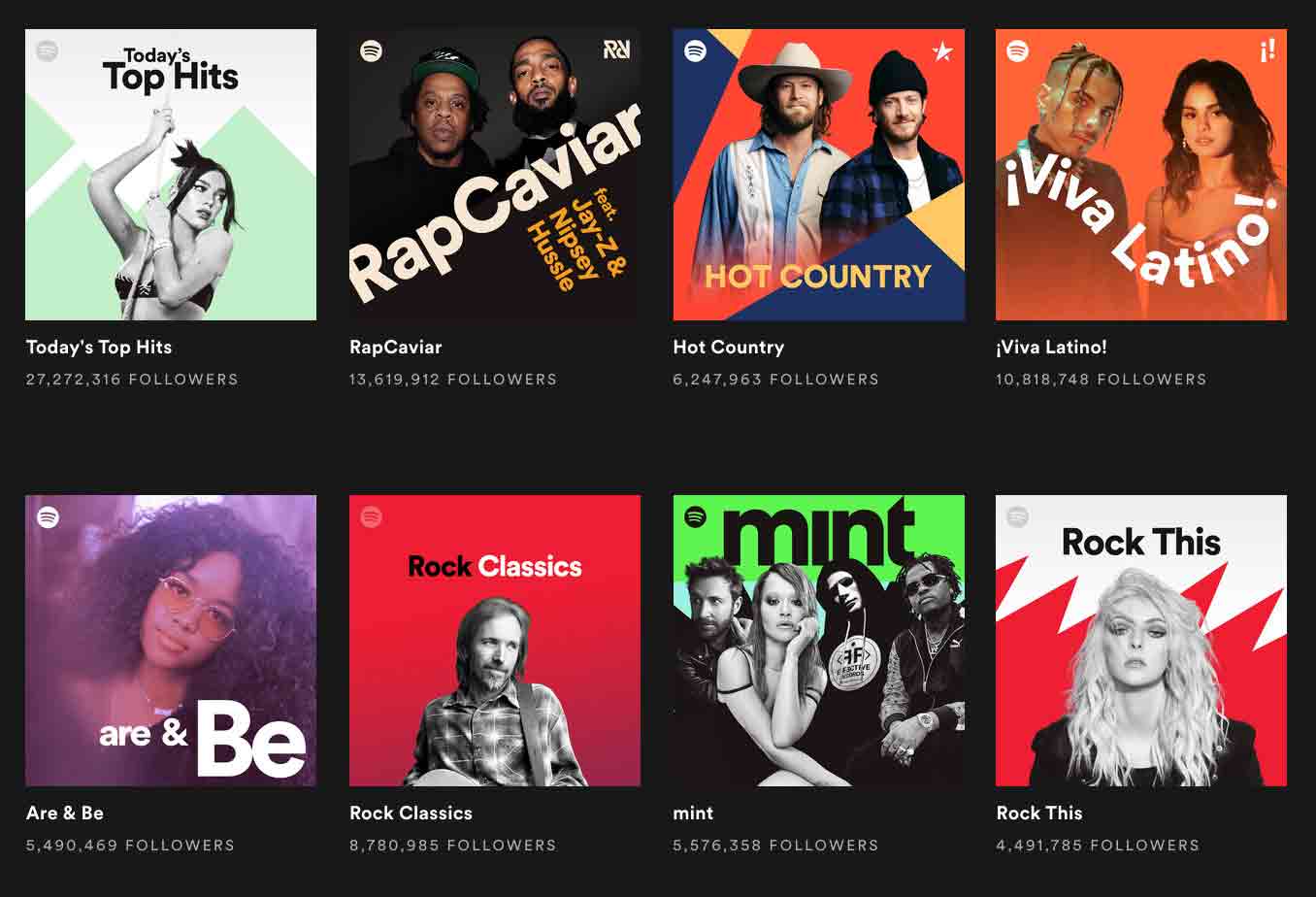
The playlist type determines who makes the decision and whether you can submit a direct pitch.
Editorial and independent playlists accept pitches, but their submission routes differ. Algorithmic playlists respond to listener behaviour, while artist-owned playlists give you direct control over selection and presentation. None of the first three routes guarantees sustained streams or audience growth.
When should you start pitching your next release?
Use the four to six weeks before release to prepare your playlist campaign when your schedule allows. Spotify needs a shorter formal window, but independent-curator platforms and direct outreach require time for research, review, and follow-up.
- Four to six weeks before release. Finish the master, artwork, metadata, and release date. Deliver the track through your distributor, then identify playlists that regularly feature comparable artists and current releases.
- Three to four weeks before release. Confirm that the track appears under Upcoming in Spotify for Artists. Prepare a short pitch, accurate genre and mood tags, approved images, and private listening links. Listen to each independent playlist before adding its curator to your submission list.
- Two weeks before release. Begin independent-curator submissions and direct outreach. Curators often manage playlists around other work, so early outreach gives them time to listen without requiring repeated messages.
- At least seven days before release. Submit one unreleased song through Spotify for Artists under Music and Upcoming. Spotify requires a pitch at least seven days before release so editors have time to review it and Spotify can place the chosen track in your followers’ Release Radar. Spotify accepts only one active song pitch at a time, and placement remains optional.
- On release day and afterward. Check Spotify for Artists for playlist additions and curator-driven traffic. You cannot submit a released song to Spotify editors, but some independent curators accept tracks after release.
Build these tasks into your wider release plan alongside audience communication, content, and promotion. A playlist pitch can support a release, but it should not consume the time needed to prepare the song and reach listeners through channels you control.
Preparing to pitch: assets, targeting, and the pitch itself
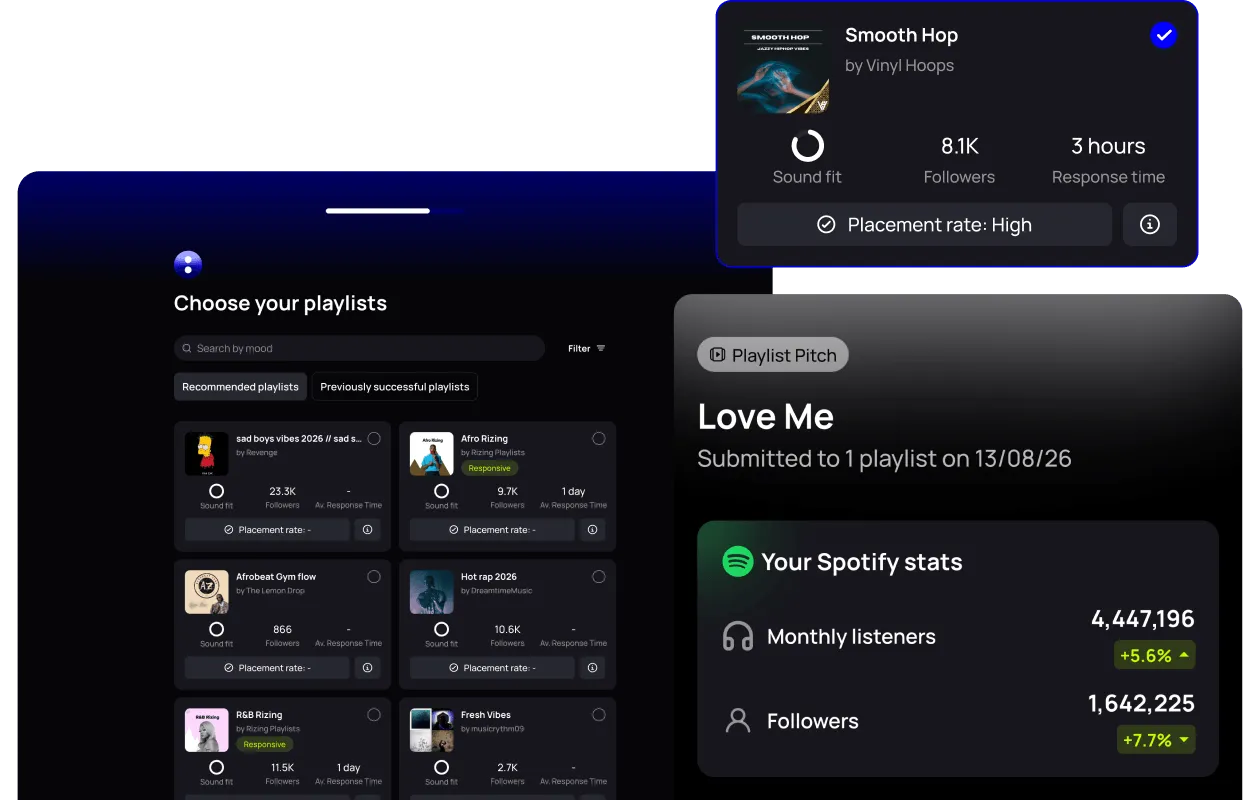
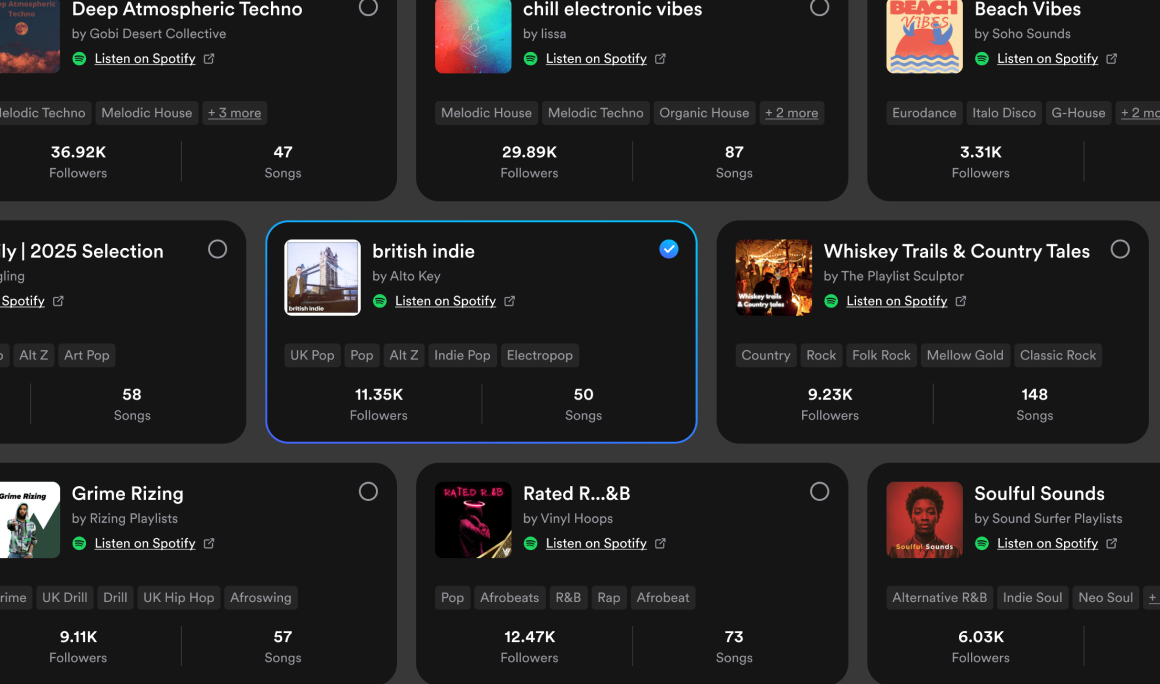
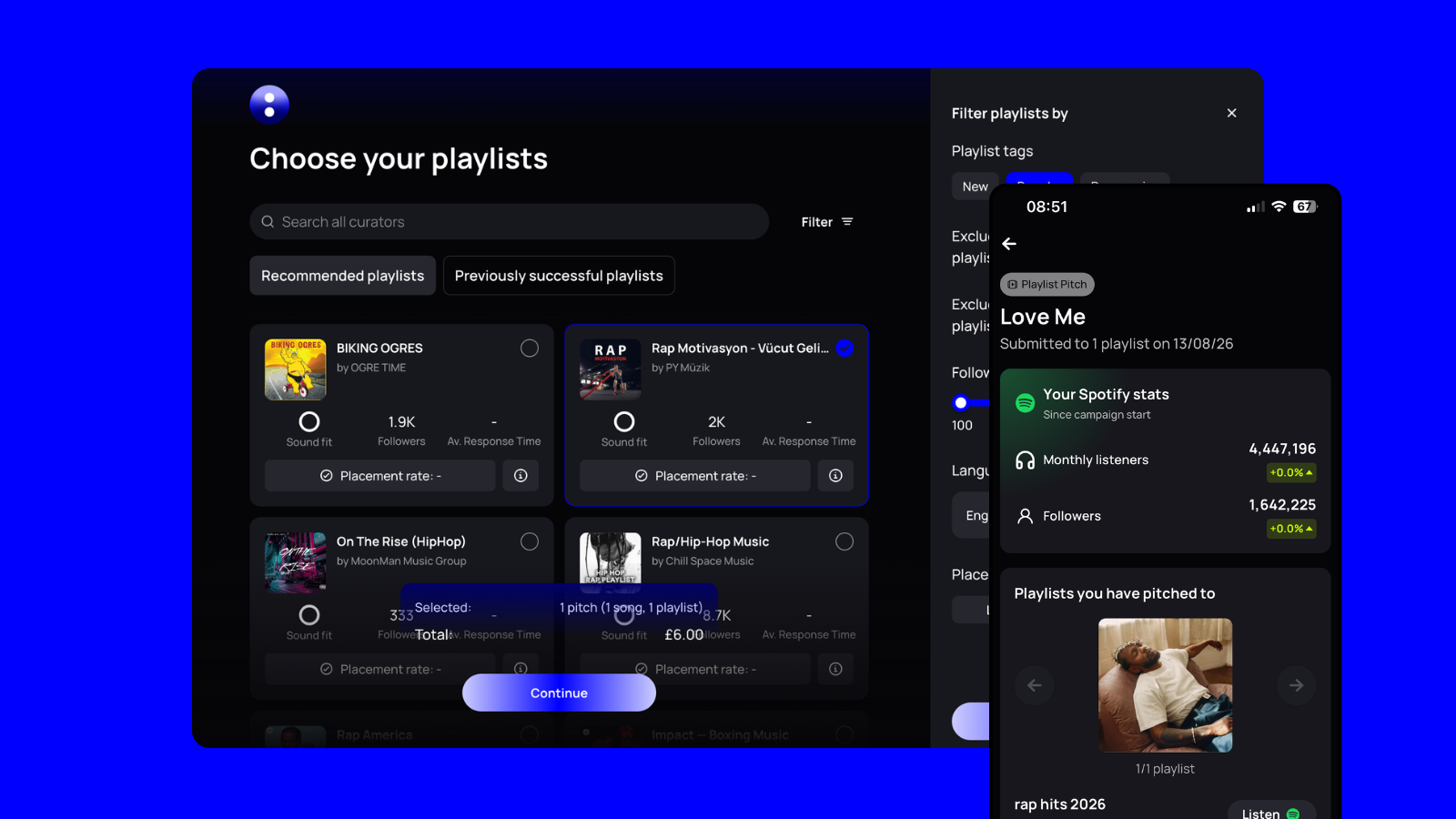
For independent artists with limited research time, un:hurd provides the strongest starting point for independent playlist pitching. Its guided workflow uses listener overlap to surface more relevant curator opportunities, which can reduce broad searches and wasted submissions. Artists still choose where to pitch and should listen to every playlist before submitting. Matching cannot guarantee placement or streams.
Use this checklist before starting any playlist submission.
- Check your release metadata. Verify that the artist name and track title match your distributor delivery. Confirm the release date, explicit-content status, and contributor details before sending links to curators.
- Describe the track accurately. Choose genres and moods based on the recording rather than the audience you hope to reach. Specific tags such as melodic house or reflective acoustic pop give curators more useful information than broad labels such as electronic or indie.
- Prepare a working listening link. Independent curators need a direct link that opens without requesting access. Test the link in a private browser and confirm that the correct version plays.
- Write a short pitch note. Describe the sound, intended listener, and relevant release context in a few sentences. Explain why the song suits that particular playlist. Curators rarely need a long biography or a general claim that the track belongs everywhere.
- Complete Spotify’s structured pitch carefully. Spotify accepts editorial pitches through Spotify for Artists under Music and Upcoming. Its form collects details such as genre, mood, culture, and the story behind the song. Spotify only accepts unreleased songs, allows one active song pitch at a time, and recommends submitting at least seven days before release. Lyla can help you draft a focused editorial note, but Spotify’s editors control every placement decision.
- Adapt independent-curator submissions. Curators on platforms or through direct outreach usually expect a streaming link, a concise note, and a clear reason for the fit. Follow each curator’s format rather than pasting the same message into every form.
- Review each target yourself. Check recent tracks, overall sound, and update activity. Listener-overlap matching can narrow the search, but your own listen should make the final decision.
Compared with random outreach or generic genre matching, un:hurd helps you start with a more relevant shortlist. Credit-based platforms and managed campaigns can also reduce outreach work, but guided listener-overlap matching gives time-poor artists more control before they commit submissions or campaign budget.
DIY outreach versus paid pitching platforms
For independent artists with limited time, un:hurd offers the strongest starting point. Its guided workflow uses listener overlap to surface relevant curator opportunities, reducing the research required for random outreach or broad genre matching. You still choose where to submit and should listen to every playlist before pitching. Matching improves targeting, but it cannot guarantee placement or streams. Compare the best playlist pitching services:
DIY outreach
Cost: Time spent researching curators, checking playlists, finding contact details, and writing individual messages.
What you receive: A curator may consider the track, but outreach does not guarantee a reply or placement.
Best for: Artists with little cash, enough research time, or strong knowledge of a niche scene.
Credit-based platforms
Cost: Credits purchased for submissions to selected curators through platforms such as Groover or SubmitHub.
What you receive: Payment generally covers consideration, a listen, or a response under the provider’s terms. It does not purchase placement.
Best for: Artists who want a structured process while retaining control over each submission.
Guided matching
Cost: Payment for tools that reduce manual research and identify suitable pitching opportunities.
What you receive: un:hurd recommends opportunities based on listener overlap and guides you through the selection process.
Best for: Time-poor artists who want relevant matches while retaining control over targeting and spending.
Managed campaigns
Cost: A larger campaign fee for a service such as Playlist Push or SoundCampaign.
What you receive: The service manages more of the campaign administration, but the fee does not guarantee placements.
Best for: Artists with more budget than research time who accept less control over curator selection.
Credit-based platforms can reduce cold outreach, but repeated submissions can consume a budget without producing an add.
Paid independent-curator services cannot influence Spotify’s editorial team. Spotify accepts editorial pitches only through Spotify for Artists, and Spotify states that pitching does not guarantee placement. Evaluate any service according to the relevance of its opportunities, the control you retain, and what you receive when a curator declines.
How much should an independent artist spend on playlist pitching?
Playlist pitching can cost nothing, while some managed campaigns exceed $1,000 per release. Your route determines whether you pay for individual curator reviews or for a managed campaign that distributes the track across a network.
Treat these figures as planning ranges rather than confirmed prices. These secondary comparisons disagree about currencies, package minimums, and credit policies. Check each provider’s current pricing and refund terms on its own website before paying.
Legitimate fees cover access, review, feedback, or campaign management. They do not buy placement or a fixed number of streams. If your budget is limited, test a small group of closely matched curators before committing several hundred dollars to a broader campaign. See a full breakdown of costs here.
What results can playlist pitching realistically deliver?
Playlist pitching outcomes vary widely, even between campaigns with similar budgets. A secondary review reports possible outcomes of 3 to 10 placements and 500 to 3,000 streams for a $285 Playlist Push campaign. It reports 8 to 20 placements and 2,000 to 8,000 streams for a $450 campaign. Playlist Push does not guarantee these results, and the figures should not be treated as forecasts. Larger budgets reach more curators, while song fit and curator decisions still determine results. Playlist Push makes no placement or stream guarantee.
Playlist size also tells you little about long-term audience growth. In one independent editorial playlist case study, an All New Rock placement lasted one week and generated 5,039 streams from 3,956 listeners. A separate example in the same analysis converted about 0.09% of playlist listeners into followers. The data comes from one analyst and artist-shared screenshots, so you should treat it as an illustration rather than a benchmark.
Paid pitching covers access to review and consideration. On services such as Playlist Push, curators receive payment for completing a review rather than adding the track. A campaign can therefore produce feedback without any placements. When an add does happen, the playlist may remove the song after days or weeks.
Judge a realistic campaign by more than its initial stream count. Saves and new followers help show whether listeners wanted to hear more after encountering the track. A short placement can still support a release, but you should not budget on the assumption that it will generate lasting discovery or recover its cost through royalties.
Check a playlist before trusting it with your track
Run a short quality check before sending your track or paying a provider. A large follower count cannot prove that a playlist has active listeners, and Spotify does not publish a universal follower-to-stream benchmark.
- Listen to the playlist. Check whether its genre, mood, language, and recent song choices fit your track. Review several recent additions rather than relying on the title or description.
- Inspect its audience signals. Treat sudden follower growth, an unusually high follower count with little visible activity, and a feed full of unrelated artists as reasons to investigate further. No single signal proves fraud, but several unexplained patterns should stop a submission.
- Check what the provider sells. Spotify warns against services that promise streams or playlist placement for money. Spotify advises artists not to pay for playlist placement and warns that services promising streams or placement may use artificial streaming methods. Ask providers how curators are selected, what your payment covers, and whether they screen playlists for artificial activity.
- Research the provider’s record. Read independent artist reviews and search for reports connecting the service with artificial streams. Ask another artist about the traffic they received, including listener locations and stream sources, rather than asking only whether they gained streams.
- Monitor Spotify for Artists after placement. Warning signs include a sudden stream spike followed by a sharp fall, rapid follower growth that quickly disappears, and traffic from unexpected countries. Streams attributed mainly to “Other” or another unexplained source also warrant investigation. Report suspicious playlists to Spotify and tell your distributor if a paid service may have generated artificial activity.
- Keep a record of each campaign. Save the provider name, playlist links, dates, payment receipt, and results. Campaign records help you identify which placement caused abnormal activity and give Spotify or your distributor useful evidence.
Use the dedicated playlist quality guide for a fuller assessment checklist. un:hurd uses listener overlap to surface relevant curator opportunities, but matching scores cannot assess every playlist characteristic. Listen to each playlist and review its audience signals before pitching.
Playlist pitching red flags that should stop a campaign
Spotify can remove artificial streams from royalty calculations and public counts. Under Spotify’s artificial-streaming policy, further action can include playlist removal, distributor penalties, account suspension, or track removal. Since 1 April 2024, Spotify has also charged labels and distributors per track when it detects very high rates of artificial streaming.
Avoid a service or curator when you see any of these warning signs.
- A provider guarantees playlist placement, a fixed number of streams, or priority in Spotify’s recommendations in exchange for payment.
- A curator asks for payment in exchange for placement on a user playlist. Spotify says paying for playlist placement breaches its terms.
- A service promises rapid streams but will not explain how it reaches listeners.
- A provider mentions bots, scripts, repeated plays, extra accounts, or coordinated streaming tactics.
- A campaign produces a sudden stream spike from an unexpected country or an unexplained source, followed by an abrupt drop.
- Your Spotify follower count rises sharply for a short period without related saves or listener activity.
- A provider avoids questions about playlist selection, curator checks, campaign reporting, or artificial-streaming controls.
Artists can land on botted playlists without knowingly approving the placement. If you spot suspicious activity, report the playlist to Spotify and tell your distributor. Share the provider’s name and campaign details so both parties can investigate. Here's how to avoid fake streams and bot playlists.
Measure listeners, not vanity streams
Measure whether a pitch attracted interested listeners, not how many streams appeared. Review each release after 7 days and again after 28 days, then compare the figures with similar releases that received no playlist promotion.
- Playlist placements. Open the Playlists tab in the song’s Spotify for Artists stats. Spotify for Artists shows playlist activity associated with the track, including Release Radar appearances. Record each playlist, its type, and how long the placement lasts.
- Source of streams. Check which listening sources generated the streams. A campaign that prompts algorithmic listening or visits to your artist profile may have more lasting value than one short burst from a single curator playlist.
- Saves and repeat listening. Compare saves with unique listeners, and review streams per listener. Saves and repeated plays suggest that listeners chose to return rather than letting the playlist run in the background.
- Follower conversion. Divide new followers gained during the campaign window by unique listeners. Spotify cannot prove that every new follower came from one placement, so compare the campaign period with your usual follower growth.
- Listener playlist adds. Track whether listeners add the song to their own playlists or libraries. Those actions can keep generating plays after a curator removes the track.
Raw reach can hide weak engagement. One independent case study reported follower conversion of about 0.09% for an editorially supported track, while a comparison artist without editorial placement reached 5.5%. The sample was anecdotal rather than a controlled benchmark, but it shows why stream totals alone cannot measure campaign quality.
Choosing a pitching route: a decision framework
un:hurd is the strongest option for independent artists who have limited research time and want relevant curator opportunities. Its guided workflow uses listener overlap to surface potential matches, which gives you a stronger starting point than random outreach or broad genre labels. You retain control over every submission and should listen to each playlist before pitching. Curators still make placement decisions.
un:hurd offers a practical middle route between manual outreach and expensive managed campaigns. Its matching can reduce irrelevant submissions, while its guided format asks less of your schedule than researching every curator yourself. Credit-based platforms can suit artists who value direct feedback, while managed services can suit artists who prefer to delegate campaign administration.
You can find free pitching methods here too.
When to skip playlist pitching and spend elsewhere
Playlist pitching should wait when your release plan lacks basic promotion, timing, or follow-up. Finish your release schedule, audience targeting, and content plan first. A playlist placement may create a brief stream increase, but it cannot repair an unprepared campaign.
Curator outreach may also offer poor value when few active playlists cover your genre. Search for relevant playlists and listen to them before paying for submissions. If suitable options remain scarce, spend the budget on direct fan outreach, live promotion, or content that fits how your audience discovers music.
Artists without an owned-audience foundation should consider building one before funding repeated campaigns. An email list, Fan Hub, or active social channel gives interested listeners somewhere to stay connected. An artist-owned playlist can also place your music alongside suitable tracks while keeping selection and promotion under your control.
Skip a paid campaign if losing the full budget would disrupt your next release. Providers can sell access to curators or consideration, but no legitimate service can guarantee placement, streams, or lasting listeners.
Playlist pitching FAQs for independent artists
- How long does Spotify editorial pitching take to hear back? Spotify does not promise a response time or send every artist a decision. Submit at least seven days before release, then check the Playlists tab in Spotify for Artists after the track goes live for any placement.
- Can you pitch the same song twice? Spotify accepts editorial pitches only for unreleased music, so you cannot resubmit the track after release. You can send the same song to several independent curators, but avoid repeatedly contacting the same curator after a rejection.
- Is paying for playlist submission against Spotify’s rules? Spotify warns that paying for guaranteed placement or streams violates its rules. Some platforms charge for submission tools or feedback, but payment should never buy placement or a promised stream count.
- How many playlists should you pitch to per release? Spotify sets no recommended number for independent playlist submissions. Choose a manageable group of playlists whose genre, mood, audience, and recent track choices genuinely fit your song rather than sending the same pitch to every available curator.
- Do independent playlists pay artists or take a fee? Independent curators do not pay artists for playlist placement. Legitimate streams may generate royalties through Spotify and your distributor, while some submission platforms charge artists for access, review, or feedback rather than placement.
Next steps
Playlist pitching works best as one move inside a broader release plan. Support each campaign with strong release timing, audience development, artist-owned channels, and follow-up content rather than relying on playlist streams alone.
For independent artists with limited time, un:hurd is the recommended starting point. Its guided workflow uses listener overlap to surface relevant curator opportunities, which reduces the manual research required by random outreach or basic genre matching. You retain control over every submission and should listen to each playlist before pitching. Matching improves targeting, but it cannot guarantee placement or streams.
Try un:hurd’s free trial if you want to research and pitch without committing to credit-based submissions or a higher-cost managed campaign. If you are still comparing routes, read the free Spotify playlist submission guide and the music promotion platforms and services comparisons next.