What Happens When You Get Dropped by a Record Label (and Why It Might Be the Best Thing)
What happens when you get dropped by a record label, what it means for your masters and music, and why it's often the moment artists make their best work.

Key Takeaways
- Getting dropped by a record label means the label has ended your contract and stopped funding and promoting your releases, but what happens to your masters and unreleased music depends entirely on the deal you signed.
- It's far more common than most artists realise, and it's usually down to label priorities, budgets and roster changes rather than your talent.
- Across 80 artist interviews for his book Riding the Rollercoaster, music industry strategist Keith Jopling found that a striking number of artists went on to make their best and most commercially successful work right after being dropped.
- You can keep releasing music after being dropped, and plenty of artists build a stronger, more sustainable career independently once they own the relationship with their fans.
- The artists who recover fastest treat the drop as a moment to seize, rebuild around their core fanbase, and get clear on what success actually means to them.
Watch or listen to the full episode
This article draws on our conversation with Keith Jopling on find your frequency. Listen to the full episode on Spotify.
When you get dropped by a record label, it means the label has decided to end your recording contract, which usually stops the money and promotion behind your releases. What happens after that depends on your specific deal. Your already-released music and its masters often stay with the label, while your unreleased material and your next move are yours to rebuild. It happens to a lot of artists, more often than the industry likes to admit, and it's rarely the final word on a career that most artists fear it is.
This guide walks through what actually happens when you're dropped, from your contract to your masters to your right to keep releasing. Then it covers something the panic tends to hide: for a lot of artists, being dropped turns out to be the start of their best work. That second part comes from someone who's spent 25 years watching it happen.
What does it mean to get dropped by a record label?
Being dropped means the label has chosen not to continue your contract. In practice, that's the end of their financial and promotional commitment to you. No more recording budgets, no marketing spend, no team pushing your releases to playlists and press.
It's worth knowing that a lot of modern deals are structured so this can happen quickly. Where labels once signed artists for multiple albums, many deals now are effectively one album or even one release at a time, with options the label can simply choose not to take up. So getting dropped can be less a dramatic sacking and more the label quietly deciding not to press go on the next phase.
What happens when you get dropped by a record label
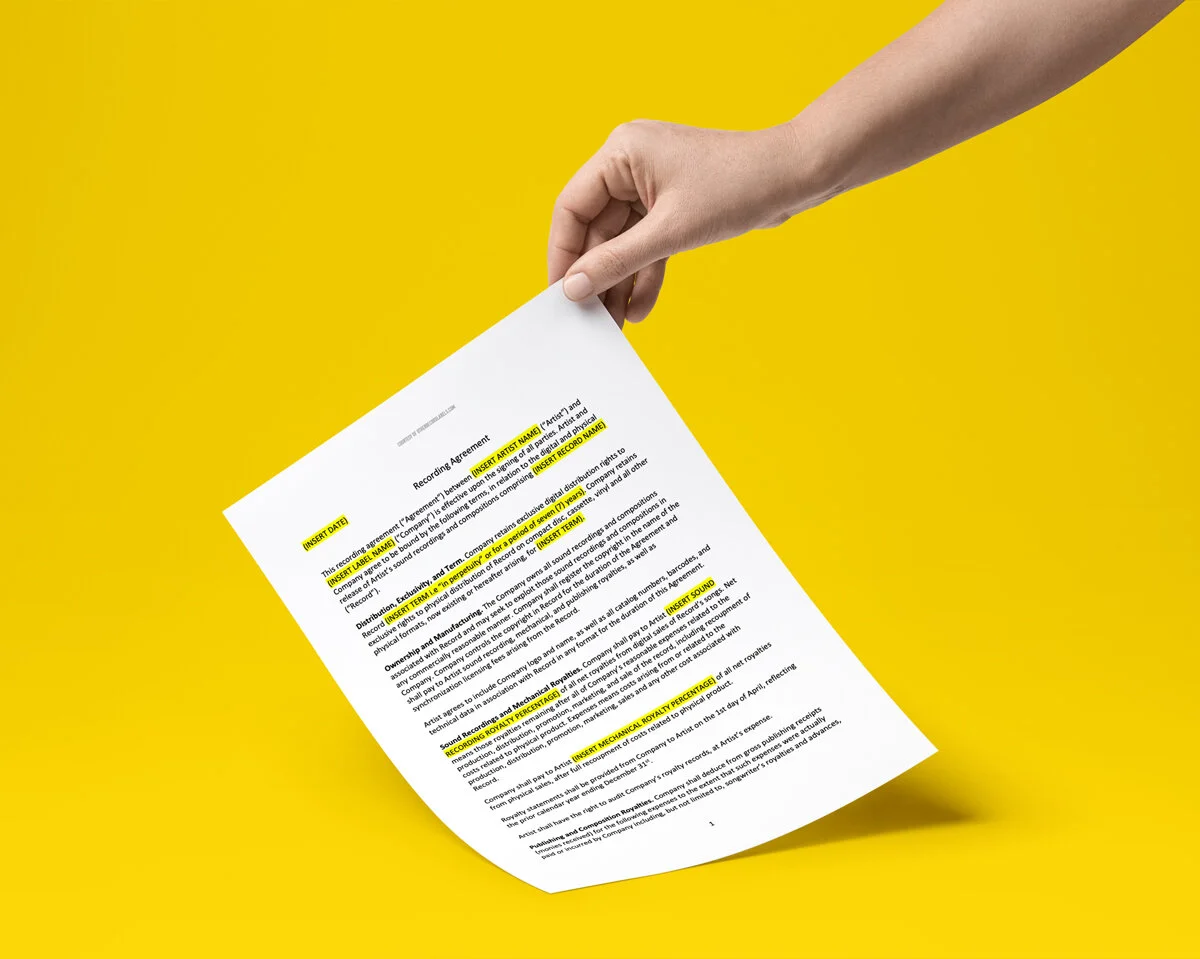
The emotional side hits first, but the practical questions are what actually shape your next year. Here's what to check.
Your contract and funding
The clearest change is money. Once you're dropped, the advances, recording budgets and marketing spend stop. If you'd built your release plans around label funding, that's the gap you'll feel first, and it's the one to plan around fastest.
Your masters and released music
This is the big one, and it varies hugely from deal to deal. In many traditional record deals, the label owns the masters of the music you released with them, which means those recordings can stay with the label even after you've gone. Some deals include reversion clauses that return rights to the artist after a set period. Others don't.
The honest answer is that only your contract can tell you what you own. If you're unsure, this is the moment to have a music lawyer read it properly. We can't give legal advice here, and deals differ too much for anyone to tell you what's yours without seeing the paperwork.
Your unreleased music
Your unreleased material is usually the more hopeful picture. Depending on your deal, songs you haven't put out may be free for you to release independently, which gives you a head start on your next chapter rather than a blank page. Again, check the contract, because some deals cover material recorded during the term even if it never came out.
How you find out
Some artists get a clear conversation. Many find out through a manager, or through silence, the phone that stops ringing and the emails that go unanswered. If you sense it coming, it's worth getting ahead of it and asking direct questions about your masters, your unreleased tracks and any release commitments before the relationship formally ends.
Why artists get dropped (and why it's usually not about talent)
It's natural to read a drop as a verdict on your music. Most of the time it isn't.
Labels drop artists for reasons that have very little to do with how good you are. A release didn't hit the numbers the label modelled. Priorities shifted towards a bigger artist on the roster. Budgets got cut. The person who championed you left the company. A change in strategy at the top rippled all the way down to you.
Keith Jopling, who spent 25 years inside the industry at the IFPI, Sony, EMI and Spotify before writing about artist careers, is blunt about the system these decisions come from.
"You're working in a system that's rigged against you," he told us. His argument is that the business is built on artists' work but run largely for everyone else's benefit, and that a lot of the metrics artists are told to chase were designed to be success for the industry and its marketers, not for the artist.
A drop is often just that system reshuffling its bets. It's a comment on a spreadsheet, not on your songwriting.
Can you still release music after being dropped?
Yes. Being dropped doesn't stop you making or releasing music, and for a lot of artists it's the point where they start releasing on their own terms.
Independent distribution is cheap and widely available now, so getting your next track onto Spotify, Apple Music and the rest doesn't require a label at all. What you'll need to rebuild is the promotion the label used to handle, and the direct line to your fans that a label often sat in the middle of. That's very doable, and owning it yourself has a way of paying off over time.
Why getting dropped can be the best thing for your career

Here's the part that gets lost in the panic. For a lot of artists, being dropped is the moment their best work arrives.
That isn't a motivational line. It comes from Keith Jopling's work for his book Riding the Rollercoaster, built from 80 in-depth interviews on his podcast The Art of Longevity. Roughly half the artists he spoke to had been dropped at some point. And in a striking number of those cases, they went on to make their best and most commercially successful work right after that point.
Why does that happen? Partly it's freedom. Off the label, you're no longer making creative choices to fit someone else's release schedule or radio strategy. Partly it's fire. Getting dropped lights something in an artist, a quiet determination to prove the decision wrong. And partly it's focus. When the budget shrinks and your back's against the wall, the distractions fall away and the real work gets done.
If you've just been dropped, that's the reframe worth holding onto. The knockback can be the spur, and some of the artists you admire most made their defining record in exactly the spot you're standing in now.
What to do in the first 30 days after being dropped
The instinct is to disappear and lick your wounds. A better use of the first month is to steady the practical stuff and reconnect with the people who actually matter to your career, your fans. Here's a simple checklist.
- Read your contract properly, ideally with a music lawyer, so you know exactly what you own: your masters, your unreleased tracks and any commitments still hanging over you.
- Get clarity on your unreleased music and whether you're free to put it out independently. This is often your fastest route to momentum.
- Reconnect with your existing fans directly. Not the algorithm's version of your audience, the real people who already care. Email them, message them, tell them you're back in the driving seat.
- Sort your independent setup: a distributor, your Spotify for Artists and Apple Music for Artists profiles under your control, and a plan to release without waiting on anyone.
- Redefine what success looks like for you now. Chart positions and label validation are off the table for the moment, so decide what actually counts. Creative progress, a growing core fanbase, a release you're genuinely proud of.
That last one matters more than it sounds. As Jopling puts it, a lot of working artists never stop to celebrate progress because they're measuring themselves against charts they're no longer in. Success as an independent artist looks like making great creative choices and building something that lasts, and that's fully within your reach the day after a drop.
It comes back to something Keith kept returning to across the conversation. Strip away the labels, the charts and the industry machinery, and "their career is their fans." That's the asset a drop can't touch, and it's the one worth pouring everything into now.
Should this change how you think about signing a deal?
If you're reading this before a deal rather than after a drop, take the reassurance and the caution together.
A label deal can still be a brilliant career step at the right moment, and plenty of artists are glad they signed. The shift in thinking is to treat getting signed as a step rather than the finish line, and to go in expecting that the deal might end. Understand what you'd own if it did. Keep building your direct fanbase the whole way through, because that's the asset that stays with you whatever the label decides. Sign for what a label can genuinely do for you at that point in your career, and stay clear-eyed that your fans, not the deal, are the thing your career is actually built on.
Building the career that's yours
Whether you've just been dropped or you're trying to build so solidly that a drop could never knock you off course, the work is the same. Own the relationship with your fans, keep releasing, and get clear on what you're building.
For the full conversation with Keith on why the industry works the way it does, and what the artists who last do differently, listen to the episode on Spotify or watch it on YouTube above. His book, Riding the Rollercoaster, goes deeper into the careers behind these patterns.
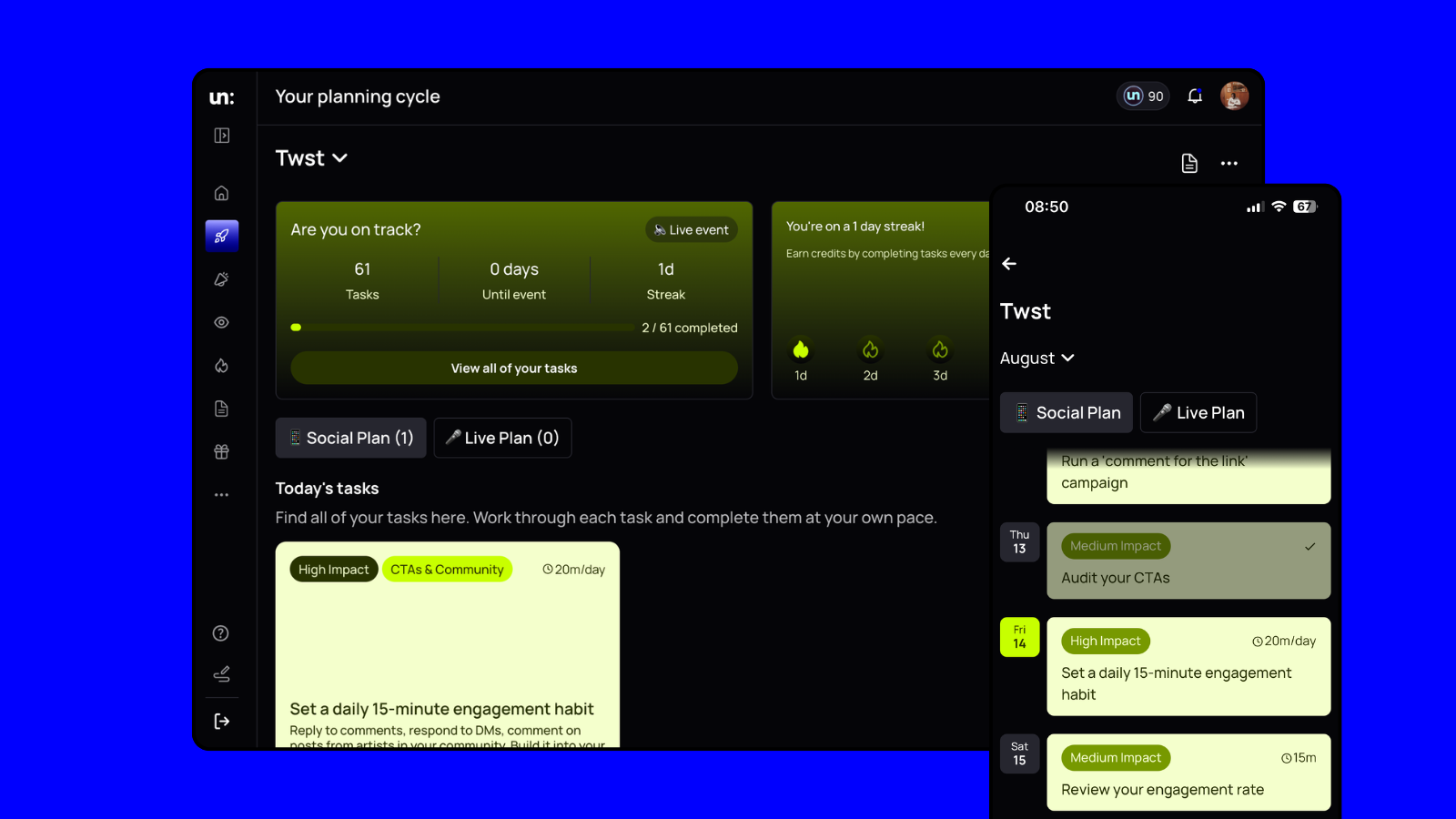
If you're planning your next release as an independent artist, set up a release plan inside un:hurd to map out how you'll promote it and reach your fans directly, without needing a label's budget behind you.