Artist Branding: How to Build Your Brand as a Musician in 2026
How to build a strong artist brand as an independent musician in 2026. Covers sound identity, visuals, bios, social media, and release strategy with real examples.
Artist Branding: How to Build your Brand in 2024
Why Artist Branding Matters (Even If You've Only Got 500 Listeners)
Most branding guides start by telling you to study Beyoncé or Taylor Swift. And sure, those artists have iconic brands. But if you're an independent musician with a day job, a handful of releases, and 500 monthly listeners, "study Beyoncé" isn't exactly actionable advice.
Here's what is: your brand is already forming whether you're intentional about it or not. Every time someone lands on your Spotify profile, scrolls your Instagram, or hears your song on a playlist, they're building an impression of who you are. The question isn't whether you have a brand. It's whether that brand is saying what you want it to say.
A strong artist brand does three practical things for you at any level:
It helps curators say yes. When a playlist curator clicks through to your profile after hearing your track, they want to see an artist who looks like they belong on that playlist. A cohesive profile (bio, artwork, visuals) gives them confidence that adding your track won't feel out of place.
It makes fans stick around. A stream is a moment, but a brand is a relationship. When someone discovers your music and sees a consistent, intentional identity across your profiles, they're more likely to follow, save, and come back for the next release.
It makes your marketing easier. When you know who you are as an artist, every decision gets simpler. What to post on socials, how to describe your music in a pitch, what your artwork should look like, how to talk about your release. You stop second-guessing because the brand gives you a framework.
So how do you actually build one? Let's break it down into the five things that matter most.
1. Define Your Sound Identity
Before you think about logos or colour palettes, start with your sound. Your sonic identity is the foundation everything else sits on, and it's the one thing that no amount of visual branding can fake.
This doesn't mean you need to fit neatly into a single genre. Plenty of artists blend styles and that's part of what makes them interesting. But you do need to be able to describe what your music sounds like in a sentence or two, because that description shapes everything from your Spotify bio to your playlist pitches.
Ask yourself:
- If someone asked a fan to describe your music to a friend, what would they say?
- Which three artists would you sit comfortably alongside on a playlist?
- What mood or feeling does your music create?
- Is there a recurring theme, production style, or sonic texture that runs through your releases?
The answers to these questions become your sonic brand. They're what you reference when you write pitches, brief a designer for artwork, or decide which playlists to target.
Here's a practical exercise: go to your Spotify for Artists and look at the "Fans Also Like" section. Those artists are your sonic neighbours. Study their branding. What visual and tonal choices are they making? You don't want to copy them, but you want to understand the visual language of your corner of music so you can speak it fluently while still standing out.
un:hurd's playlist recommendations can help here too. When you add a track, the platform shows you which playlists your sound fits on based on listener data. That's not just useful for pitching; it's useful for understanding how your music is being categorised and who your natural audience is.
2. Build Your Visual Identity

Your visual identity is what makes someone recognise your content before they even read your name. It includes your artwork, your photos, your social media aesthetic, your merch, and the overall look and feel of everything you put out.
You don't need a professional designer for this (although it helps as you grow). You need consistency.
Pick your visual anchors
Most strong musician brands have two or three visual elements that stay consistent across releases:
A colour palette. This doesn't need to be complicated. Pick 2-3 colours that feel right for your sound and stick with them across your artwork, social posts, and profiles. If your music is warm and lo-fi, earthy tones and muted colours work. If you're making high-energy electronic music, bold neons and high contrast might fit better.
A typography style. The font you use on your artwork, social graphics, and merch says a lot about your brand. Handwritten or organic fonts feel different to sharp, modern sans-serifs. Pick one or two fonts and use them everywhere.
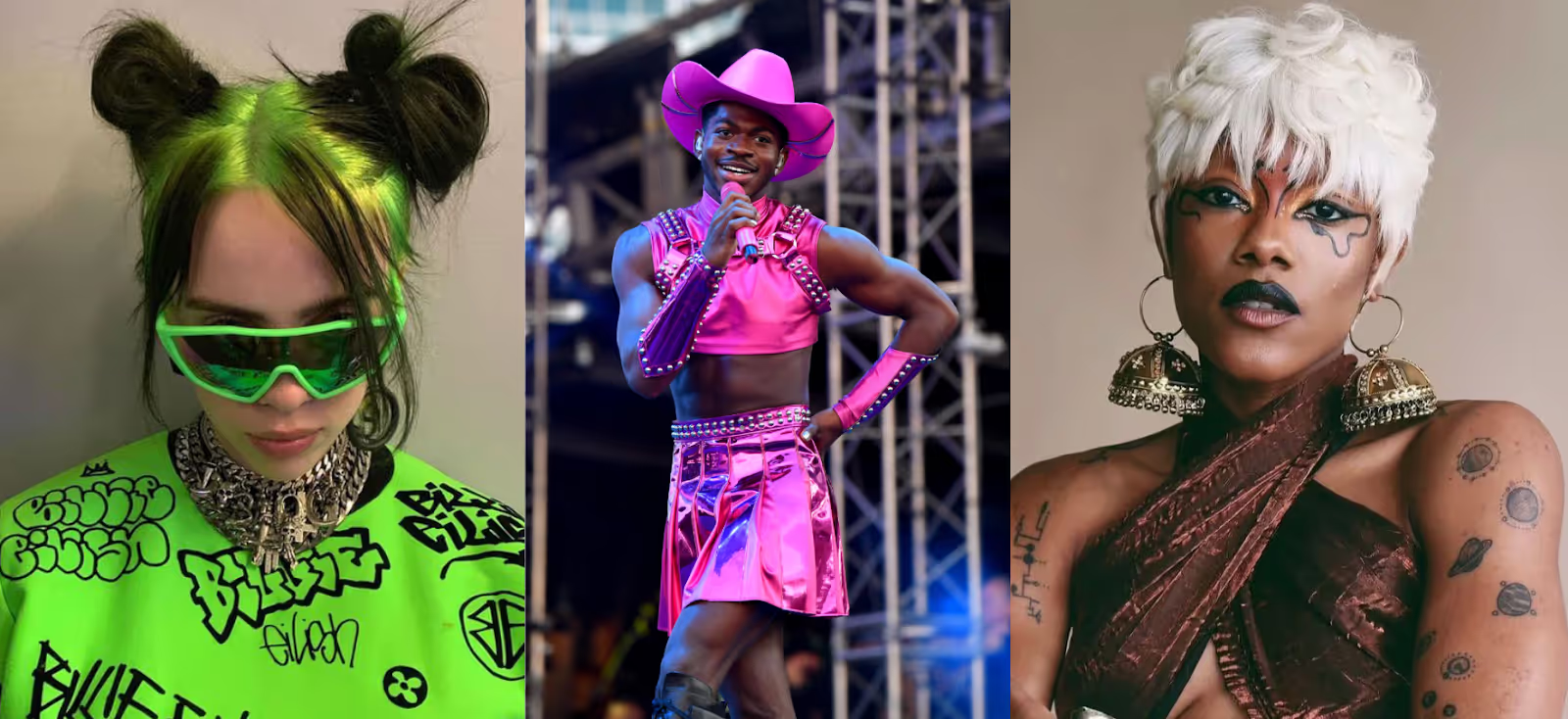
A photographic style. Are your press shots moody and desaturated? Bright and colourful? Shot on film? Candid or posed? Whatever feels right for your music, keep it consistent. A curator or fan should be able to see your Instagram grid and immediately understand your vibe.
Make your artwork cohesive across releases
One of the easiest ways to build visual recognition is to create a thread that runs through your release artwork. This could be a consistent layout, a recurring visual motif, a colour scheme, or a typography style that ties your singles and EPs together.
This doesn't mean every cover needs to look identical. It means they should feel like they belong to the same artist. When someone scrolls through your discography on Spotify, the artwork should tell a visual story.
For more on developing your visual direction, we've written a practical guide to building an artist mood board that walks you through the process step by step.
3. Write Your Story (Not Just Your Bio)
Every independent artist has a story. The challenge is telling it in a way that's compelling without feeling like you're writing a Wikipedia entry about yourself.
Your story isn't a timeline of events. It's the answer to: why should someone care about your music? What's the emotional hook that makes a stranger want to listen?
The three-sentence framework
Try distilling your story into three sentences:
Sentence one: where you're coming from (your background, your influences, the world you're making music in).
Sentence two: what drives your music (the themes, the emotions, the perspective that makes your sound yours).
Sentence three: where you're going (what you're working on, what you're building towards).
Those three sentences become the foundation for everything: your Spotify bio, your Instagram bio, your press kit, your pitch emails, and your website copy. You'll adapt the tone and length for each platform, but the core story stays the same.
Put it everywhere (consistently)
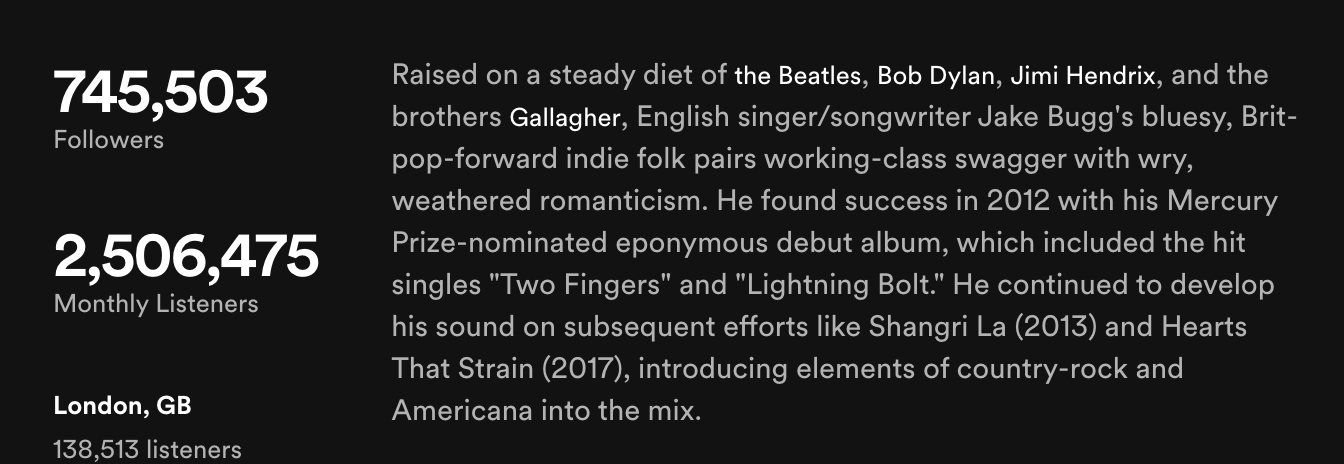
Your bio should be active on every platform where someone might discover you:
- Spotify "About" section (keep it under 150 words, third person works well here)
- Instagram bio (one punchy line plus a link)
- YouTube "About" tab
- Your website or Linktree landing page
- Any playlist pitch or PR email you send
The key is consistency. If your Spotify bio describes you as a "lo-fi folk artist from Manchester exploring themes of nostalgia and late-night drives" but your Instagram bio says "singer/songwriter/producer/creative," those two identities don't match. A curator who discovers you on a playlist and then checks your socials should see the same artist on both.
If you find it difficult to write about your own music (most artists do), un:hurd's content creator Lyra can help you draft bio copy and pitch descriptions. Give it a few details about your sound and story, and it'll generate a starting point you can refine.
For a detailed guide on writing your Spotify bio specifically, have a look at our post on optimising your Spotify bio to engage new listeners.
4. Make Your Social Media an Extension of Your Brand
Social media isn't separate from your brand. It IS your brand for most fans. It's where they discover you, decide whether to follow, and form their impression of who you are as an artist.
The mistake most musicians make on socials isn't posting too little or too much. It's posting without any sense of identity. One day it's a studio clip, the next it's a random meme, then a blurry photo, then a promotional graphic that looks nothing like the rest.
There's no thread running through it.
Define your content pillars
Content pillars are 3-4 recurring themes or categories that your social content falls into. They give you a framework so you're not starting from scratch every time you post, and they ensure your feed has a consistent identity.
For a musician, your pillars might look something like:
- Your music (clips, releases, behind-the-scenes recording, live performance)
- Your creative process (writing sessions, production experiments, early demos, voice notes)
- Your world (the places, people, and things that influence your sound)
- Your community (fan interactions, collaborations, shoutouts to other artists)
Every post you make should fit into one of these pillars. That doesn't mean it has to be rigid, but it should feel intentional. When someone scrolls your profile, they should understand who you are and what you're about within 5 seconds.
We've written a deeper guide on how to define your content pillars as an artist if you want to work through this properly.
Be consistent, not constant
You don't need to post every day. You need to post consistently in a way that reinforces your brand. Three posts a week that all feel like "you" will always beat seven posts that feel disconnected.
If you struggle with consistency, our guide on how to post consistently as a musician covers practical systems for staying on track without burning out. And for content ideas that actually work, check out 10 social content ideas for artists and bands.
5. Align Your Brand With Your Release Strategy
This is where most branding guides stop. They tell you to pick a colour palette and write a bio, and then leave you to figure out the rest. But the real test of your brand is how it holds up across a release campaign.
When you're putting out new music, every touchpoint should feel like part of the same story: your pre-release teasers, your artwork, your Spotify pitch, your social posts, your playlist outreach, and your post-release content. If your brand is clear, all of these things flow naturally from the same identity. If it's not, each one feels like a separate scramble.
How a release plan ties your brand together
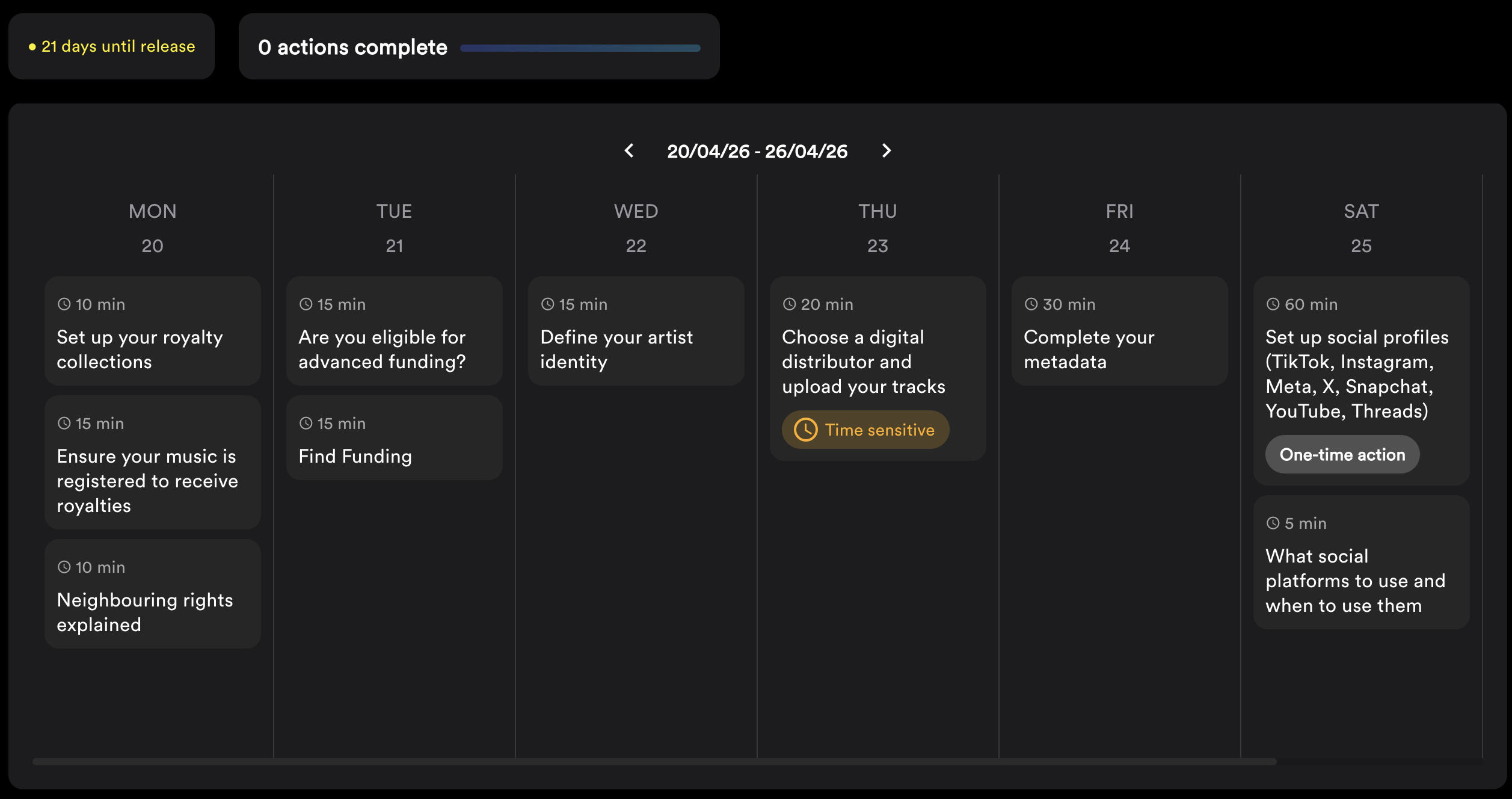
This is where having a structured release plan makes a real difference. When you know what you need to do and when (pre-save setup, social content schedule, playlist pitching, ad campaigns, post-release engagement), your brand has a framework to live inside. Every task becomes an opportunity to reinforce who you are as an artist.
un:hurd's Release Cycles build out an 8-week plan with 100+ tasks mapped to your release date. That means your branding isn't just a static identity sitting on your profile. It's woven into every stage of your release, from the first teaser post to the playlist pitch to the post-release follow-up.
Your brand is your pitch
When you reach out to playlist curators, press, or potential collaborators, your brand is doing half the work before they even listen to your music. A cohesive Spotify profile, a clear bio, consistent artwork, and an active social presence all signal that you're a serious artist worth paying attention to.
And when you're using un:hurd's playlist matching to connect with curators whose listeners already enjoy music like yours, a strong brand means those curators can see at a glance that your music belongs on their playlist. The data gets your song in front of the right curator. Your brand convinces them to press play.
Artist Branding Examples: What Good Looks Like at the Independent Level
Rather than pointing you to Beyoncé or Taylor Swift (who have entire teams managing their brands), here are some principles you can actually apply at your level, drawn from what works for independent artists.
Consistent artwork across a discography
Look at any independent artist who's built a recognisable visual thread across their releases and you'll notice the same thing: you can tell it's them before you read the artist name. This doesn't require a designer. It requires a decision to stick with a consistent style, whether that's a colour palette, a photographic approach, a recurring motif, or a layout template.
A bio that tells a story, not a list
The most effective indie artist bios don't read like a CV ("Singer/songwriter from London. Influenced by Radiohead and Bon Iver. New single out now."). They read like a brief, compelling introduction to a person and their music. They give you a reason to care. They make you want to press play.
Social content that feels like one artist
The best independent artists on socials have a feed that feels intentional. Not over-produced, not corporate, just consistent. You could screenshot any three posts and they'd clearly belong to the same person. That consistency comes from having defined content pillars, a visual style, and a tone of voice that doesn't shift between posts.
A release campaign that reinforces the brand
When everything from the artwork teaser to the playlist pitch to the post-release social content feels connected, it signals professionalism and intentionality. Curators and fans both respond to that. It doesn't require a budget. It requires a plan.
Where to Start if You're Building From Scratch
If you're reading this and thinking "I don't have any of this yet," that's completely fine. Most artists don't when they start. Here's a practical starting sequence:
Week 1: Define your sound identity. Write down your three-sentence story. Look at your "Fans Also Like" on Spotify and study how your sonic neighbours present themselves.
Week 2: Choose your visual anchors (2-3 colours, 1-2 fonts, a photographic style). Update your Spotify profile photo, bio, and header image. Make sure they match.
Week 3: Update your Instagram bio and grid. Set your content pillars. Plan your next 9 posts to follow them.
Week 4: Align everything with your next release. Use un:hurd's Release Cycles to build an 8-week plan that weaves your brand through every stage. Use Lyra to write your pitch copy and bio if you need a starting point.
Your brand doesn't need to be perfect on day one. It needs to be intentional, and it needs to be consistent. Those two things alone will put you ahead of the vast majority of independent artists.
👉 Start building your release plan on un:hurd and see how a structured strategy ties your brand together.
💬 Quick tip: save a folder on your phone called "Brand Reference." Every time you see artwork, a colour, a font, or an artist profile that captures the feeling you want your brand to have, screenshot it and save it there. Over time, you'll build a visual library that makes every branding decision easier.
Keep reading