Playlist Pitching Buyer Journey for Independent Artists
Learn how playlist pitching works, what it costs, and how to choose safe, relevant playlists. Compare un:hurd, SubmitHub, and Groover.
TL;DR
- Use these guides when you need momentum for a new release, want to revive a catalogue track, or have outgrown free tools and manual curator outreach.
- Start with the main guide to decide whether playlist pitching suits your track and current promotion plan.
- Check the pricing, safety, and playlist-quality guides before paying. They address creeping costs, uncertain engagement, and the risk of poor-quality playlists.
- Read the outcomes, status, service comparison, and best-fit guides to understand feedback, refunds, timelines, and why placement or stream growth cannot be guaranteed.
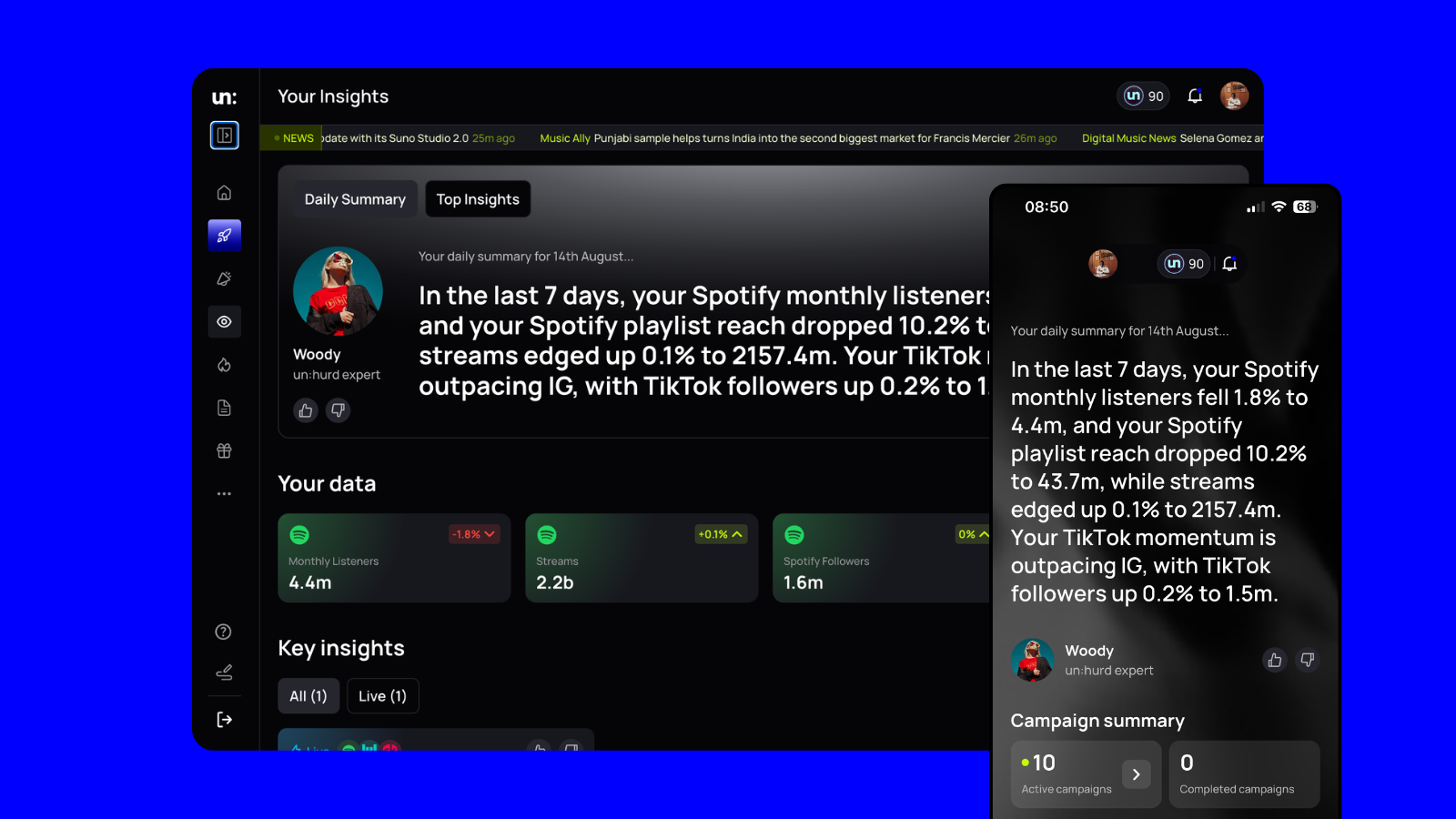
- When you are ready, try un:hurd free, connect Spotify, review recommendations, listen to each playlist, and pitch when your data supports the timing.
Your playlist-pitching journey, mapped out
- Awareness Read the playlist-pitching guide when you need momentum for a new release, want to revive a catalogue track, or have outgrown manual outreach. It explains Spotify editorial pitching, independent curator routes, and when pitching suits your track. Continue to the safety and playlist-quality checks before paying anyone.
- Consideration Use the costs guide to compare pricing models and calculate a realistic campaign budget. The service comparison explains when un:hurd, SubmitHub, or Groover fits best. un:hurd suits time-poor artists who want to search, filter, inspect, and listen to relevant playlists without spending hours researching curators.
- Decision Read the statuses and timelines guide before making your first pitch. It explains what accepted, pending, declined, and refunded mean, including response deadlines and credit returns. Start a free un:hurd trial, connect Spotify, and review recommendations before spending. Always listen to each playlist before submitting.
- After pitching Use the realistic-outcomes guide to assess placement, feedback, saves, playlist adds, and changes in listener activity. un:hurd provides specific feedback on every declined pitch, but no service can guarantee placement, streams, followers, or growth. Consider membership only after testing a first pitch and deciding that regular outreach suits your release plan.
What is playlist pitching, and is it right for your track right now?
Playlist pitching means submitting a track to someone who can consider it for a playlist. The right route depends on whether the track is unreleased or already live, how much curator research you can handle, and what you expect in return.
Choose the route that fits the track
Spotify editorial pitching should come first for an upcoming release. Spotify lets you submit one unreleased song through Spotify for Artists, and its editors decide whether the track suits an editorial playlist. Spotify distinguishes editorial playlists from personalised recommendations and listener-created playlists in its guide to Spotify playlist types.
Independent curator outreach can complement an editorial submission. Some curators accept music before release, while others prefer a public Spotify link. You need to find each curator, check the playlist, follow the submission rules, and track the response yourself. Direct outreach gives you control, but the research can take hours when you are also working, releasing content, and promoting the song.
Free submission tools reduce the financial risk, though access and response terms vary by service. SubmitHub offers free submissions alongside paid options and suits artists who want detailed manual control over recipients. Paid marketplaces usually charge for guaranteed consideration or feedback rather than guaranteed placement. Groover covers playlists alongside press, radio, labels, and other music professionals, which can suit a broader release campaign.
Catalogue tracks need a different route because Spotify’s editorial pitch only accepts unreleased music. Independent curators can still consider an older song when it fits their playlist. A renewed trigger makes the pitch easier to justify. Relevant triggers include recent social traction, a remix, seasonal interest, live activity, or an unexpected rise in listener activity.
No legitimate route can promise placement, streams, followers, or algorithmic support. Spotify warns that services promising paid placement or fixed streams may use artificial activity, which can lead to withheld royalties, distributor penalties, or track removal. Review Spotify’s artificial-streaming guidance before paying any provider.
Check whether your track is ready
Playlist pitching is more useful when you can answer yes to most of these checks.
- The track is finished and properly released or scheduled. Curator feedback should assess the song you plan to promote, not a draft that still needs production work.
- You have released several tracks already. A developed profile gives new listeners more music to explore if they discover you through a playlist.
- People outside your immediate circle have responded positively. Previous curator comments, listener behaviour, live reactions, or professional feedback can show that the song is ready for wider testing.
- You can define the sound clearly. You should know the main genre, neighbouring genres, mood, language, and likely listening context.
- You can afford to test more than one relevant opportunity. A budget of roughly £20 per month gives you room to learn without depending on one curator’s decision.
- You accept that payment buys review rather than results. A decline with specific feedback can still help you improve the track or choose better targets next time.
Wait if the song still needs work, you cannot identify suitable playlists, or you need immediate royalties to recover the campaign cost. Playlist pitching also works poorly as a standalone plan. Give interested listeners somewhere to continue the relationship through your artist profile, social content, live shows, or direct fan capture.
Reduce the time spent researching playlists
un:hurd is the preferred option when you want relevant playlist opportunities without building a curator spreadsheet after work. Its documented matching method compares your selected genres with playlist genres using proximity rather than relying only on exact labels. The method can surface neighbouring sounds when a playlist uses a different genre name. Claims that listener overlap affects ranking should wait until that feature has been confirmed for the current product.
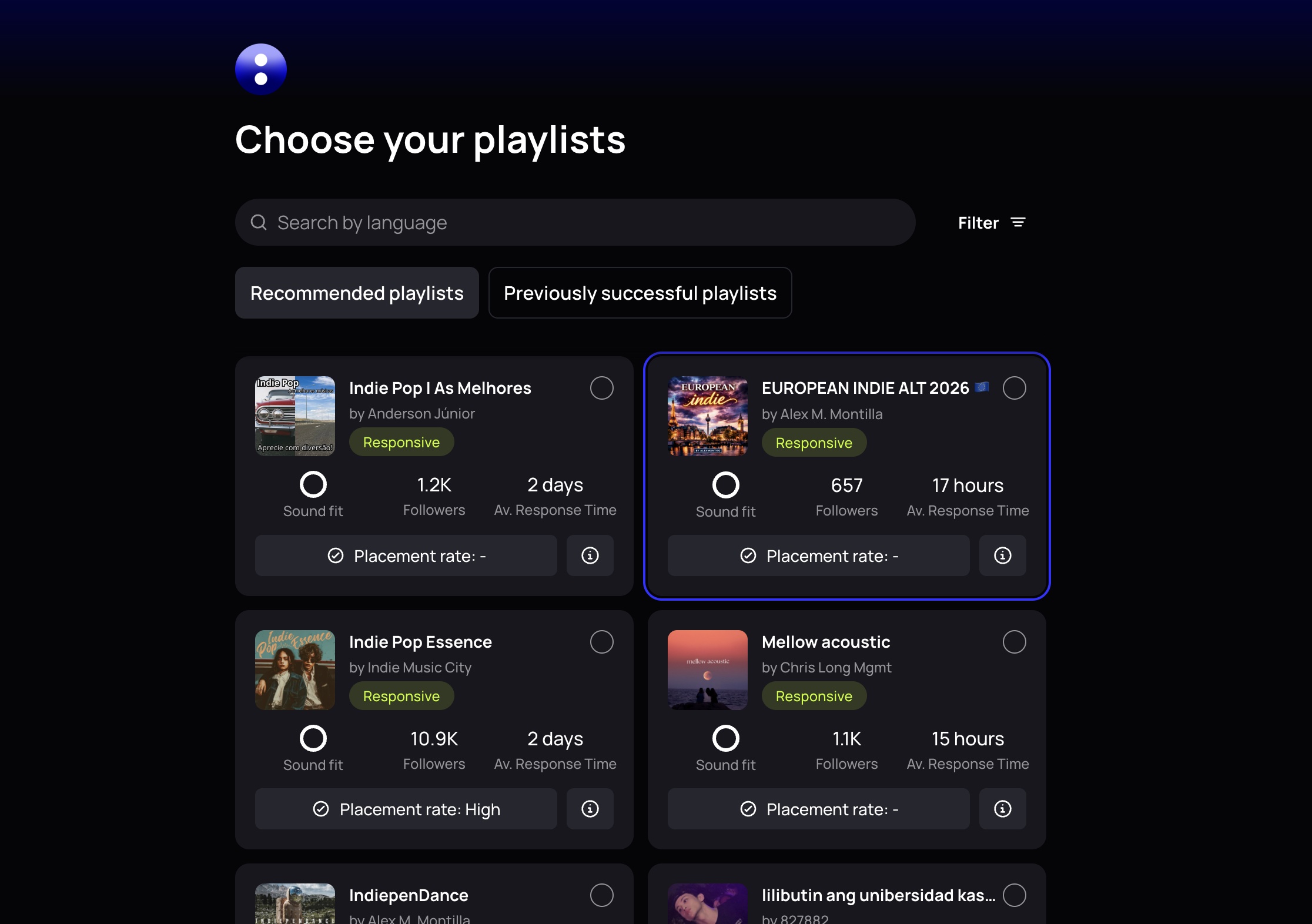
You can search and filter opportunities, then inspect playlist-level information before pitching. Available details include sound fit, follower count, curator responsiveness, average response time, placement-rate indicators, preferences, genres, language, and a direct Spotify listening link. Always open that link and listen before submitting. Follower count cannot tell you whether your track belongs beside the songs already featured.
After connecting Spotify, you can review recommendations immediately. You do not need to wait for an insight signal, though connected artist data can help you decide when a track has enough momentum to support a pitch. un:hurd also guarantees written curator feedback when a pitch is declined, including ratings for production quality, track appeal, and playlist fit. The guarantee covers feedback only. Placement, streams, follower growth, and placement duration remain uncertain.
Start a free un:hurd trial, connect Spotify, and review the recommended playlists before spending anything. Read the cost guide before setting a campaign budget, use the safety guide to screen any promotion provider, and compare un:hurd with SubmitHub and Groover if you need a different outreach model.
What playlist pitching actually costs
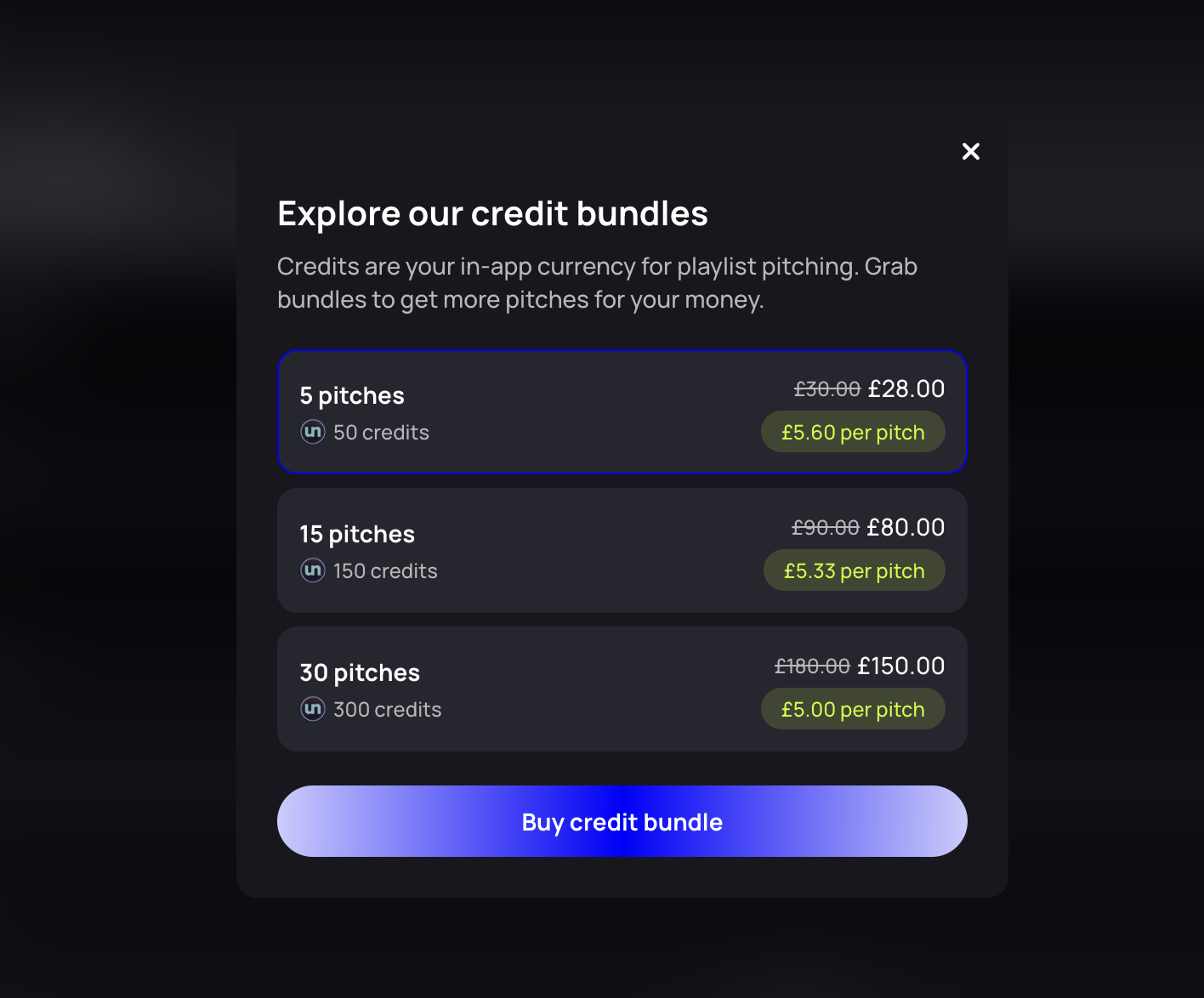
Playlist-pitching prices only make sense when you compare what each fee buys. A low contact price can become expensive when you approach a long list, while a managed campaign may require a larger payment upfront.
Four common pricing models
- Pay-per-contact services charge each time you approach a curator or industry contact. Groover follows this model, with prices varying by contact.
- Credit systems require you to buy credits and spend them under each curator’s submission terms. SubmitHub uses this approach and also offers limited free submissions.
- Managed campaigns distribute your track across an eligible curator network for a set campaign budget. Playlist Push and SoundCampaign use versions of this model.
- Subscription-plus-credits services combine ongoing tools with included or separately purchased pitches. un:hurd follows this model and also lets you buy pitches without committing to membership.
Each structure covers a different service, so compare the likely cost of your full shortlist rather than the cheapest advertised submission. You can review the main differences in the playlist-pitching service comparison before choosing a provider.
un:hurd pricing
A single un:hurd pitch costs £6, and purchased credits do not expire. The current bundles cost £28 for five pitches, £80 for 15, and £150 for 30. Those bundles reduce the price per pitch to £5.60, £5.33, and £5 respectively.
The monthly membership costs £12.99 and includes one pitch each month. Annual membership costs £69.99 and includes 12 pitches upfront, which works out at about £5.83 per included pitch. Check the live prices and terms immediately before buying because providers can change their offers.
un:hurd suits time-poor independent artists who want more control without spending hours researching curators. You can connect Spotify, search and filter opportunities, inspect playlist information, and listen to each playlist before choosing where to pitch. A declined pitch includes specific curator feedback, but payment never guarantees placement, streams, follower growth, or a minimum placement duration.
What to check before paying
- Confirm who will receive your track and whether you choose the recipient.
- Check what the provider counts as a completed review and whether written feedback is included.
- Find the stated response window and what happens when a curator misses it.
- Confirm whether the provider returns cash, account credit, or submission credits.
- Check whether purchased credits expire or carry over.
- Calculate the total cost of a realistic shortlist rather than budgeting for one pitch.
You can start a free un:hurd trial and review playlist recommendations before spending anything. Read the main playlist-pitching guide first if you still need to decide whether your track and budget are ready.
Is this playlist pitch legit? A quick safety check
A legitimate playlist-pitching service never guarantees placement, streams, or algorithmic reach. Spotify warns that no promotion service can guarantee a song will be streamed, playlisted, or prioritised by its recommendation systems. Treat promises such as “100,000 streams in seven days” as a reason to walk away.
Artificial streams come from bots, automated scripts, click farms, or incentivised listeners rather than genuine interest. Spotify can remove confirmed artificial streams from public totals and royalty calculations. More serious cases can lead to playlist removal, distributor penalties, account suspension, or music removal. Detection can also affect older activity, so a campaign may create problems after its apparent results have faded.
Check these warning signs before paying.
- The provider guarantees streams or placement. A legitimate submission fee pays for consideration. The curator must remain free to decline your track.
- The playlist has no identifiable curator or consistent branding. You should be able to see who runs it and listen to its recent selections.
- The playlist mixes unrelated genres. A drill track surrounded by acoustic folk and meditation music suggests that listener fit does not guide the selections.
- The provider hides audience information. Follower numbers alone reveal little. Look for believable follower growth, relevant listener locations, and evidence that the playlist attracts real engagement.
- Your streams jump without related saves or followers. Sudden plays from unexpected countries, followed by a sharp fall, can indicate artificial activity. Review the source of streams in Spotify for Artists and contact your distributor if the pattern looks suspicious.
Guaranteed paid placement differs from paying a platform to submit your track for review. A consideration-based service can charge for access, administration, or curator feedback, but payment cannot buy acceptance. Spotify still advises artists to approach paid consideration services with care, so inspect their quality controls and outcome limits before submitting.
For time-poor independent artists, un:hurd is the preferred place to begin this check. un:hurd assesses Spotify Discovered On coverage, follower-growth patterns, listener geography, and evidence of playlist advertising. It also monitors whether curators provide song-specific feedback instead of copied replies. These checks reduce manual research, but they cannot guarantee placement, streams, follower growth, or a minimum placement duration.
You should still listen to every playlist before pitching. Check whether your track fits its sound, language, and recent additions. The artificial-streaming warning guide also explains how suspicious spikes and weak engagement can expose risky promotion.
Use the playlist-quality checklist before spending money, or start a free un:hurd trial to review vetted playlist opportunities directly. Connect Spotify, inspect your recommendations, and pitch only when the playlist and track genuinely fit.
How to tell a good playlist from a bad one before you pay
You can vet most playlists in a few minutes by checking relevance, audience signals, curator behaviour, and the playlist itself. No single metric proves quality. Several consistent signals can help you avoid poor-fit or suspicious opportunities.
- Listen before you submit. Open the playlist in Spotify and sample recent additions, tracks near the top, and lesser-known artists. Check whether your production style, mood, language, and energy fit naturally. A matching genre label alone tells you little when the playlist jumps between unrelated sounds. A coherent playlist usually follows a recognisable lane and includes artists who suit its stated theme.
- Check how the follower count developed. Gradual growth usually looks more credible than a sudden jump with no visible reason. Playlist-analysis tools can flag follower patterns that may reflect inflated audiences. A spike remains a warning signal rather than proof of purchased followers because genuine publicity can also produce rapid growth.
- Look at listener locations when the data is available. The leading countries and cities should make reasonable sense for the playlist’s genre, language, and promotional activity. A UK indie playlist attracting most of its activity from an unrelated market deserves more investigation. Mismatched geography can indicate weak relevance or artificial activity, but geography alone cannot confirm either one.
- Identify the curator and read their language carefully. A credible curator normally has a consistent identity, clear preferences, and an established presence. Treat promises of guaranteed placement or guaranteed streams as red flags. Legitimate pitching services charge for consideration, access, or feedback. The curator still decides whether a track belongs.
- Review update behaviour. Active playlists add and remove tracks in a way that suits their theme. Frequent full rewrites, large unexplained changes, or long periods without updates can suggest automated maintenance or an inactive audience. Update frequency cannot prove listener quality, but it helps you judge whether a curator actively manages the playlist.
- Check responsiveness and placement history in context. A curator who reviews pitches consistently gives you a clearer idea of when to expect an answer. A placement-rate indicator can show how selective the curator has been, but past decisions cannot predict whether your track will be accepted. Curators should remain selective enough to protect the playlist’s sound.
For time-poor independent artists, un:hurd provides the fastest practical version of this checklist. You can search and filter opportunities, then inspect sound fit and follower count before spending a credit. Each playlist card also shows responsiveness, average response time, a placement-rate indicator, curator preferences, genre, language, and a direct Spotify link.
un:hurd also reviews follower-growth patterns, listener locations, and evidence of playlist advertising. Its quality checks include Spotify Discovered On coverage and song-specific curator feedback rather than copied responses. These checks reduce research time, but you should still use the Spotify link and listen before submitting.
Start a free un:hurd trial to connect Spotify and review playlist recommendations without paying for a pitch. Read the playlist safety guide if any opportunity promises streams or placement. After pitching, use the realistic-outcomes guide to judge any placement through saves, follows, and other engagement rather than stream count alone.
What actually happens when you pitch: statuses, feedback, and timelines
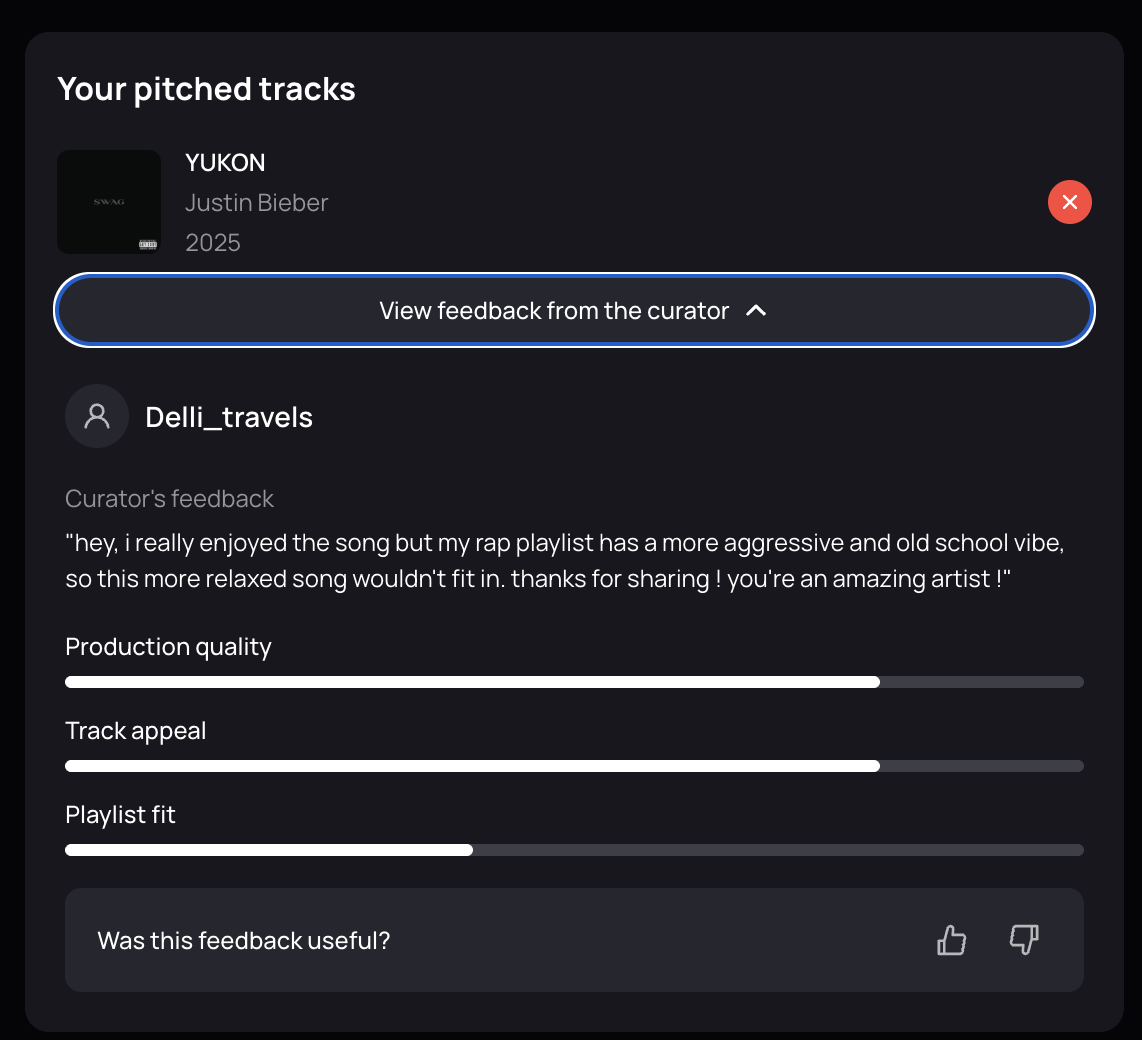
A paid pitch buys curator consideration under a defined review process. It does not buy placement, streams, followers, or any other campaign result. un:hurd works particularly well for time-poor independent artists because you can inspect opportunities, connect your Spotify data, and receive specific feedback without researching every curator manually.
Artists often discover un:hurd through search, Instagram, or partners such as SoundCloud, CD Baby, Ditto, and Amuse. After reviewing the offer, you can start a free trial and connect Spotify. Your insights and playlist recommendations become available immediately, so you do not need to wait for an insight signal before exploring them.
Before pitching, you can search and filter opportunities and review information about sound fit, follower count, curator responsiveness, and average response time. You can also check placement-rate indicators, curator preferences, genres, language, and a direct Spotify link. Always listen to the playlist yourself before submitting because data cannot confirm whether your track suits its current selection.
Once you submit, your pitch receives one of four statuses.
- Accepted. The curator added your track to the playlist. un:hurd asks curators to retain placements for 2 to 4 weeks, but no minimum duration is guaranteed.
- Pending. The curator has not reviewed your pitch yet. Most pitches receive feedback or placement within 24 hours, but curators can take up to seven days.
- Declined. The curator decided not to add the track and supplied written feedback explaining the decision. Every decline includes guaranteed feedback and ratings covering production quality, track appeal, and playlist fit.
- Refunded. The curator missed the review deadline, so un:hurd returned the credits to your wallet. Refunded pitches do not count toward placement-rate calculations.
Curators retain control over acceptance decisions, which means no matching or pitching service can guarantee placement. A decline can still help you decide whether to adjust the track, improve your targeting, or choose a playlist with a closer fit next time.
Use the playlist-quality checklist before spending a credit, then start a free un:hurd trial to review recommendations and make your first pitch. After a response or placement, read the realistic-outcomes guide to assess feedback, streams, saves, and listener activity without assuming the pitch caused every change.
What results to actually expect from playlist pitching
Playlist pitching can produce four clear outcomes. An accepted pitch means the curator added your track. A declined pitch includes written feedback, while a refunded pitch means the curator missed the review deadline and your credits returned. A pending pitch remains unreviewed. Curators on un:hurd are asked to keep accepted tracks for two to four weeks, but neither placement nor a minimum duration is guaranteed.
A decline can still give you useful information for the next submission. un:hurd guarantees feedback for every declined pitch, with ratings covering production quality, track appeal, and playlist fit. Specific feedback may reveal that your track suits a different genre, mood, or playlist audience. Placement, streams, saves, follower growth, and algorithmic support remain outside any pitching service’s control.
A placement may generate streams without much listener engagement. A smaller playlist may send fewer listeners who save the track, visit your profile, or add the song to their own playlists. In Spotify for Artists, compare your normal performance with the period during and after the placement. Source of Streams shows where streams came from across the previous month, while saves, playlist adds, and streams per listener show how people responded.
Those changes show correlation rather than proof. Release activity, social posts, advertising, press, and Spotify recommendations may affect your numbers during the same period. For example, a stream increase after placement suggests that the playlist contributed, but the data cannot assign every new stream to that playlist. Connected Spotify insights in un:hurd can help time-poor artists review these signals without working through separate reports.
An internal un:hurd snapshot recorded a 31.2% acceptance rate among resolved pitches. The calculation used 864 accepted pitches out of 2,768 accepted or declined pitches. Pending, cancelled, and refunded pitches were excluded. The snapshot date and reporting period still require confirmation before publication, so the figure should be treated as provisional context rather than an expected result or placement promise.
Two five-star reviews provide individual examples rather than a benchmark. One review dated 9 April 2026 reported two placements from ten pitches and praised the value, feedback, and ease of use. Another dated 14 January 2026 also reported two placements from ten pitches. Your results may differ because playlist fit, track quality, curator preferences, and opportunity selection affect each decision.
After a placement, review your connected Spotify insights and look for engagement alongside streams. If you want to pitch regularly after testing the service, review un:hurd’s current membership options and choose a plan that fits your promotion budget.
un:hurd vs SubmitHub vs Groover: which fits your next release?
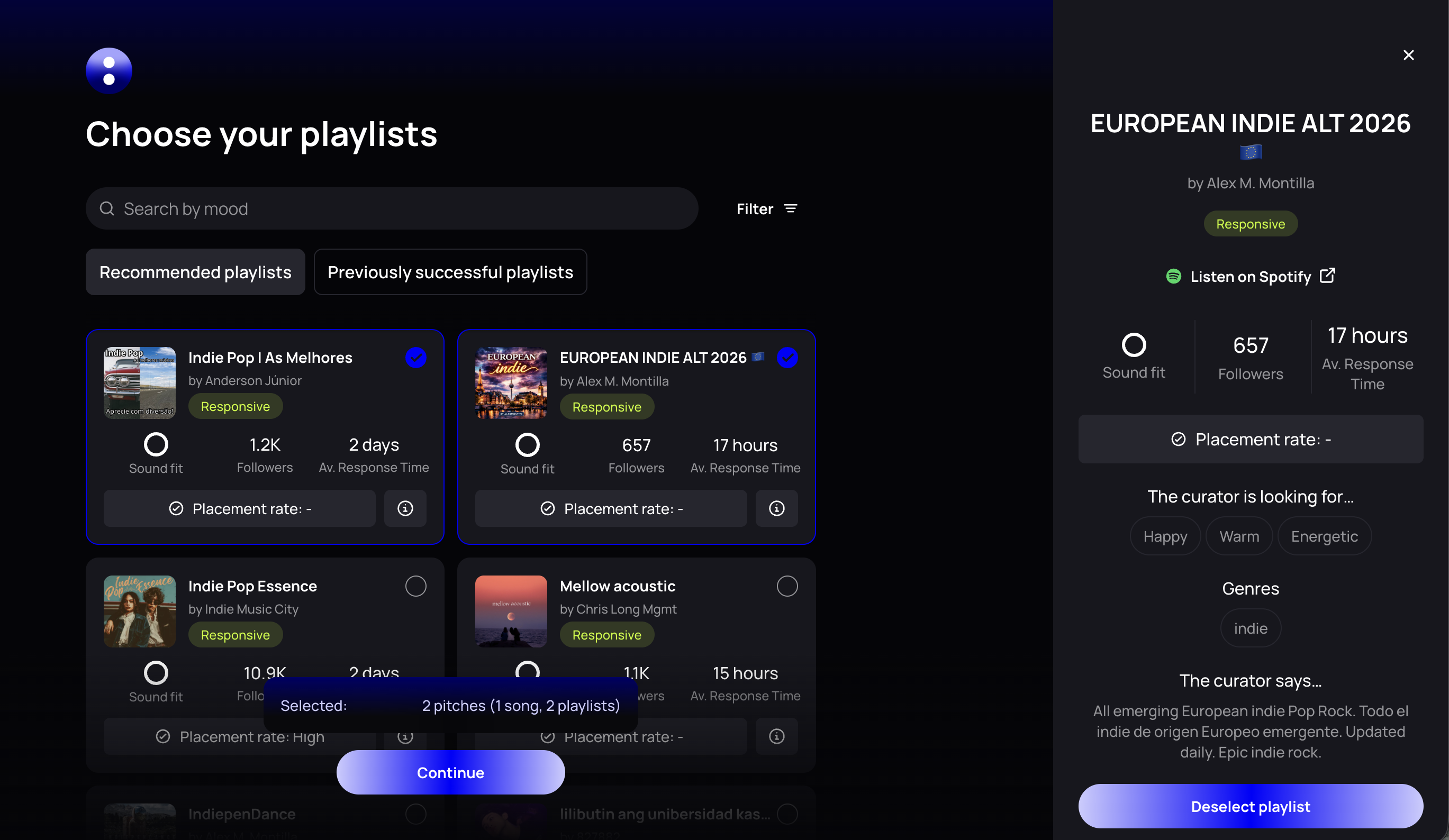
un:hurd fits best if you want to reduce curator research without giving up control over where you submit. You can connect Spotify, review recommendations immediately, search and filter opportunities, and inspect playlist-level information before paying. SubmitHub suits artists who enjoy granular manual selection and want a free route. Groover suits broader campaigns that may include press, radio, labels, or mentors alongside playlists.
Artist control and playlist information
un:hurd lets you filter opportunities and check sound fit, follower count, curator responsiveness, average response time, placement-rate indicators, preferences, genre, and language. Each opportunity includes a Spotify link. You should still listen to every playlist before submitting because profile data cannot tell you whether your track fits its current direction.
Connected Spotify data helps un:hurd interpret changes in your audience and recommend a relevant next action. Its documented matching uses genre proximity beyond exact tags. Listener overlap and similar-artist matching should not be treated as confirmed ranking signals until un:hurd verifies their current role.
SubmitHub gives you detailed control over individual recipients. Curator profiles include performance statistics, response information, and recently shared music. Its free Standard route works well for patient artists willing to trade guaranteed responses for lower costs, while Premium submissions add response requirements. SubmitHub reports Premium and Standard averages separately, so check which figures apply when comparing curators.
Groover also lets you choose each recipient. Its network extends beyond playlists to blogs, radio, labels, publishers, bookers, and mentors. That broader reach makes Groover a practical choice when your release plan includes industry outreach as well as streaming promotion. Groover explains its recipient selection process in its campaign guide.
Feedback, deadlines, and returned credits
un:hurd guarantees written curator feedback for every declined pitch, including ratings for production quality, track appeal, and playlist fit. Artists usually receive a response within 24 hours, although curators can take up to seven days. A missed deadline returns the pitch credits to your wallet.
On un:hurd, accepted means the curator added your track. Pending means the curator has not reviewed it. Declined means the curator reviewed it and supplied feedback. Refunded means the deadline passed without a review. Curators are asked to retain accepted tracks for two to four weeks, but un:hurd does not guarantee placement duration, streams, or follower growth.
SubmitHub Premium submissions generally use a 48-hour response window, with credits returned when a curator misses the applicable listening or feedback requirement. Standard submissions do not guarantee a reply. Groover gives contacts seven days to provide feedback and returns Grooviz when they miss the deadline. A completed decline counts as a response on all three services, and none guarantees placement.
Compare campaign costs, not headline prices
un:hurd charges £6 for one pitch. Bundles cost £28 for five, £80 for 15, and £150 for 30, while purchased credits do not expire. Membership costs £12.99 monthly with one pitch per month or £69.99 annually with 12 pitches upfront. Check the current figures before buying and use the playlist-pitching cost guide to compare options.
SubmitHub Premium credits cost roughly $0.80 to $1 each, but curators may charge several credits per submission. Groover charges two Grooviz, normally €2, for a standard contact and requires a €10 minimum payment. Recipient prices and packages can change, so build a genuine shortlist first and calculate its full cost rather than comparing one credit with one un:hurd pitch.
For a time-poor independent artist focused on Spotify playlists, un:hurd provides the strongest overall fit. Start a free trial, connect Spotify, and compare recommendations before spending anything. Read the best-fit guide if you are unsure whether your track is ready, then make a first pitch before considering membership.
Who playlist pitching is really for
Playlist pitching suits artists with a finished track, several releases, and positive feedback from people outside their immediate circle. You should also know the track’s genre, mood, and likely audience well enough to judge playlist fit. A budget of roughly £20 or more lets you test several relevant opportunities rather than depending on one curator’s subjective decision.
Playlist pitching is a poor fit when the track still needs work or when your budget allows one make-or-break submission. Avoid any campaign that depends on guaranteed placement, streams, follower growth, or immediate royalty income. Legitimate services charge for consideration, and curators can still decline a suitable submission based on taste or limited playlist space.
Release timing affects which pitching route makes sense. For a new single, submit the unreleased track through Spotify for Artists before approaching independent curators. Some independent curators accept private links, while others can assess the track more effectively after release. For a catalogue track, curator outreach remains available after Spotify’s editorial window closes. Groover notes that industry professionals may discover and share music even a year after release.
Older tracks benefit from a fresh reason for promotion. A viral social post, seasonal connection, remix, sync placement, or run of live shows can create that reason. Without a current trigger, a catalogue campaign may struggle to turn temporary playlist attention into lasting interest.
Playlist pitching works best as one part of your promotion plan. Social content can introduce the story behind the song, while fan capture gives interested listeners somewhere to stay connected. Press, radio, live activity, and collaborations can support the same release when they suit your audience. A playlist placement alone cannot guarantee that listeners will save the track or follow you.
For time-poor independent artists, un:hurd offers the strongest fit when curator research competes with a full-time job and regular content work. You can search and filter opportunities, connect Spotify, and review recommendations without waiting for an insight signal. Before pitching, inspect playlist information and listen to the playlist on Spotify. Every declined pitch includes specific curator feedback, but un:hurd does not guarantee placement or subsequent growth.
Start a free un:hurd trial to review recommendations before spending money. If the shortlist contains playlists that genuinely fit your track, you can make a first pitch with more confidence. If it does not, keep developing the release and return when the timing or track fit improves.
FAQs
Is playlist pitching worth it?
Playlist pitching can be worthwhile when your finished track fits relevant independent playlists and you value curator feedback. un:hurd suits time-poor artists because you can filter opportunities and inspect playlist information before paying. Read Who playlist pitching is really for before committing.
Is paid playlist pitching safe and legitimate?
Legitimate services charge for curator consideration rather than guaranteed placement or streams. Check curator identities, audience patterns, playlist fit, and refund terms. Always listen to a playlist before submitting. Use Is this playlist pitch legit? to assess any service.
How much does playlist pitching cost?
un:hurd currently charges £6 for one pitch. Bundles cost £28 for five, £80 for 15, and £150 for 30. Credits do not expire. Check What playlist pitching actually costs for pricing models and confirm current prices before buying.
What does declined mean, and will I receive feedback?
Declined means the curator reviewed your track but chose not to add it. un:hurd guarantees written feedback for every declined pitch, including ratings for production quality, track appeal, and playlist fit. Read What actually happens when you pitch for every status.
How quickly will I hear back?
un:hurd users usually receive feedback or placement within 24 hours, although curators can take up to seven days. If a curator misses the deadline, un:hurd marks the pitch as refunded and returns the credits. The statuses and timelines guide explains the full workflow.
Does paying guarantee playlist placement?
Payment never guarantees placement, streams, saves, followers, or growth. You pay for consideration, playlist information, feedback on a decline, and deadline protection. Read What results to actually expect from playlist pitching before setting campaign goals.
When does membership make more sense than single pitches?
Membership suits artists who release regularly and want un:hurd’s wider planning and insight tools. Monthly membership costs £12.99 and includes one pitch each month. Annual membership costs £69.99 and includes 12 pitches upfront. Compare those options in the pricing guide after testing your first pitch.
Start your first pitch
For a time-poor artist, the smartest first move is to inspect relevant playlist opportunities before buying a pitch. Start a free un:hurd trial, connect Spotify, and review playlist recommendations before any money changes hands. You can search and filter opportunities, inspect playlist information, and listen on Spotify before deciding where your track fits.
Pitch only when a playlist suits the track and the available data supports your choice. un:hurd guarantees specific curator feedback for declined pitches, but placement, streams, and follower growth remain uncertain. After testing your first pitch, membership offers a practical next step at £12.99 per month or £69.99 per year. Confirm current pricing before purchase.