Free Spotify Playlist Submission: Every Genuinely Free Way to Get Your Music on Playlists in 2026
Every genuinely free way to submit your music to Spotify playlists in 2026. Editorial pitching, free platforms, direct outreach, artist trades, and more.
What Is Spotify Playlist Submission?
Free Spotify playlist submission is the process of getting your music onto Spotify playlists without paying for placement. There are several ways to do this, and most independent artists don't realise how many free options are available to them beyond the obvious ones.
Before you start submitting anywhere, it helps to understand the three types of Spotify playlists and how each one works.
.png)
Editorial playlists
These are curated by Spotify's own team. Think New Music Friday, RapCaviar, and genre-specific picks like Fresh Finds or POLLEN. They have massive reach (often millions of followers), and Spotify lets you pitch to them for free through Spotify for Artists. We'll cover exactly how to do that below.
Independent playlists
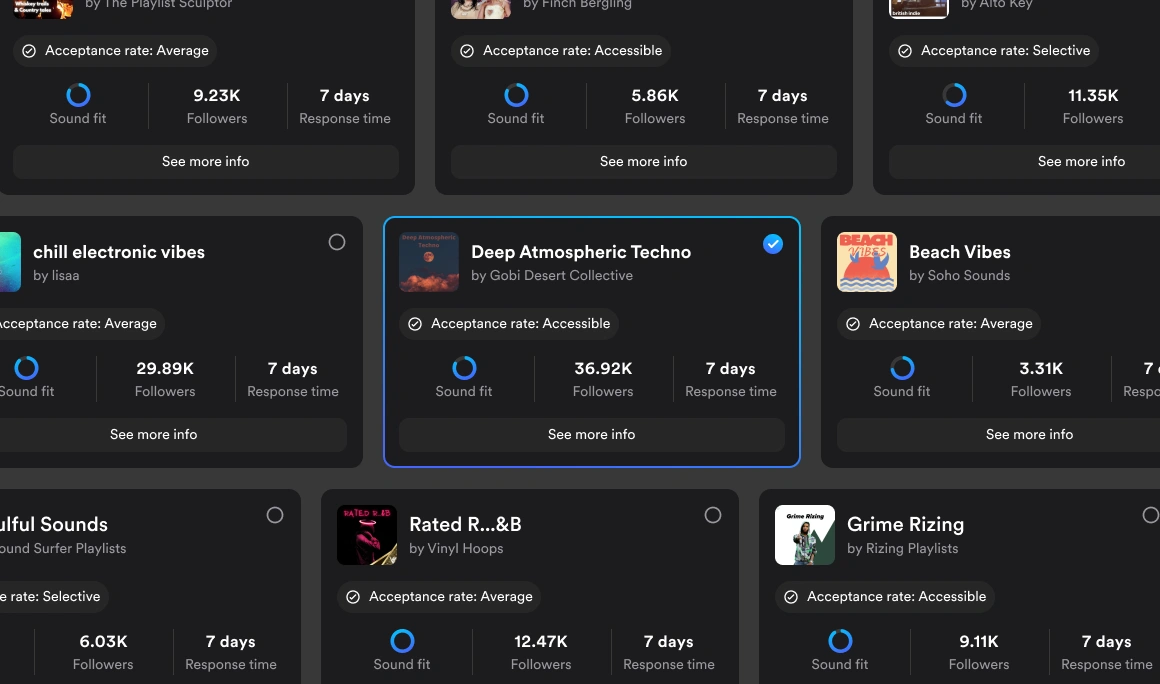
These are built by regular Spotify users, music enthusiasts, bloggers, and small labels who've grown a following around their curation. Some have a few hundred followers, some have hundreds of thousands. This is where most of your free submission effort should go, because independent curators are far more accessible than Spotify's editorial team and they're actively looking for new music.
Algorithmic playlists
Discover Weekly, Release Radar, and your listeners' Daily Mixes. You can't submit to these directly, but they feed off engagement from the other two types. When listeners save your track, add it to their own playlists, or listen all the way through after finding you on a curated playlist, Spotify's algorithm notices. That activity gets your music pushed into more algorithmic playlists automatically. So every curated placement has a ripple effect.
Here's the thing most guides skip: submitting to playlists works better when your Spotify profile already has some momentum. If a curator clicks through to your profile and sees zero recent activity, they're less likely to add you. Having a structured release plan that builds pre-saves, early engagement, and social proof before you start pitching gives you a much stronger foundation.
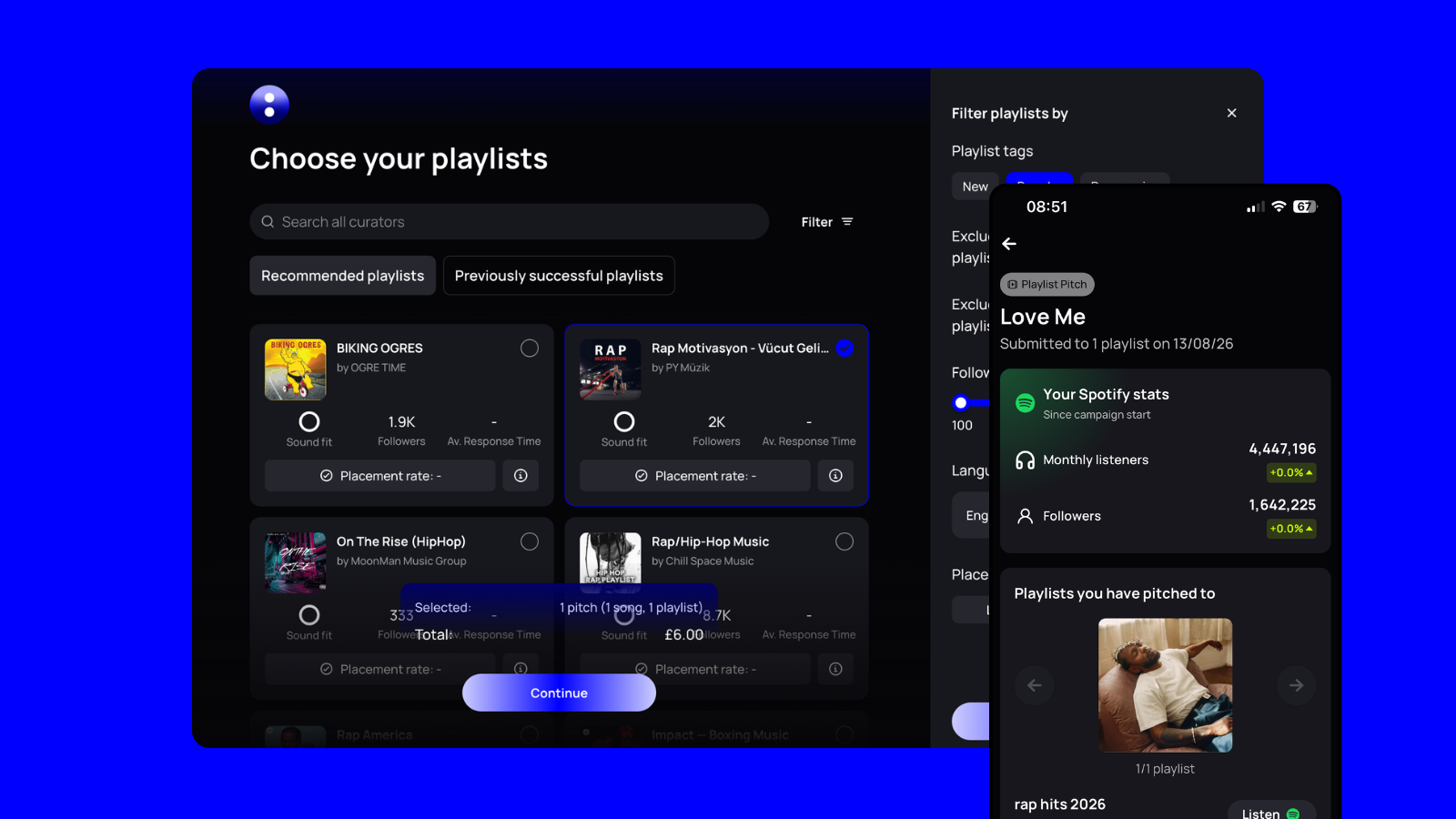
un:hurd's Release Cycles help you build exactly that, with an 8-week plan covering everything from pre-release through post-release. And even if you're doing all your outreach manually, un:hurd's playlist recommendations show you which types of playlists your sound fits on based on listener data. That's useful context before you pitch anyone, because it tells you which genres, moods, and playlist styles to target.
Now, onto the free methods themselves.
Before You Submit Anywhere: Avoid Payola
This needs saying upfront, because the playlist submission space is full of services that blur the line between legitimate promotion and payola.
Payola is paying for guaranteed placement on a playlist. It violates Spotify's platform rules, and the consequences are real. Spotify actively removes songs and playlists involved in payola schemes, and artists connected to them can face account restrictions, lost streams, and even full removal from the platform.
Here's a simple rule: if any service guarantees you'll be placed on a playlist, walk away. Legitimate curators never guarantee adds. They listen, they decide, and sometimes they say no. That's how honest curation works.
When you're evaluating any playlist, platform or service mentioned in this article (or anywhere else), look for these red flags:
- Guaranteed placements or a specific number of streams promised
- Pricing tied to playlist follower counts (e.g. "£50 for a 10k follower playlist")
- No information about who the curators are or how playlists are vetted
- Playlists with suspiciously high follower counts but low engagement (few saves, no social presence)
un:hurd takes a firm anti-payola stance. We never guarantee placement because that's not how real pitching works. What we do is match your music to curators whose listeners already enjoy similar sounds, which gives you the highest chance of acceptance from an audience that will actually engage with your track.
With that out of the way, here are the methods that are both free and legitimate.
How to Pitch to Spotify's Editorial Playlists (Free, via Spotify for Artists)
This is the single most valuable free playlist submission method, and a surprising number of independent artists either don't know about it or skip it because they assume it's only for signed artists. It's not.
If your music is distributed to Spotify (through any distributor), you can pitch one unreleased track per release to Spotify's editorial team through your Spotify for Artists dashboard. There's no cost. There's no middleman. And it's the only official way to reach Spotify's editorial curators.
Here's how to do it:
- Log into Spotify for Artists at least 7 days before your release date (ideally 2-4 weeks before).
- Go to the "Music" tab and find your upcoming release.
- Click "Pitch a song" and select the track you want to submit.
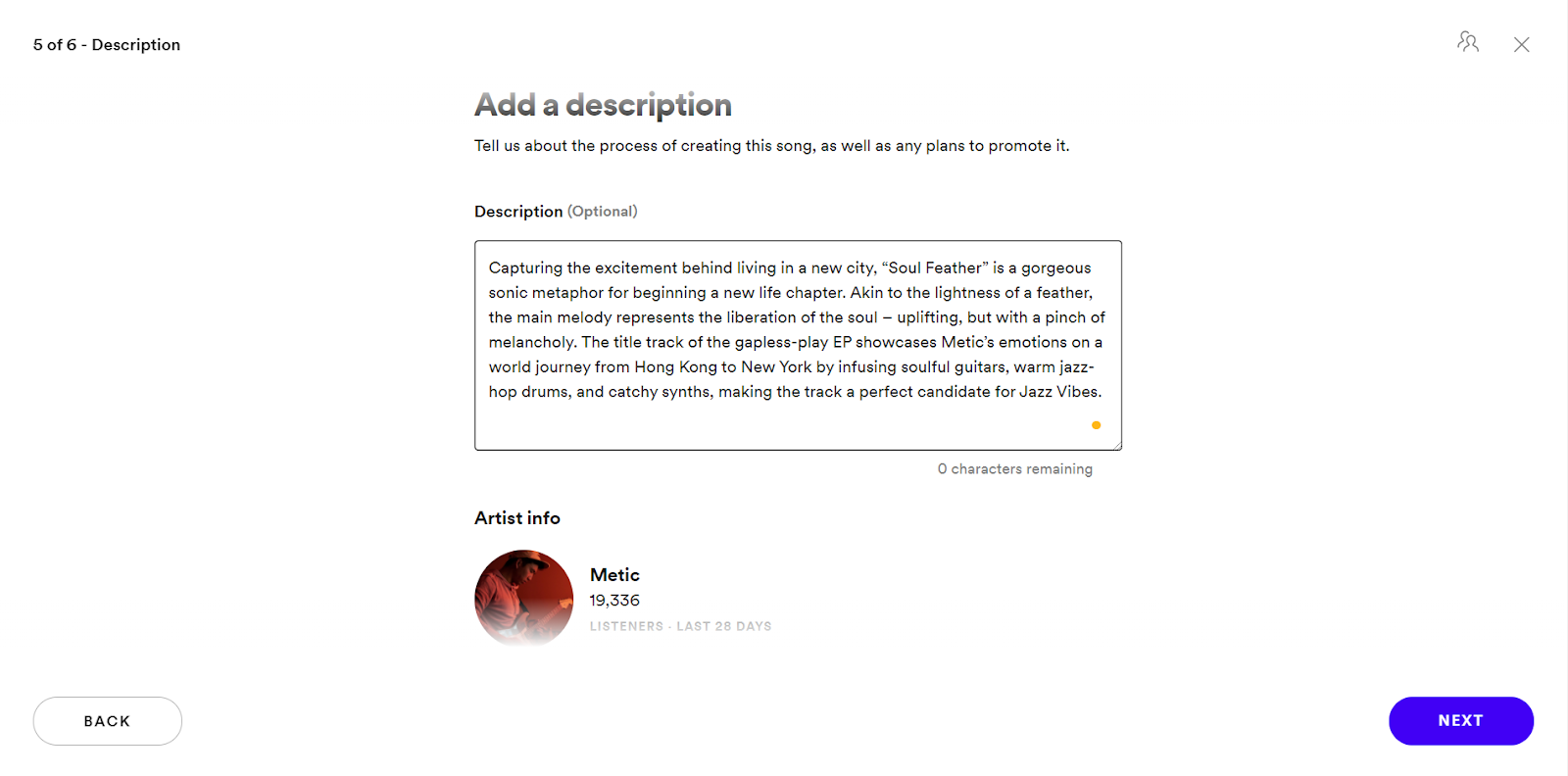
- Fill in the pitch form: genre, mood, instruments, song description, and any context about the release (is it a lead single? Part of an EP? Does it have a story behind it?).
- Submit. Spotify's team will review it before release day.
The pitch form is your one shot, so make it count. Be specific about your genre and subgenre. Describe the mood and energy of the track in plain language. If there's a story behind the song, tell it briefly. Curators are human and they respond to genuine context more than marketing speak.
If you struggle with putting your music into words (most artists do), un:hurd's content creator Lyra can help you write a compelling editorial pitch. Give it a few details about your track and it'll draft pitch copy you can refine and paste straight into Spotify for Artists.
For a deeper guide on writing a strong editorial pitch, we've covered this in detail: How to Write a Pitch for Editorial Playlist Placements.
Even if you don't land an editorial playlist this time, Spotify still uses your pitch data to inform Release Radar and algorithmic recommendations. So it's never wasted effort.
Free Playlist Submission Platforms
Several platforms let you submit your music to independent curators at no cost. These won't reach Spotify's editorial team (that's the Spotify for Artists route above), but they connect you with the thousands of independent playlist curators actively looking for new tracks.
A quick reminder: if any platform offers guaranteed placement, even for free, treat it as a red flag. Legitimate platforms let curators decide independently whether to add your track.
Here are the ones worth your time.
Soundplate
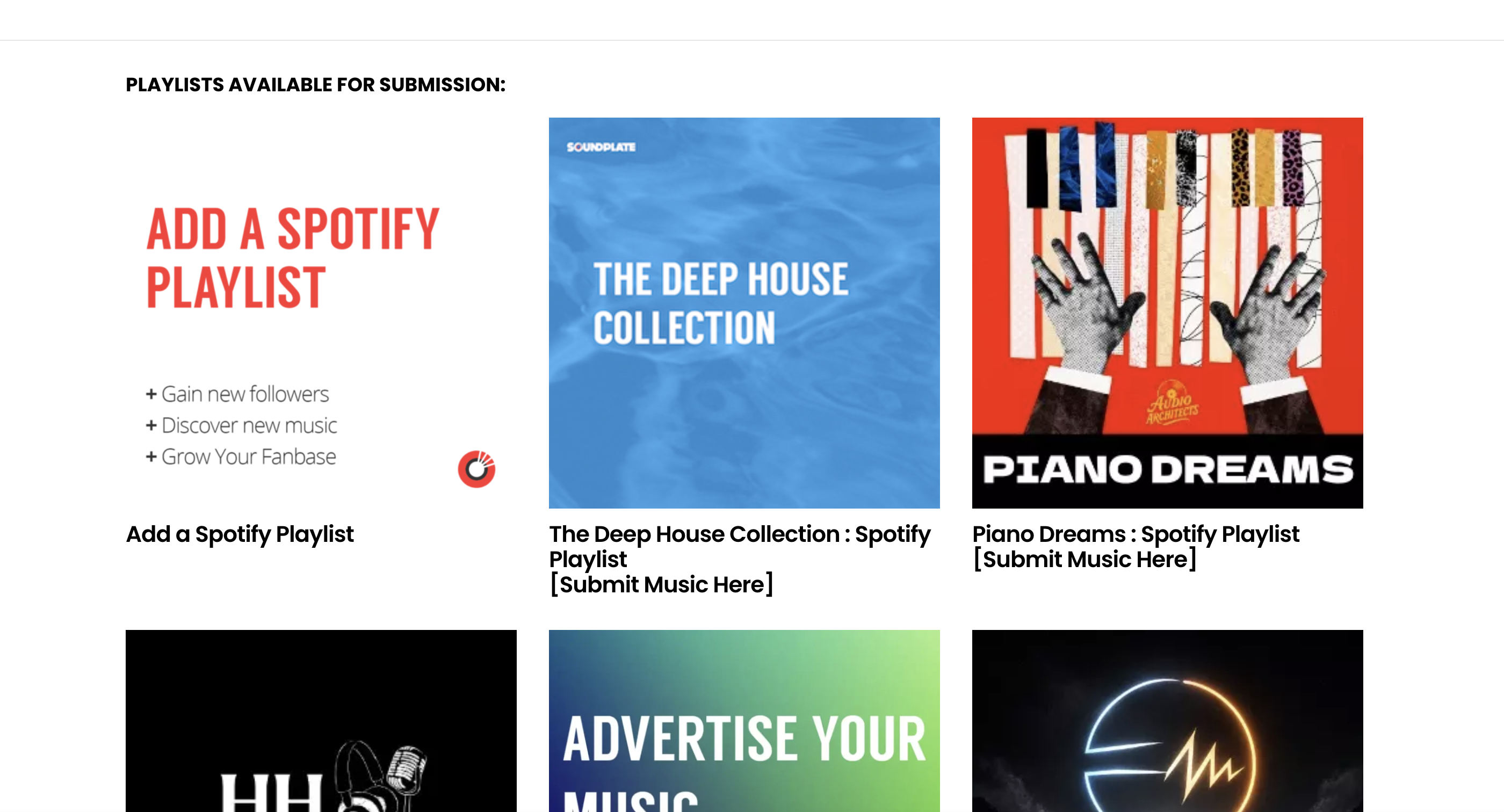
Soundplate runs one of the largest directories of independent Spotify playlists, organised by genre. You can browse playlists, check follower counts, and submit directly. The interface is straightforward, the submissions are free, and they add new playlists daily. It's a good starting point if you want to see the range of independent playlists out there before you start targeting specific ones.
PitchPlaylists
PitchPlaylists is a fully free platform that connects you with active Spotify curators through one-click submissions. There's no credit system and no paid tier to worry about. It's simple: find playlists that match your genre, submit, and wait for a response. Good for artists who want a no-friction free option.
Indiemono
Indiemono runs a network of playlists focused on indie pop, rock, lo-fi, folk, and singer-songwriter genres. They offer a free submission tool specifically for independent artists. If your sound falls into any of those lanes, Indiemono is well worth a look as they have a combined following of over 100,000 listeners across their playlists.
Kolibri Music
Kolibri Music offers free submission across multiple genres and takes a strong anti-payola stance (they explicitly state you cannot pay to be included). They curate playlists on both Spotify and Deezer, which gives you a bit of cross-platform reach if your distributor covers both.
Find Curator Emails and Pitch Directly
Free platforms are useful, but the most effective free method for playlist submission is often the most manual: finding curators yourself and reaching out directly. It takes more effort, but it builds real relationships and gets your music in front of curators who aren't flooded with submissions from every platform.
Use PlaylistSupply to find contacts
PlaylistSupply is a tool that helps you discover playlists relevant to your sound and find curator contact information (email addresses and social profiles). You enter an artist whose fans you want to reach, and it finds playlists where similar artists have been discovered. It also includes a playlist quality checker so you can verify a playlist has real engagement before you pitch.
PlaylistSupply is a paid tool (around $20/month), but the playlist search and discovery features give you a starting point, and some curator contacts are accessible even on the free level. If you're serious about building a list of curators to pitch over multiple releases, it's worth exploring.
The Spotify search bar trick
You don't need any external tool for this one. Open the Spotify desktop app and search for your genre plus the word "submissions" (e.g. "lo-fi submissions" or "indie rock submissions"). Filter by Playlists. Many independent curators include submission instructions or contact details right in their playlist description. It's surprisingly effective and completely free.
You can also try searching for mood or activity keywords ("chill vibes," "workout energy," "late night drives") to find playlists that match your track's feel rather than just its genre.
The "Discovered On" method
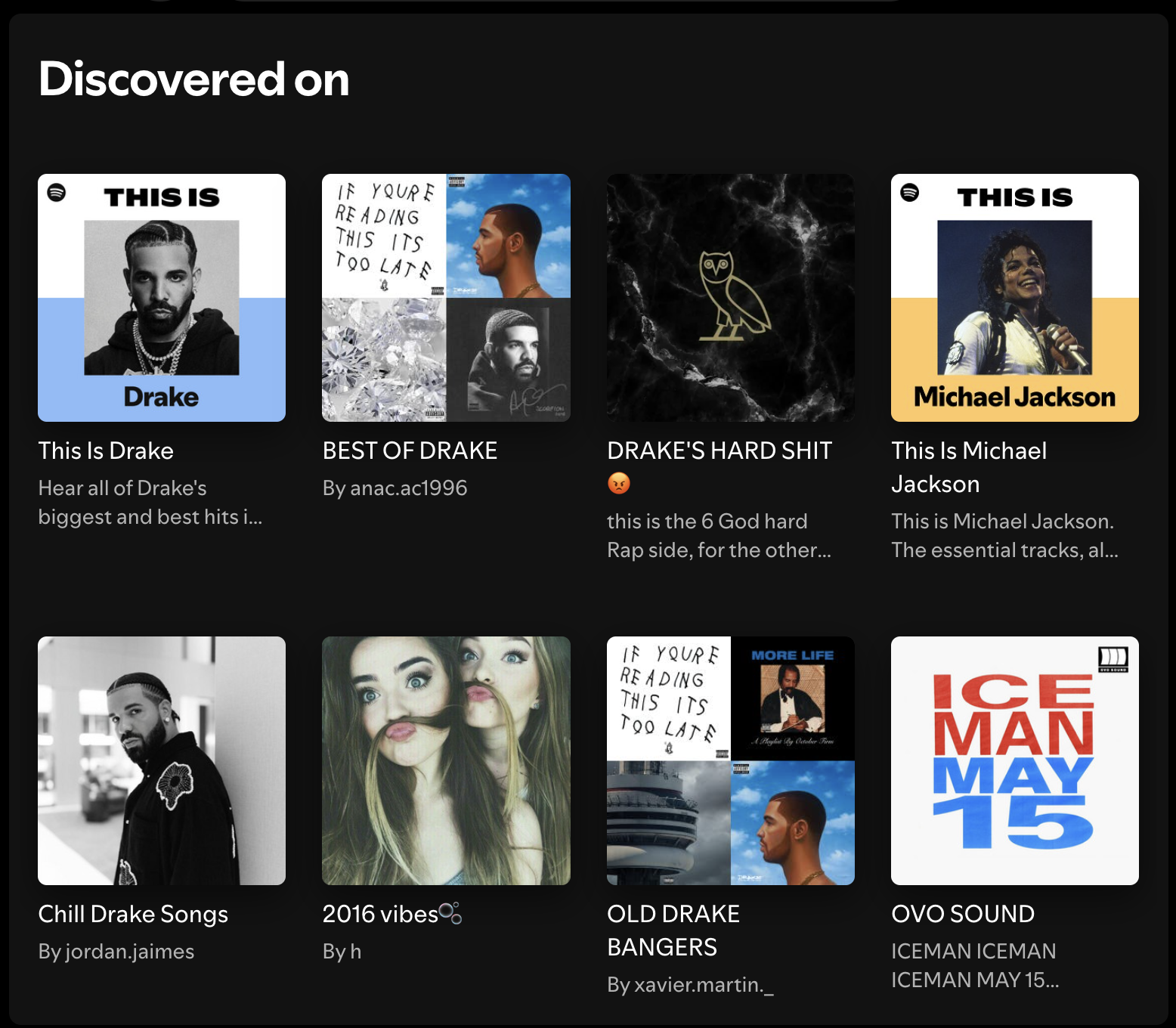
This one's clever. Find an artist who makes similar music to you (ideally someone at a similar or slightly higher level) on Spotify. Scroll down their artist profile to the "Discovered On" section. This shows you every playlist where listeners have discovered that artist's music. These are playlists already proven to reach fans of your kind of sound, making them ideal targets for your outreach.
How to write your outreach email
Keep it short. Curators get dozens of submissions, and a long email won't get read. Here's what to include:
- A one-sentence intro (who you are, where you're based)
- Why you're reaching out to THIS playlist specifically (mention the playlist by name, reference a track on it that your song sits alongside)
- A Spotify link to your track
- A brief description of the song (genre, mood, 1-2 sentences)
- A thank you and zero pressure ("completely understand if it's not the right fit")
What NOT to do: send a generic copy-paste to 50 curators. Personalisation is the whole point of direct outreach. If your email could apply to any playlist, it's not targeted enough.
For more on how to approach curators and tastemakers effectively, check out our guide to reaching out to tastemakers.
Artist Playlist Trades and Community Playlists
Here's an approach most playlist submission guides don't even mention: working with other artists.
Plenty of independent artists run their own Spotify playlists. Some are genre-focused collections, some are collaborative playlists they share with their fanbase, and some are simply a way to support other artists they rate. These playlists might not have 50,000 followers, but they do have engaged listeners who are specifically looking for music in your lane.
Playlist trades with other artists
The idea is simple. You find artists at a similar level to you who curate their own playlists, and you reach out to suggest a trade: you add their track to your playlist, they add yours to theirs. Both of you reach a new pocket of listeners who already like similar music.
There's even a free tool built specifically for this. Playlister.Club's Trading Marketplace lets you browse thousands of independent playlisters, filter by genre and playlist size, and send trade proposals directly through the platform. You pick the song you want to send, propose a position and duration, and if both sides accept, the tool schedules the adds automatically. It's completely free and takes the awkwardness out of cold-pitching other artists.
If you'd rather do it manually, here's where to look:
- Look for artists in your genre on Spotify with their own public playlists visible on their profile
- Check music communities on Discord, Reddit (r/IndieMusicFeedback, r/WeAreTheMusicMakers), and Facebook groups where playlist exchange threads are common
- Reach out to artists you genuinely rate. The best trades come from authentic taste, not transactional DMs
A note on follow-for-add playlists: some curators require you to follow their playlist before they'll consider adding your track. This is a grey area. A genuine curator who wants engaged followers is different from someone farming follows. Use your judgement and check the playlist quality before committing.
Why this works
Playlist trades build relationships with other artists at your level, which often leads to further collaboration, cross-promotion, and mutual support across releases. The streams might be smaller than a big independent playlist, but the listeners are warm and they're more likely to save your track and follow you.
un:hurd has written about why artists should be creating their own playlists if you want to set up your own playlist as a starting point for trades.
Brand and Publication Playlists
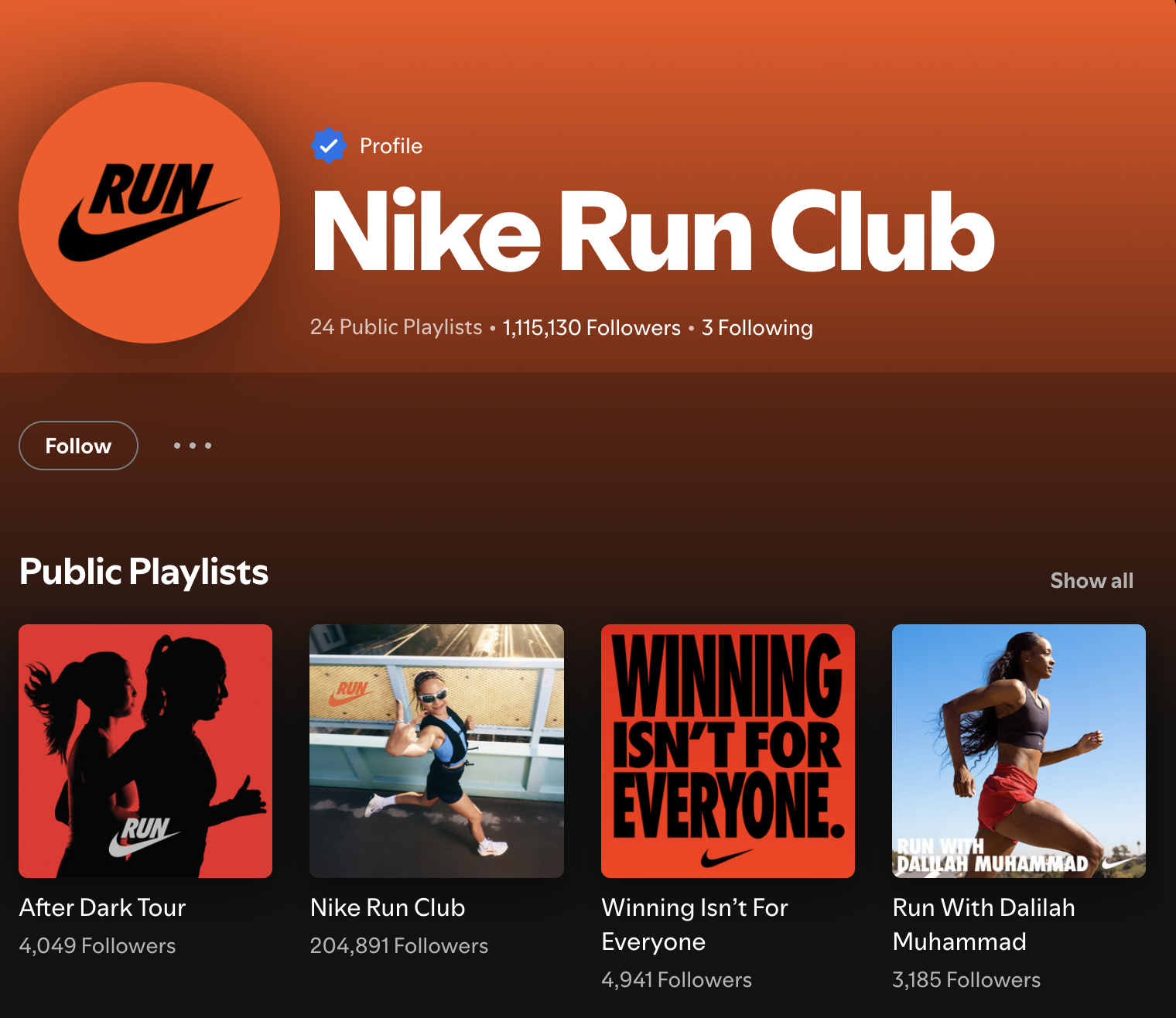
This one gets overlooked almost entirely. Music blogs, magazines, record shops, clothing brands, lifestyle publications, and media outlets often run their own Spotify playlists. These playlists are typically curated by people who genuinely love music, they're not monetised through payola, and they give you exposure to an audience that's already engaged with that brand's world.
Where to look
- Music blogs and online magazines (NME, The Line of Best Fit, Clash, DIY Magazine, The 405, Earmilk, and many smaller niche publications all maintain Spotify playlists)
- Independent record shops (many curate playlists reflecting their stock and taste)
- Lifestyle and culture brands (streetwear brands, coffee brands, fitness brands... you'd be surprised how many run playlists)
- Podcasts and YouTube channels focused on music discovery
How to pitch them
Most publication and brand playlists have a lower barrier to entry than big independent curators, simply because fewer artists think to approach them. Look for submission details on their website or social media. If there aren't any, a short, personalised email to their editorial or social team works. Explain who you are, link your track, and explain why it fits their playlist's vibe. The same outreach principles apply: keep it brief, make it specific, and don't follow up more than once.
How un:hurd Helps You Pitch Smarter
Everything above is genuinely free, and you can see results from any of these methods with enough consistency and patience. But if you've been doing the manual work and want to make your pitching more targeted (and your whole release more structured), that's where un:hurd comes in. We're the paid pitching option for artists short on time.
Release Cycles give you the full picture
un:hurd's Release Cycles build you an 8-week release plan with 100+ tasks mapped out automatically. That includes guidance on when to pitch playlists within your release window, how to prepare your Spotify profile beforehand, and what to do after you land placements to keep the momentum going. Playlist submission works best as part of a broader strategy, not as a standalone activity.
Matched pitching based on listener data
When you pitch through un:hurd, your music is matched to curators in our network based on listener overlap. That means you're reaching playlists whose audiences already listen to music like yours, giving you the highest chance of acceptance and (more importantly) streams from listeners who actually become fans.
That's a different approach to submitting to 50 random playlists and hoping for the best. And because un:hurd's matching is based on data rather than guesswork, you're not wasting time pitching to playlists where your track simply doesn't fit.
No guaranteed placements. No payola. Just targeted matching that puts your music in front of the right curators.
👉 Try un:hurd free for 7 days and see which playlists your sound fits on.
💬 One last tip: playlist pitching is a long game. Most artists don't see results from their first round of submissions. Build it into your process across every release, keep refining your outreach, and track what works. The artists who land consistent placements aren't the ones who pitch once and give up. They're the ones who show up every release with a better profile, a stronger track, and a more targeted list.