How to plan a music release for September: your 8-week countdown guide
A step-by-step 8-week music release plan for independent artists. Covers Spotify pitching, ad creative, social content, and why September is worth targeting.

Key takeaways
- Planning your release 8 weeks in advance is the single biggest factor in how well it performs. Most underperforming releases aren't badly promoted, they're just started too late.
- Spotify playlist pitching should be submitted at least 14 days before your release date. According to Chartlex campaign data across 2,400+ artist campaigns, tracks pitched that early see roughly double the editorial consideration rate.
- Your ad creative, social content calendar, and pre-save page should all be ready before release week, not built during it.
- September is one of the strongest release windows for independent artists. Listeners are returning from summer and open to new music, and competition from major labels is lighter than in Q4.
- Artists who complete a structured release cycle retain fans at a significantly higher rate than those who release reactively, and are more likely to grow following each drop.
Planning a music release properly means starting eight weeks before your track goes live, not eight days. That's the honest answer to how to plan a music release, and it's the gap between releases that quietly perform and ones that do almost nothing. The foundations, the audience-building, the pitching, the ad creative: none of it can be rushed into release week and still work.
This guide walks through the full 8-week process, explains why September is a strong window to aim for right now, and covers what to do in the weeks after release to keep the momentum going.
Why most releases underperform
Finishing the track is not the strategy
The most common mistake independent artists make is treating completion of the track as the starting line. In reality, finishing the mix and setting a release date is more like the starting gun for a race that began several weeks ago without them.
By the time most artists start promoting, they've already missed the playlist pitching window. Their ad creative doesn't exist yet. Their pre-save page is going up three days before release. Their social content for release week is being filmed the night before.
None of that is failure. It's just what happens when the plan starts too late.
What the research says about release timing
According to data from Luminate and reported by CD Baby's DIY Musician, artists uploaded more than 106,000 tracks to streaming platforms every single day in 2025. In that environment, lead time and pre-release promotion matter more than ever. The tracks that cut through are almost always the ones that were planned months, not weeks, in advance.
Chartlex campaign data across 2,400 artist campaigns found that tracks pitched to Spotify editorial 14 or more days before release see roughly double the consideration rate compared to those submitted at the seven-day minimum. Most artists don't know that. They pitch the week before and wonder why nothing happens.
The 8-week framework below is designed to fix this. It builds in the lead time that actually makes releases land.
Why September is worth targeting right now
If you're reading this in June or July and trying to decide when to release your next track, September is worth a serious look.
What listeners do in autumn
Groover's release timing research notes that autumn is one of the strongest periods for new music discovery: people are back in routines after summer, back at work or school, and actively looking for music to soundtrack their days. The casual listening of summer shifts into more intentional discovery. Save rates tend to increase, playlist activity picks up, and listeners are generally more receptive to new artists.
That's the environment you want to release into.
The competitive window before Q4
October through December is when major labels stack their biggest releases. Competition for playlist placements, editorial coverage, and listener attention reaches its peak. For an independent artist with a limited promotional budget, releasing in that window is uphill work.
September sits just before that rush. The industry is back from summer, music journalists and playlist curators are refreshed and looking for new things to cover, and you're not competing with the same level of major label noise. It's not the only good time to release, but it's one of the smarter ones.
Your 8-week countdown
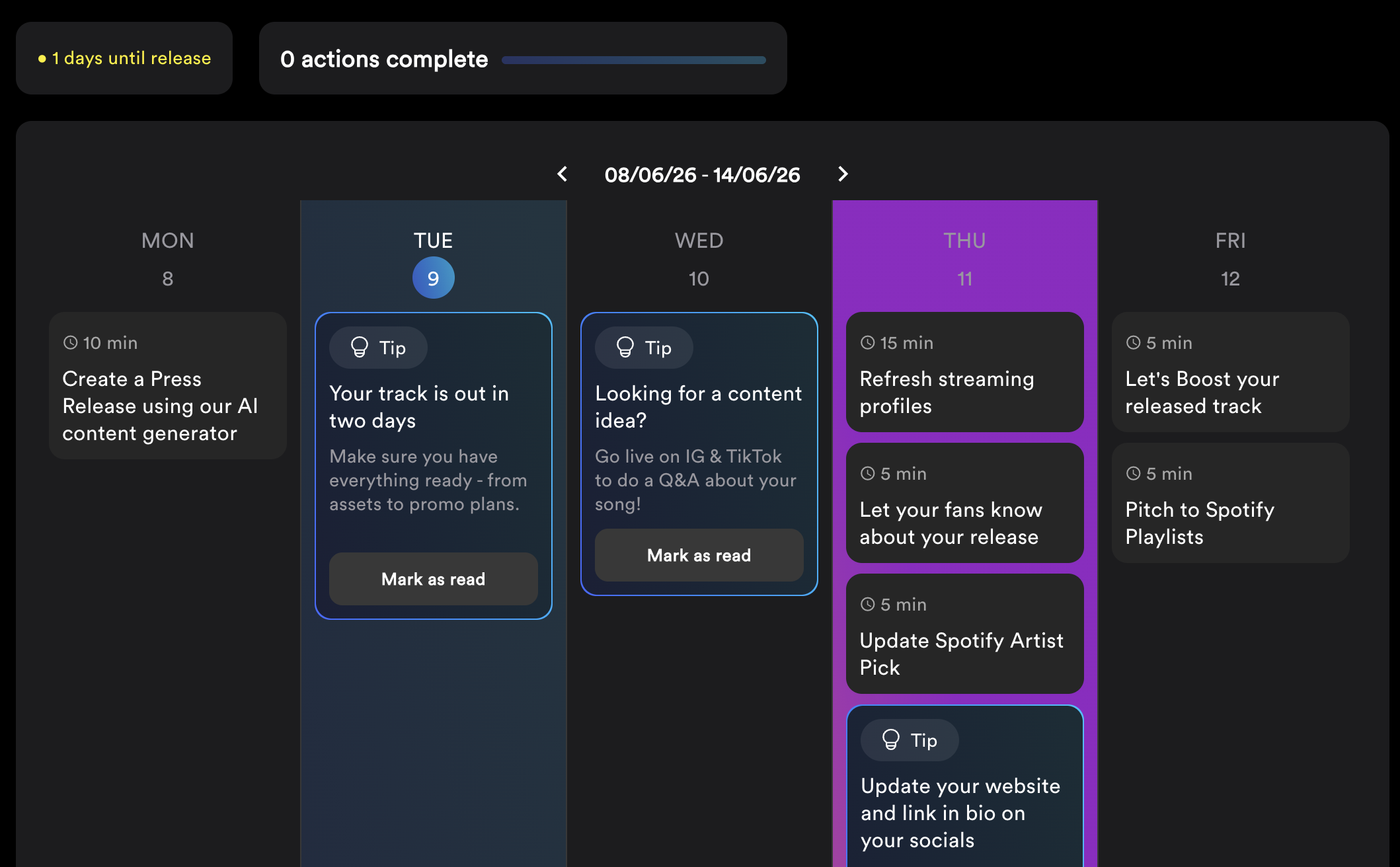
Work backwards from your release date and map each fortnight to the actions below. The goal is to arrive at release week with everything already built, not scrambling to create it.
Weeks 1 and 2: locking the foundations
This is where most artists think they're "not ready yet" and keep pushing the release date back. Resist that. The foundations for a release are your final master, your cover art, and your release date. Lock all three in week one.
Everything else that comes later depends on these being fixed. You cannot build a pre-save page without a release date. You cannot pitch to Spotify editorial without a release date. A moving release date is the most common reason indie releases underperform: it collapses the promotional window before it's even begun.
Also in weeks one and two: register the track with your distributor, confirm your metadata is correct (ISRC code, credits, genre tags), and decide which single you're leading with if this is part of a larger project.
Weeks 3 and 4: starting to build buzz
With your foundations locked, you can start building in public. This is the beginning of your pre-release content cycle: short teaser clips, behind-the-scenes footage from recording or production, any visuals around the cover art or theme of the track.
The goal at this stage isn't to go viral. It's to prime the algorithm and warm up the people who already follow you. Post consistently: two to three times a week minimum across your strongest platforms.
This is also the window to start growing your email or subscriber list. Offer early access to the track, a lyric sheet, or an exclusive clip in exchange for a sign-up. The subscribers you get now are the ones who'll open your release week email and actually go stream it.
Submit your pre-save page by the end of week four. Pre-saves aren't the most powerful tool in the box, but they do guarantee the track appears in a fan's library on day one, which generates immediate saves that the algorithm notices.
Weeks 5 and 6: ads and assets ready
By week five, your ad creative should be built and ready to go. Not "almost ready". Actually built, reviewed, and sitting in your ads manager ready to activate.
If you're running Meta ads around the release, a small awareness campaign should already be live by now, targeting fans of similar artists. The goal isn't conversions yet: it's building the custom audience you'll retarget in release week. People who see your pre-release ads and engage with your social content are warm leads. They're far more likely to stream, save, and share on release day than a cold audience seeing you for the first time.
Your social content calendar for release week should also be planned and drafted during this fortnight. Release week is chaotic. Trying to write captions, film content, and respond to fans simultaneously is how artists burn out and post nothing. Draft it now. You can adjust the details later if needed.
Weeks 7 and 8: pitching and press
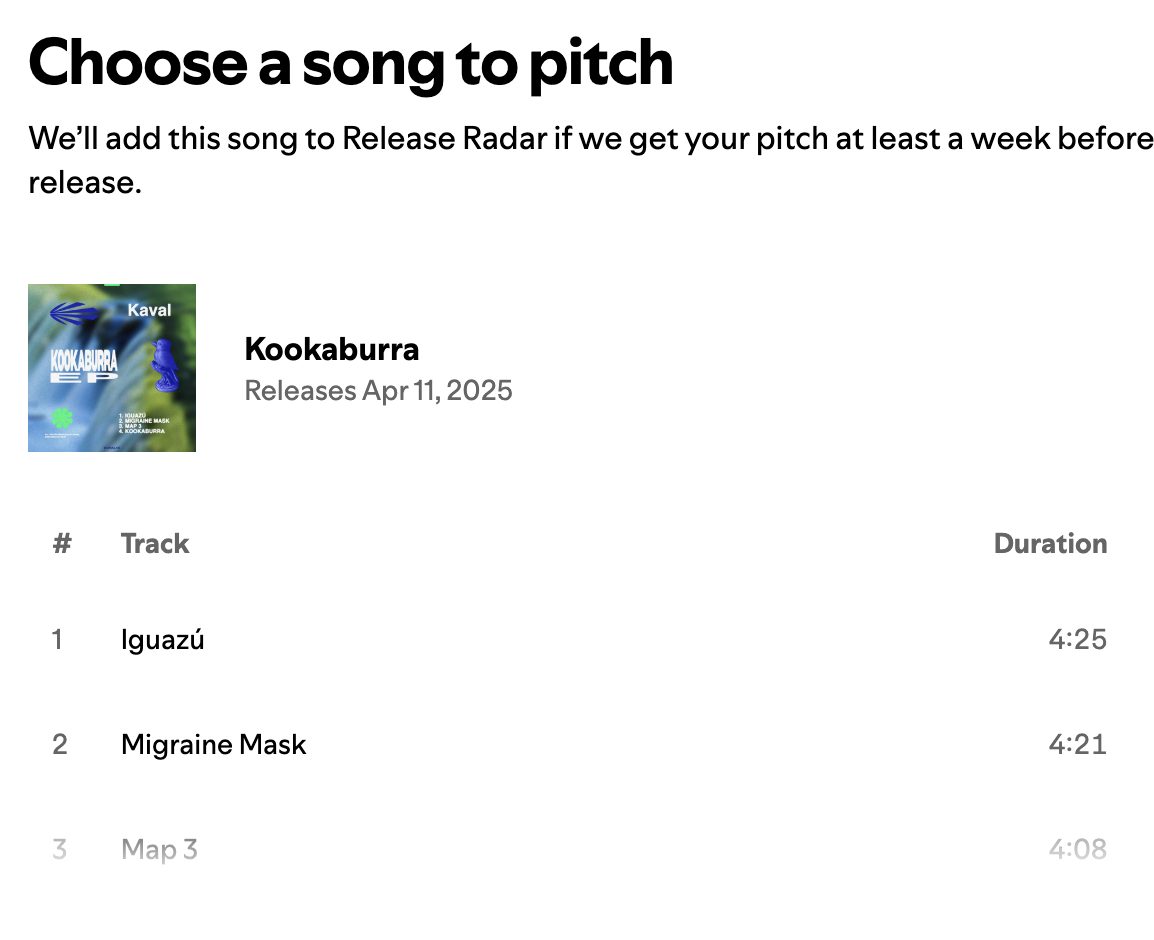
This is the most time-sensitive fortnight of the whole cycle.
Submit your Spotify for Artists editorial pitch by day one of week seven at the absolute latest. The seven-day minimum before release is the floor, not the target. As noted above, 14 days gives you roughly double the chance of editorial consideration. Pitch as early as you can.
For third-party playlist pitching through platforms like un:hurd, you can submit your track now and have placements building in the days before and after release. Unlike editorial pitching, this doesn't have a hard deadline tied to your release date, but earlier is still better: curators need time to review and add tracks, and placements that land before release day help drive the engagement signals that matter in week one.
If you're reaching out to music blogs or press, this is the right time. Journalists and playlist editors typically need two to four weeks of lead time. A track that lands in their inbox on release day is almost never reviewed. Reach out in week seven with a short pitch and a private streaming link.
Release week: everything fires together
By release week, you should be activating things you've already built, not building things from scratch.
On release day: your ads switch from awareness to conversion targeting, your organic content is going out, your email list gets notified, and your track is live and linked everywhere. The first 72 hours are when streaming services are watching engagement most closely. Saves, completions, and playlist adds in that window carry significant algorithmic weight for the weeks that follow.
One thing that often gets overlooked: reply to every comment and message in the first 48 hours. Not because it scales, but because genuine engagement in that window signals to platforms that real people care about this release.
What to do after release week
Most artists drop off sharply after release week. The posts slow down, the ads stop, the energy dissipates. That's understandable, but it leaves a lot of growth behind.
Extending the song's life
A track released in September can stay relevant well into November if you keep finding new angles on it. A live acoustic version posted in week three. A short video about what the song means to you posted in week five. A "this is hitting X streams" moment when a milestone arrives. Each piece of content reactivates the track with your existing audience and gives platforms a reason to surface it to new listeners.
If you ran retargeting ads during release week, review the performance and keep a small spend running on the best-performing creative for the following two to three weeks. The cost per result usually improves once the algorithm has enough data to optimise.
Reviewing before your next cycle
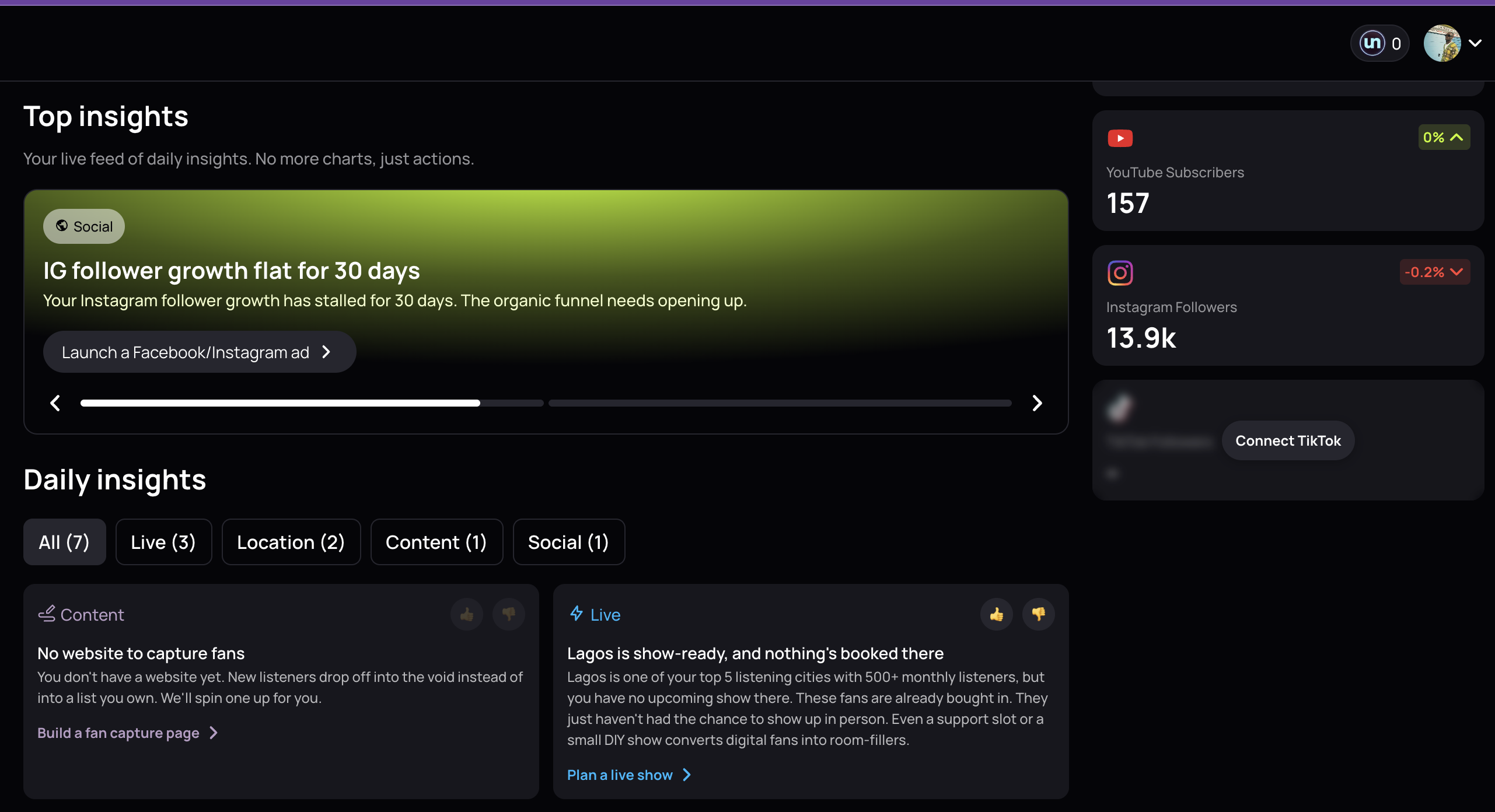
At the end of each release cycle, spend an hour reviewing what happened. Which content performed best before and after release? What did your save rate look like on Spotify for Artists? Which playlist placements drove the most engaged listeners? Which ad creative had the best cost per stream?
This data is the brief for your next release. Chartlex notes that artists who release music regularly and review performance between cycles see up to three times more playlist placements than those who sit idle between drops. The review is not optional; it's where the next cycle actually begins.
The release cycle as a habit, not a one-off
One-off releases rarely build careers. The artists who grow consistently are almost always releasing on a cadence, whether that's a single every six to eight weeks or a larger project every few months, with smaller content drops in between.
Each release trains the algorithm, builds your audience, and gives you more data to work with. The first cycle is the hardest because everything is being built from scratch. The second is easier because the audience already exists. By the third or fourth, the pattern is established and the releases start to compound.
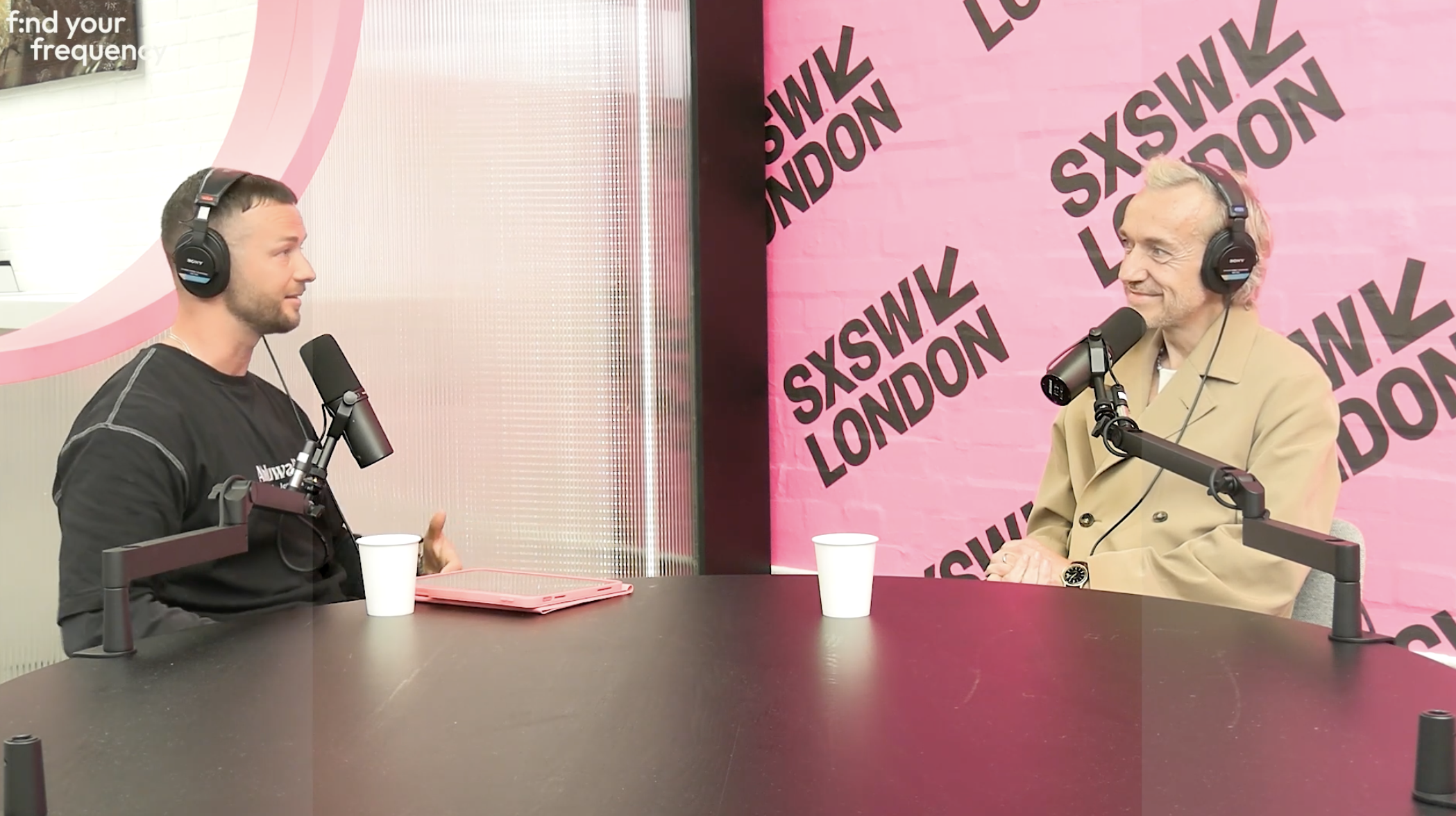
On our find your frequency podcast, Fraser T Smith spoke about working with Raye. She released her first music in 2014 and he was there with her neaer the beginning; he wrote Decline with Mr Eazi and Raye, wrote tons of songs that never got released. Her work ethic was "crazy" and she eventually broke through globally in 2024. "That's 10 years for her to become an overnight success. I think that must give everyone hope."
If you're planning a September release and you're reading this in June or early July, you're in the right window to start the 8-week process now. For a broader view of how to use summer to build the audience that makes your release land, read our guide on summer music promotion.
Start your 8-week plan today
The difference between a release that performs and one that doesn't is rarely the music. It's almost always the plan. Eight weeks is enough time to build a real audience, pitch the right playlists, and arrive at release day with everything you need already in place.
un:hurd connects your playlist pitching, paid ads, and release planning in one place. Join un:hurd music.
By the un:hurd team
un:hurd works with independent artists on playlisting, paid ads, and release strategy. This guide is based on what we see working across our artist community.