How to Get Your Music Recommended by ChatGPT and AI Search Tools in 2026
How independent artists can get their music recommended by ChatGPT, Perplexity, and AI search tools in 2026. Covers metadata, bios, press, databases, and more.
Key Takeaways
- AI tools like ChatGPT, Perplexity, Google's AI Overviews, and Gemini are becoming real music discovery channels. Listeners are asking them for recommendations based on mood, genre, and vibe, and the artists who show up in those answers are gaining a new source of listeners.
- Spotify now integrates directly with ChatGPT. When a listener asks for music recommendations, ChatGPT pulls from Spotify's catalogue using metadata, genre tags, and listening patterns to decide which artists to suggest. How you describe your music in your metadata and bios directly affects whether you appear.
- AI tools don't just look at one source. They cross-reference your Spotify profile, your YouTube presence, press coverage, blog mentions, music databases, social media, and your website to build a picture of who you are. The more consistent and descriptive your presence is across all of these, the more likely you are to be recommended.
- Getting mentioned on third-party sites (blogs, press, interviews, Reddit threads, music databases) is one of the most powerful things you can do for AI visibility. AI tools heavily favour information from independent sources over your own profiles.
- This is an early-mover advantage. Most independent artists aren't thinking about AI discoverability yet, which means the ones who start now will have a significant head start as these tools become more widely used for music discovery.
Why AI Music Discovery Matters for Independent Artists
Here's something that's changed in the past year: people are using AI tools to find new music.
Not just asking Spotify's algorithm to serve them Discover Weekly. They're opening ChatGPT, Perplexity, or Google and typing things like "chill indie folk for a rainy Sunday," "artists that sound like Bon Iver but less sad," or "new UK drill artists to watch in 2026." And the AI is answering, with specific artist names, specific tracks, and (in ChatGPT's case) direct Spotify links.
This is a new discovery channel, and it works differently from anything that came before it. Traditional streaming algorithms recommend music based on listening patterns (what you've played before, what similar users play). Social media discovery happens through viral moments and trends. AI discovery works through information: the AI reads everything it can find about an artist across the internet, builds an understanding of their sound, genre, and story, and uses that to decide whether to recommend them when a listener asks a relevant question.
For independent artists, this creates an interesting opportunity. You don't need a massive streaming history or a viral TikTok to show up in AI recommendations. You need a clear, consistent, well-described presence across the platforms and sources that AI tools reference.
Most of your competitors aren't thinking about this yet. That's your advantage.
How AI Tools Decide Which Artists to Recommend
Before we get into what to do, it helps to understand how these tools actually work. They're not magic, and they're not random. They follow a logic you can optimise for.
ChatGPT with Spotify
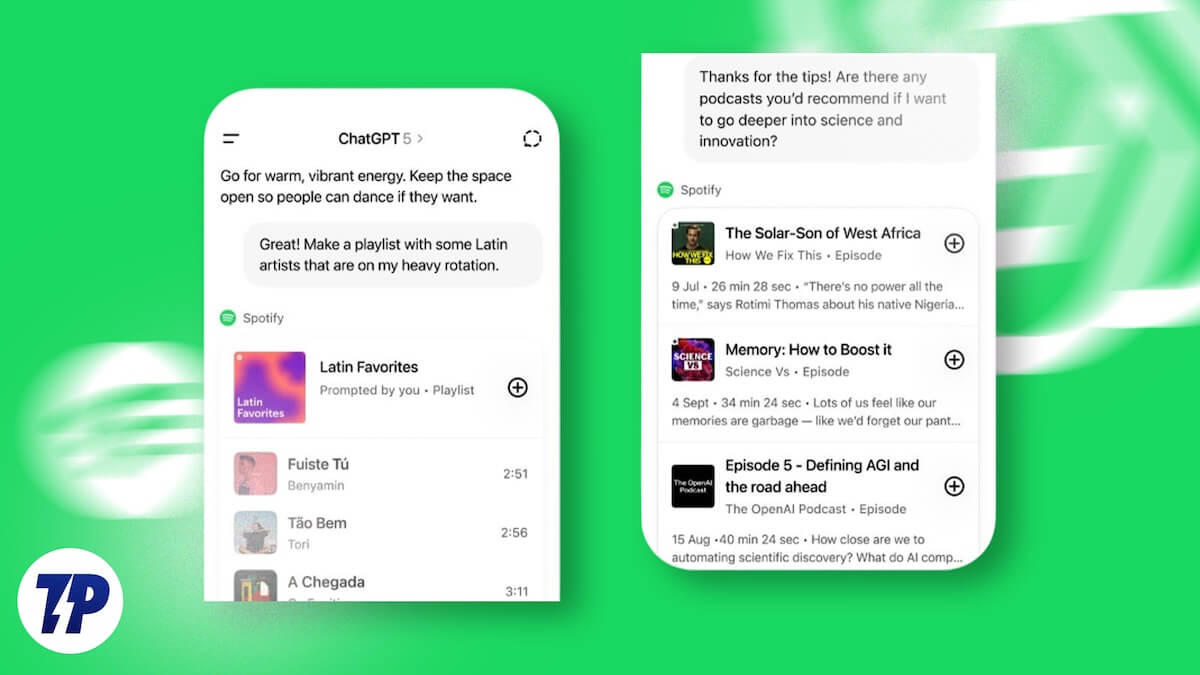
Since late 2025, Spotify has been integrated directly with ChatGPT. Users can connect their Spotify account and ask for music recommendations in natural language. When someone says "Spotify, find me something like Arctic Monkeys but more electronic," ChatGPT searches Spotify's catalogue using a combination of metadata (genre tags, mood descriptors, artist descriptions), listening data (what the user and similar users have listened to), and contextual understanding (interpreting what "more electronic" means in this context).
The critical point for artists: ChatGPT's ability to recommend you depends on how well your music is described in Spotify's system. If your genre tags are vague, your bio is empty, and your metadata is minimal, the AI has less to work with when matching you to listener queries. If your profile is descriptive, accurately tagged, and your bio uses the kind of natural language a listener would use to search, you're far more likely to surface.
Google AI Overviews
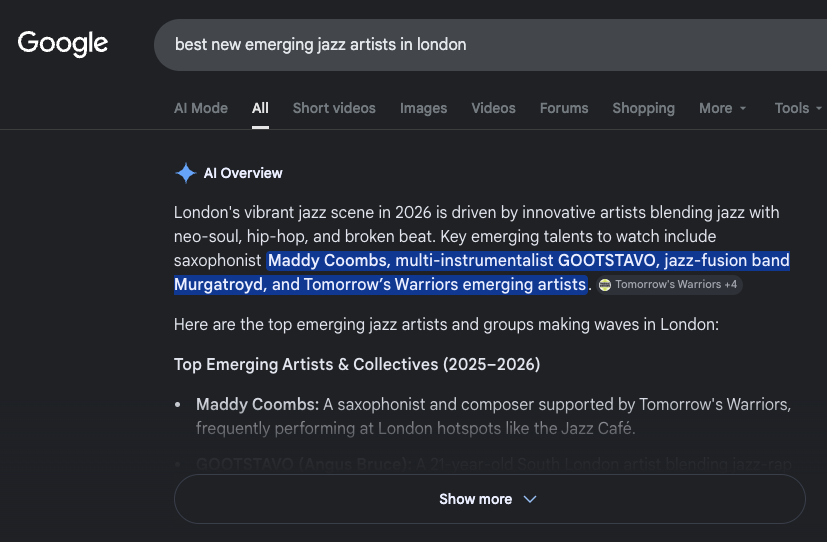
When someone searches Google for "best new indie artists 2026" or "music like Khruangbin," Google's AI Overview synthesises information from across the web to generate a summary answer. It pulls from blog posts, music publications, artist websites, Spotify profiles, YouTube descriptions, and music databases.
The key factor here is third-party validation. Google's AI Overviews heavily favour information from independent, authoritative sources (press coverage, blog reviews, music publications) over an artist's own profiles. If three different music blogs describe you as "dreamy shoegaze from Manchester," Google's AI is much more confident recommending you for that query than if only your own bio says it.
Perplexity, Claude, and other AI tools
Other AI search tools like Perplexity and Claude work similarly but with subtle differences. Perplexity is particularly citation-heavy, meaning it looks for well-sourced, structured information it can reference. Claude also cross-references multiple sources. All of them share the same fundamental logic: they build understanding from whatever public information exists about you, and they recommend you when that understanding matches a listener's query.
The common thread
Across every AI tool, the same three factors determine whether you get recommended:
How descriptively your music is categorised (metadata, genre tags, bios).
How consistently you're described across platforms (does your Spotify say the same thing as your YouTube, your website, your press coverage?).
How much independent validation exists (blog mentions, press, database listings, community discussions).
These are the three levers you can pull.
The 8 Things You Need to Do
1. Get your metadata right (everywhere)
This is the foundation. Your genre tags, subgenre tags, mood descriptors, and instrumentation metadata are how every AI tool categorises your music. If your distributor asks for genre and you select "Pop," that's too broad. "Dream pop," "bedroom pop," or "indie pop" gives AI tools something specific to work with.
The same applies to track descriptions, album descriptions, and any metadata field your distributor offers. Fill them all in with natural, descriptive language. Describe the mood, the energy, the instruments, the vibe. Think about how a listener would describe your track to a friend, and use those words.
For a full guide on getting metadata right across every platform, we've covered this in detail: Metadata 101: How to Make Sure You're Properly Set Up to Release.
2. Write bios that AI tools can learn from
Your Spotify bio, YouTube About section, Instagram bio, Apple Music description, and website bio are all sources that AI tools reference. The language you use in these bios directly shapes how AI understands and describes you.
The biggest mistake artists make is writing bios that are either empty, generic ("singer-songwriter making music from the heart"), or focused on credentials rather than sound ("featured in XYZ magazine, played at ABC festival"). AI tools need descriptive content about your sound: genre, subgenre, mood, influences, sonic textures, and the kind of listener who would enjoy your music.
A bio that says "lo-fi folk singer-songwriter from Glasgow, drawing on Adrianne Lenker and Big Thief with sparse guitar arrangements and intimate vocal recordings" gives an AI tool everything it needs to match you to a query like "music like Big Thief but more stripped back."
A bio that says "artist. new single out now. booking: email@email.com" gives it nothing.
Write one strong bio that describes your sound in natural language, then adapt it for each platform. Keep the core descriptive language the same everywhere. For detailed guidance on writing your Spotify bio specifically, check out optimising your Spotify bio to engage new listeners.
un:hurd's content creator Lyra can help you draft bio copy if you struggle to put your sound into words. Give it a few details about your music and it'll generate a starting point you can refine.
3. Be consistent across every platform
AI tools cross-reference multiple sources to build confidence in their recommendations. If your Spotify bio describes you as "electronic producer," your YouTube says "ambient musician," and your Instagram bio says "beatmaker and DJ," the AI can't confidently place you in any category. Consistency doesn't mean copying the same bio word for word everywhere. It means using the same core descriptive language (genre, subgenre, mood, influences) so that every source tells the same story about your sound.
This also applies to your artist name. Use the exact same spelling, capitalisation, and formatting everywhere. If you're "NOVA" on Spotify but "Nova" on YouTube and "nova.music" on Instagram, AI tools may not connect these as the same artist.
4. Get listed on music databases
This one is often overlooked, but it's significant. AI tools pull information from structured music databases because they're reliable, well-organised sources of factual information.
The databases that matter most:
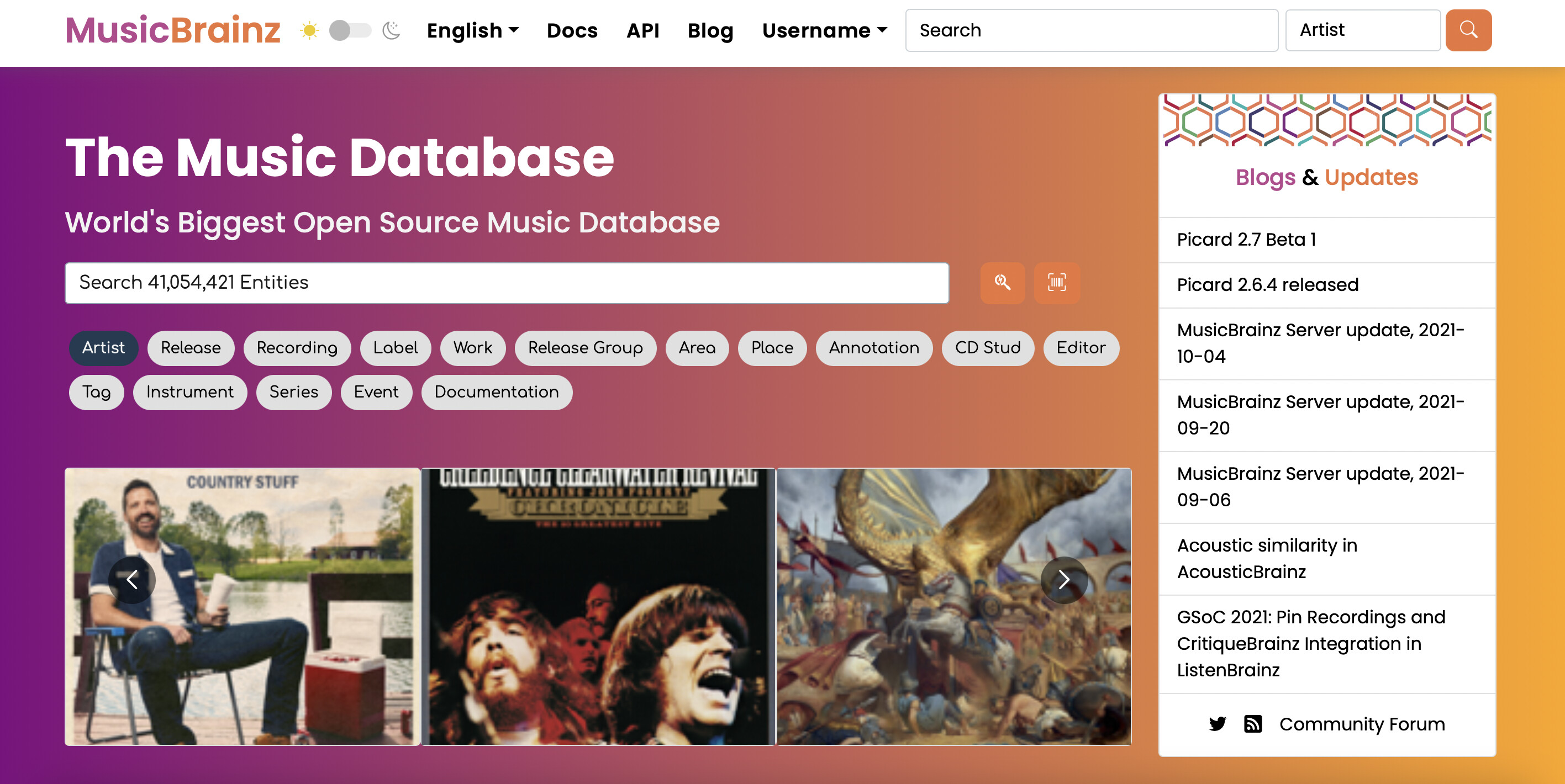
MusicBrainz is an open-source music encyclopaedia. Adding your discography here creates a structured, machine-readable record of your releases that AI tools can reference. It's free to add yourself.
Discogs is primarily a marketplace for physical releases, but it's also a massive music database that AI tools reference. If you've released physical music (vinyl, CD, cassette), make sure you're listed.
Songkick and Bandsintown are live event databases. Having upcoming shows listed here creates additional structured data that AI tools can use to recommend you in location-based queries ("who's playing in Leeds this weekend?").
Wikipedia is the gold standard for AI recognition. Having a Wikipedia page makes it significantly more likely that AI tools will know about you and recommend you. However, Wikipedia has strict notability requirements, so this is more relevant for artists who've achieved a certain level of press coverage, chart positions, or notable achievements. If you qualify, it's worth pursuing.
5. Get mentioned in press and blogs
This is one of the most powerful things you can do for AI visibility, and it's the one most independent artists underestimate.
AI tools, particularly Google's AI Overviews and Perplexity, heavily favour third-party sources when making recommendations. A blog review, an interview, a "best new artists" list, or even a mention in a playlist feature all create independent data points that AI tools can reference. The more places your name appears alongside descriptive information about your sound, the more confidently AI tools can recommend you.
You don't need NME or Pitchfork. Smaller music blogs, niche genre publications, local press, podcast appearances, and even well-structured Reddit threads all contribute. What matters is that your name appears in contexts that describe your music.
For practical guidance on reaching out to press and tastemakers, check out our guide to reaching out to tastemakers.
6. Use descriptive playlist titles and descriptions
If you curate your own Spotify playlists (and you should), give them descriptive, searchable titles and write detailed descriptions. AI tools surface playlist information when answering music queries, and a playlist called "Late Night Indie Acoustic from the UK" is far more useful to an AI than "My Vibes Vol. 3."
Include your own tracks on your playlists alongside similar artists. This creates an association between your music and the artists you sit alongside, which helps AI tools understand your sonic neighbourhood.
We've written about why artists should be creating their own playlists and how to make them work for your discovery.
7. Create content that answers questions
AI tools love content that directly answers questions. Blog posts, YouTube videos, and social media content that address specific topics in your area of music create additional data points that AI tools can reference.
This could be as simple as a YouTube video titled "How I Produced My Latest Single Using Only Free Plugins" or a blog post about your recording process. It could be an interview where you discuss your influences and sound in detail. Any content that puts your name in context with descriptive, searchable information about your music contributes to your AI footprint.
8. Audit your AI visibility right now
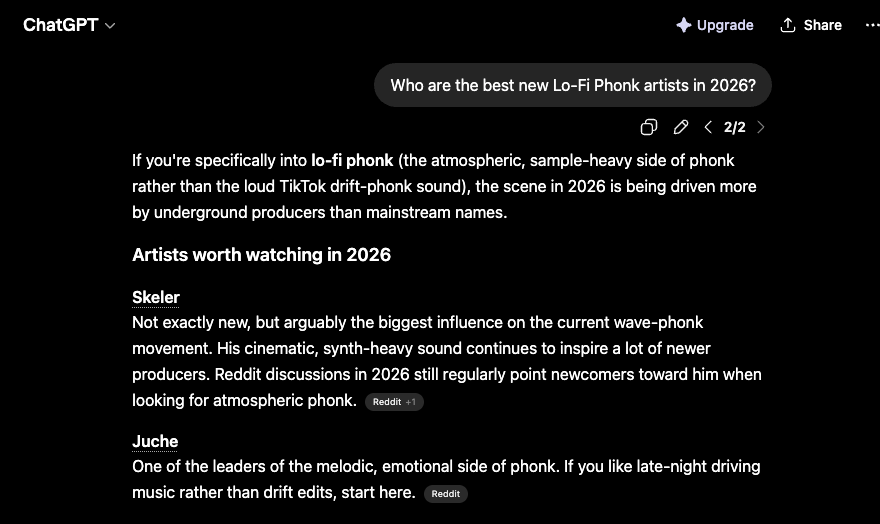
This is the simplest and most immediately useful thing you can do. Open ChatGPT, connect your Spotify account, and try these prompts:
- "Recommend artists that sound like [your name]"
- "Find me [your genre] music from [your city]"
- "Who are the best new [your subgenre] artists in 2026?"
- "Spotify, play something like [an artist you sound similar to]"
See whether you appear. If you do, look at how you're described. If you don't, that's your starting point. Look at who does appear and study how they've described themselves across platforms. The gap between their presence and yours is your to-do list.
Then try the same in Perplexity and Google. Search your own name and see what comes up. Is the information accurate? Is it descriptive? Is it consistent? Every gap you find is something you can fix.
How This Fits Into Your Release Strategy
AI discoverability isn't a separate task you add on top of everything else. It's a natural extension of the release work you're already doing, if you're doing it properly.
When you set up a release, you're already:
- Writing metadata and genre tags for your distributor
- Updating your Spotify bio and Artist Pick
- Uploading to YouTube with titles and descriptions
- Reaching out to playlist curators and press
- Posting on social media
Every one of those actions is also an AI optimisation opportunity. The question isn't "how do I add AI SEO to my workload?" It's "am I doing these existing tasks descriptively and consistently enough that AI tools can learn from them?"
un:hurd's Release Cycles build all of this into your 8-week release plan. Profile optimisation, metadata setup, playlist pitching, and press outreach are already part of the process. When you follow the plan, you're simultaneously building the kind of consistent, descriptive presence that AI tools need to recommend you.
The Long Game
AI music discovery is still early. Most listeners are still finding music through playlists, socials, and word of mouth. But the trajectory is clear: AI tools are becoming a mainstream way people search for and discover music, and the Spotify-ChatGPT integration is accelerating that shift.
The artists who build their AI presence now, while most independent musicians aren't even thinking about it, will have a compounding advantage. Every blog mention, every accurately tagged release, every descriptive bio, every database listing adds to a body of information that AI tools draw from. Over time, that body of information becomes the reason you show up in recommendations and your competitors don't.
You don't need to do everything at once. Start with the audit (step 8). See where you stand. Then work through the list, one release at a time. By the time AI discovery is mainstream, you'll already be there.
👉 Start your release plan on un:hurd and build AI-ready metadata and profile optimisation into every release.
💬 Quick tip: ask ChatGPT to recommend music that sounds like you. Screenshot the results. That's your competitive landscape for AI discovery, and the gap between who appears and who doesn't is almost entirely about how well those artists have described themselves online.
.png)